Do this now
Turn it off at the wall and open the door. Do not run another cycle to see if it clears: a second wash on top of standing dirty water just fills the tub further.
Dishwasher not draining: the filter, the hose kink, or the air gap
Updated
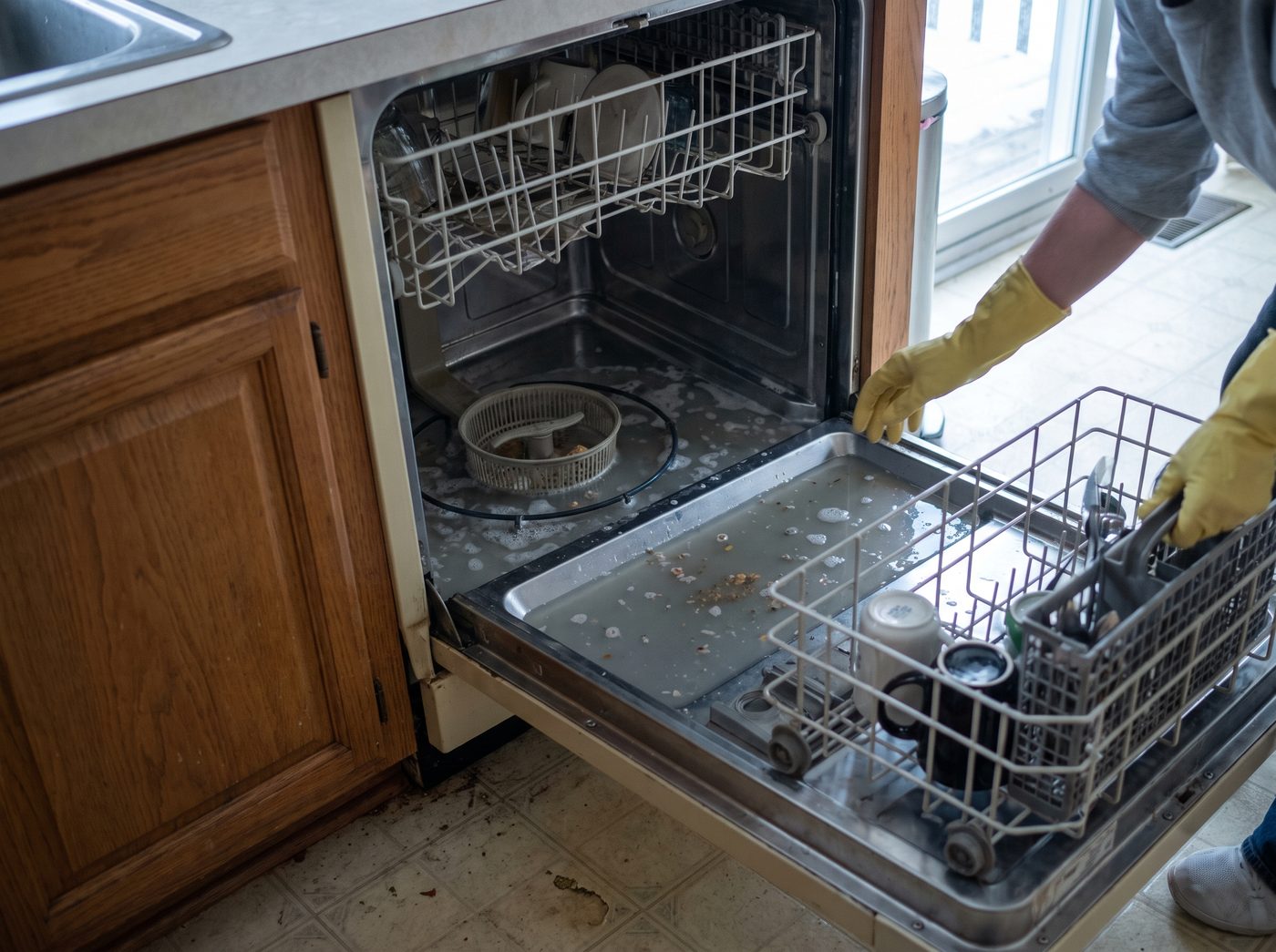
Standing water in the bottom of a dishwasher is almost always one of four things, and three of them cost nothing. A blocked filter, a kinked or blocked drain hose, a blocked air gap on the sink, or a knockout plug still in place on a newly fitted garbage disposal. Work them in that order and most people never reach the pump.
- 01
Bail the water out
A jug and a towel, or a wet vacuum. You need the tub empty to see anything, and everything below is unpleasant with three inches of dishwater in the way.
- 02
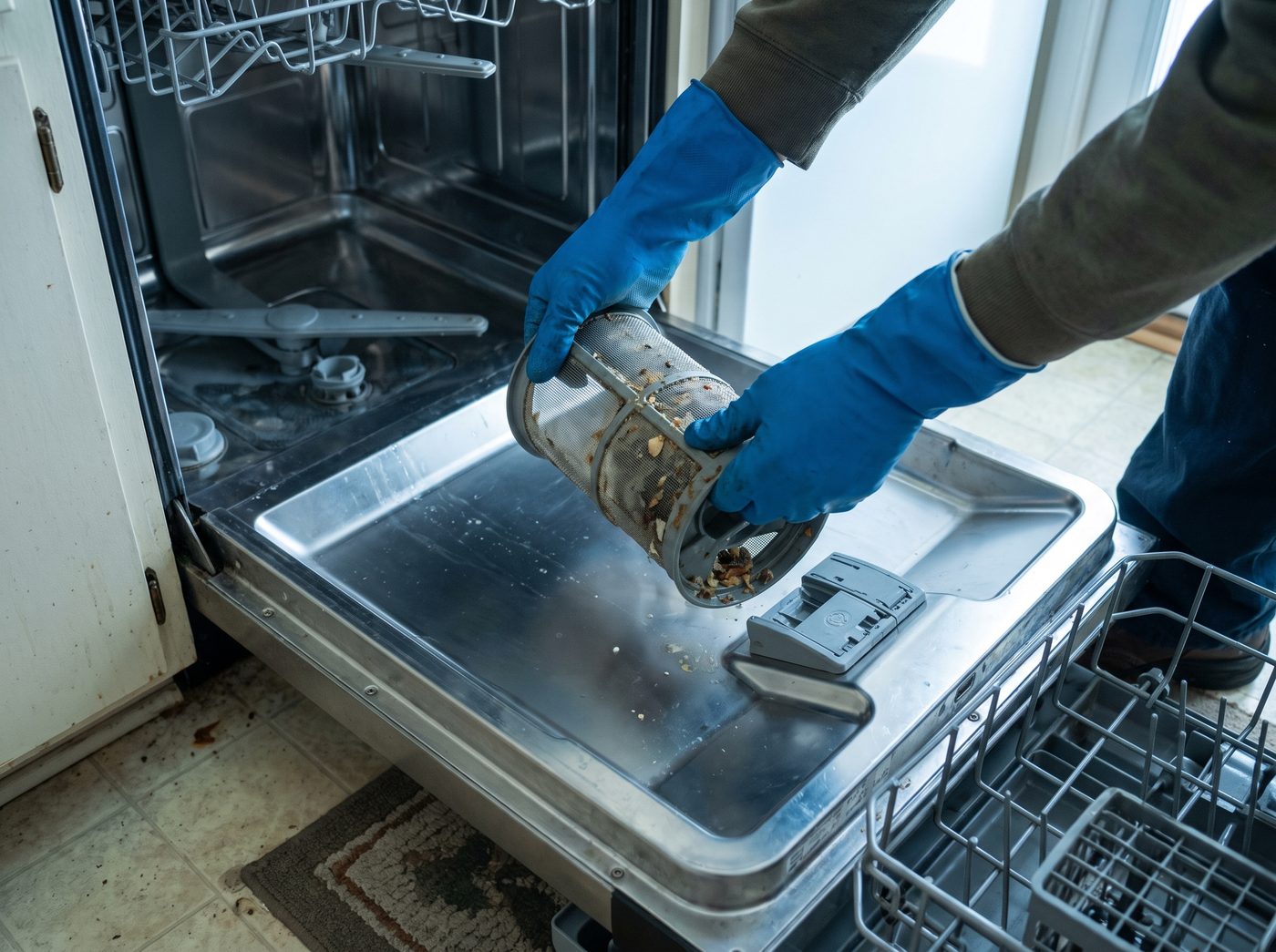
Pull the filter and clean it
Bottom of the tub, usually a cylinder that twists out with a flat plate under it. Take both out, rinse under a hot tap, brush the mesh. If you have never done this, expect it to be genuinely unpleasant and expect it to fix the problem.
- 03
Check the sump for debris
With the filter out, look into the recess underneath. Glass chips, fruit stickers, and bones are the usual finds. Fingers rather than a tool, and carefully, because broken glass ends up here.
- 04
Look at the drain hose behind the machine
It should run up to a high loop under the counter before dropping to the waste. Kinks happen when a machine is pushed back into place. If yours has no high loop at all, that is a fitting fault and it will keep siphoning back.
- 05
Clear the air gap if you have one
The small chrome cylinder on the sink deck beside the tap. Lift the cover, unscrew the cap and clear the debris inside. It blocks with the same gunge as the filter and almost nobody knows it exists.
- 06
Check the disposal knockout plug
If the dishwasher drains into a garbage disposal fitted recently, the plug in the disposal inlet must have been knocked out at installation. If it was not, the dishwasher has never had anywhere to drain to. It is the classic new-install fault and it is worth ruling out before you pay anyone.
What it costs
| Cost | Source | |
|---|---|---|
| Clean the filter and air gap yourself | nothing | |
| Dishwasher repair overall | $100 to $300, averaging $200 | |
| Drain pump replacement | $100 to $400 | |
| Motor replacement | $350 to $500 | |
| Appliance repair, per hour | $50 to $125 | |
| Replacing the machine | $600 to $1,700 |
Every figure here is published by the source named beside it. We do not average them into a number of our own.
Where to stop
Filters, hoses and air gaps are homeowner work. Inside the machine is a different matter.
- The drain pump or motor
- It means pulling the machine out, laying it over and working underneath, with water and mains electricity in the same space.
- Water on the floor as well as in the tub
- That is a leak rather than a drainage fault, and a leaking dishwasher can ruin a kitchen floor from underneath before it ever shows.
- The sink backing up at the same time
- The blockage is in the shared waste line, not the dishwasher. Clearing the filter will change nothing.
- Any hard-wired electrical connection
- Many dishwashers are wired rather than plugged, so the isolation you think you have may not be there.
Why it happened
Older dishwashers ground food up and flushed it away. Most modern ones use a manual filter instead, because it is quieter and uses less water, and the manual bit means somebody has to clean it. Almost nobody was told that when the machine was fitted, so the first anyone hears of the filter is standing water two years later.
What stops it happening again
Clean the filter monthly. That is the whole thing, and it is why this guide exists: a two minute job nobody knows about, which turns into standing water, a call out, and sometimes a new machine.
- The part
- Nothing to buy. A washing up brush you do not mind dedicating to the job.
- How often
- Filter monthly. Air gap every few months. Run a hot cycle with dishwasher cleaner or white vinegar every couple of months to keep grease off the sump.
Want the rest of the house covered?
One email a month, timed to the systems you actually have. The same kind of thing as the tablet: small, cheap, and it stops the call.
Also asked
- Why is there standing water in my dishwasher?
- Usually a blocked filter, a kinked drain hose, a blocked air gap, or on a new installation the knockout plug still sitting in the garbage disposal inlet. Three of those four cost nothing to fix.
- How often should I clean the dishwasher filter?
- Monthly. Most modern machines use a manual filter rather than a food grinder, and nobody is told that at installation, which is why this is the most common dishwasher fault there is.
- What is the air gap on my sink?
- The small chrome cylinder beside the tap. It stops waste siphoning back into the dishwasher, and it blocks with the same debris as the filter. Unscrew the cap and clear it.
- My new dishwasher has never drained. Why?
- Check the garbage disposal knockout plug. If the dishwasher drains into a disposal, that plug must be removed at installation, and a missed one means the machine has never had anywhere to drain.
- Is it worth repairing or replacing a dishwasher?
- HomeGuide puts repair at $100 to $300 averaging $200, against $600 to $1,700 to replace. A pump or motor at $350 to $500 on an older machine is the point where the sums start to favour replacing.