Do this now
If water is already coming inside, deal with that first: bucket underneath, valuables out. Do not go up a ladder onto ice to attack the dam. Nothing about this is worth a fall.
Ice dam on the roof: what to do now, and why it is really an attic problem
Updated
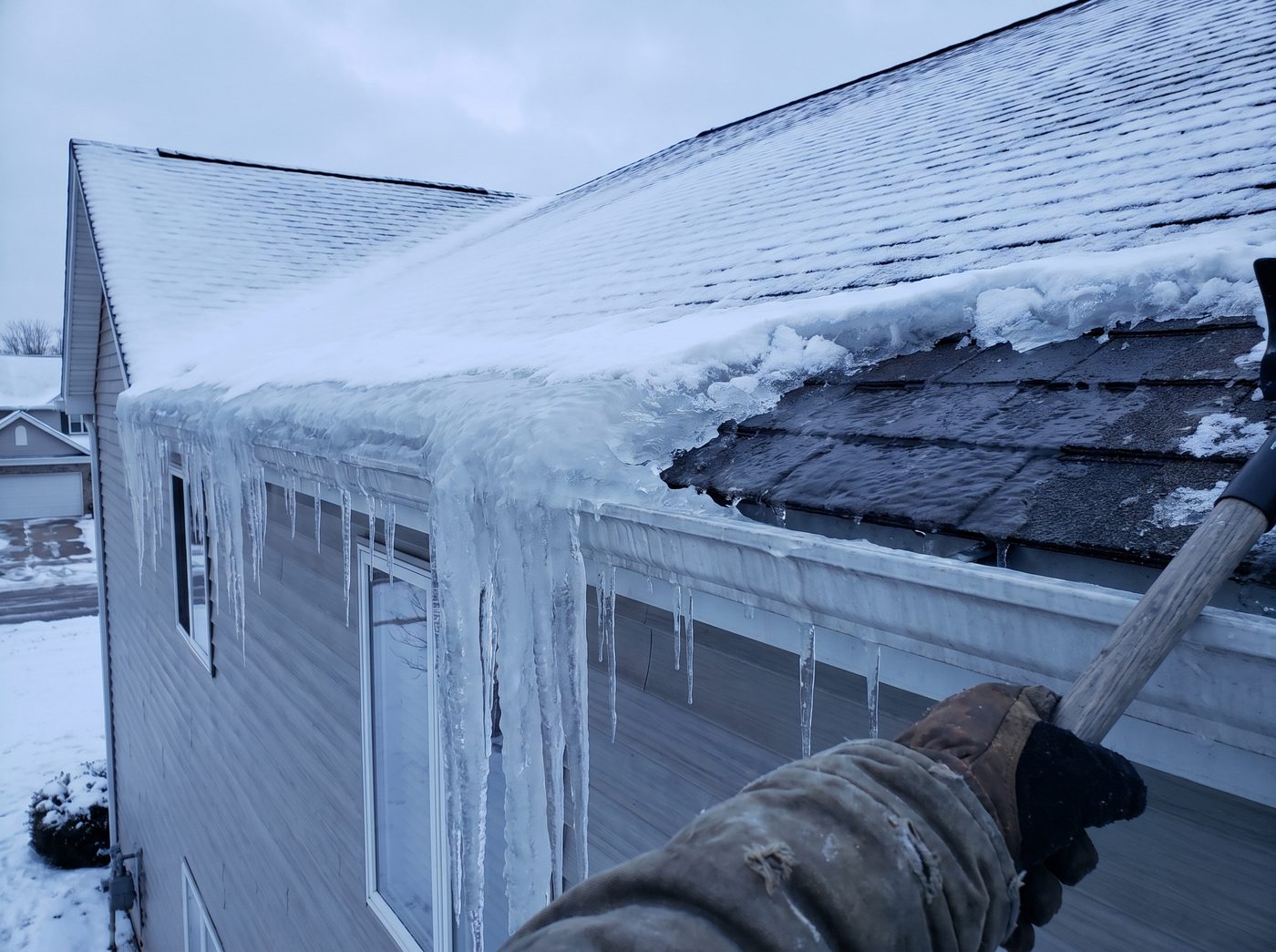
An ice dam is a ridge of ice at the cold edge of a roof, built because snow higher up is melting and refreezing when it reaches the overhang. The melting is caused by heat leaking from the house into the attic. So the dam is a symptom: the roof is fine, the insulation and air sealing are not. Clearing the ice buys you this winter and changes nothing about the next one.
- 01
Deal with the water inside first
Water backing up behind a dam gets under the shingles and into the house. Containing that is urgent and safe. The ice itself is neither.
- 02
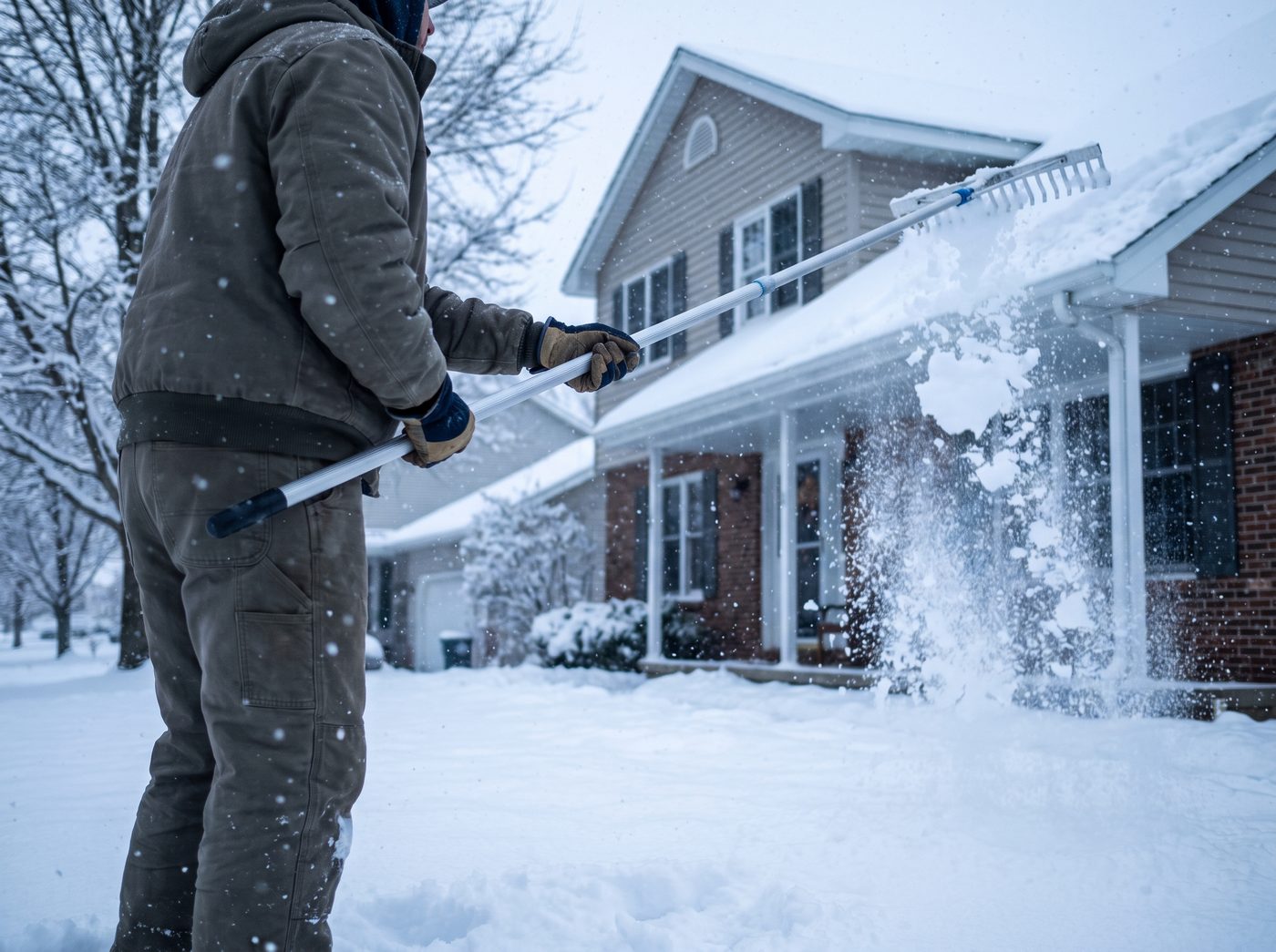
Rake the snow off the lower roof, from the ground
A roof rake with an extension pole, standing on the ground, clearing the first few feet of roof above the gutter. Removing the snow removes the fuel: no meltwater arriving means the dam stops growing.
From the ground, always. Never off a ladder in ice and snow. Watch for overhead power lines before you extend an aluminium pole.
- 03
Cut a channel with a de-icer, not a hammer
A sock or stocking filled with calcium chloride, laid vertically across the dam, melts a channel through it and lets the trapped water drain. It is slow, undramatic and it does not damage the roof.
Calcium chloride, not rock salt. Rock salt corrodes metal flashing and gutters and kills whatever it lands on below.
- 04
Do not chip, hack or pressure wash
Chipping ice off shingles takes the granules with it and often the shingle. HomeGuide lists chipping as a service precisely because it goes wrong: it is the method most likely to turn a winter nuisance into a roof repair.
- 05
Go and look in the attic
On a cold day, with a torch. Frost on the underside of the roof deck, thin or displaced insulation, gaps around light fittings, bathroom fans venting into the attic instead of outside. That is where the heat is going, and that is the actual fault.
- 06
Book the real fix for spring
Air sealing, insulation and ventilation, in that order. Doing it in the cold while dealing with an active leak is the worst time to make those decisions and the most expensive time to buy the work.
What it costs
| Cost | Source | |
|---|---|---|
| Ice dam salt or roof melt tablets | $200 to $300 | |
| Chipping | $800 to $1,800 | |
| Steam removal | $800 to $2,400 | |
| Single-storey, 1,000 sq ft | $200 to $600 | |
| Two-storey, 1,500 sq ft | $1,000 to $2,000 and up | |
| Roof snow removal per visit | $200 to $500 |
Every figure here is published by the source named beside it. We do not average them into a number of our own.
Where to stop
Almost all of this stops at ground level, and the reason is straightforward.
- Going up a ladder onto an iced roof
- This is the single most dangerous thing described anywhere on this site. Professional crews use steam and harnesses for a reason.
- Steam removal
- It is the method that does not damage the roof, and it needs equipment you will not have. HomeGuide puts it at $800 to $2,400.
- Heat cables
- They are electrical work on a roof and they mask the problem rather than solving it. Worth doing properly if at all.
- Attic air sealing and insulation
- Get it wrong and you block ventilation, which causes condensation and rot. This is the fix, and it is worth paying for the fix.
Why it happened
Warm air leaks out of the living space into the attic, warms the roof deck, and melts the underside of the snow lying on it. That water runs down to the overhang, which is not over heated space and is therefore properly cold, and freezes there. The ridge grows, water pools behind it, and eventually finds its way under the shingles. Every part of that is caused inside the house.
What stops it happening again
Air sealing first, then insulation, then ventilation. Sealing the gaps where warm air escapes into the attic does more than adding insulation on top of a leaky ceiling, and it is usually cheaper. A house that does not warm its own roof deck does not build dams.
- The part
- A roof rake, roughly the cost of one professional visit and reusable every winter. Calcium chloride rather than rock salt for the channel.
- How often
- Rake the lower roof after any snowfall over about six inches. Check the attic for frost on the deck once each winter. Get air sealing and insulation looked at once, properly, rather than every year.
Want the rest of the house covered?
One email a month, timed to the systems you actually have. The same kind of thing as the tablet: small, cheap, and it stops the call.
Also asked
- Can I break an ice dam off myself?
- Do not chip at it. You take shingle granules off with the ice and often the shingle. Lay calcium chloride in a sock across the dam to melt a drainage channel instead, and rake the snow above it from the ground.
- Why do I get ice dams and my neighbour does not?
- Heat escaping into your attic. Their ceiling is better sealed or better insulated, or their attic is better ventilated. The roof itself is rarely the difference.
- Will heat cables fix it?
- They keep a channel open but do nothing about the heat loss causing the dam, and they are electrical work on a roof. They are a mitigation, not a fix.
- Is rock salt the same as ice dam salt?
- No. Rock salt corrodes flashing and gutters and damages planting below. Use calcium chloride.
- How much does professional ice dam removal cost?
- HomeGuide puts steam removal at $800 to $2,400 and chipping at $800 to $1,800, with single-storey jobs from around $200 to $600. Steam is gentler on the roof.