Do this now
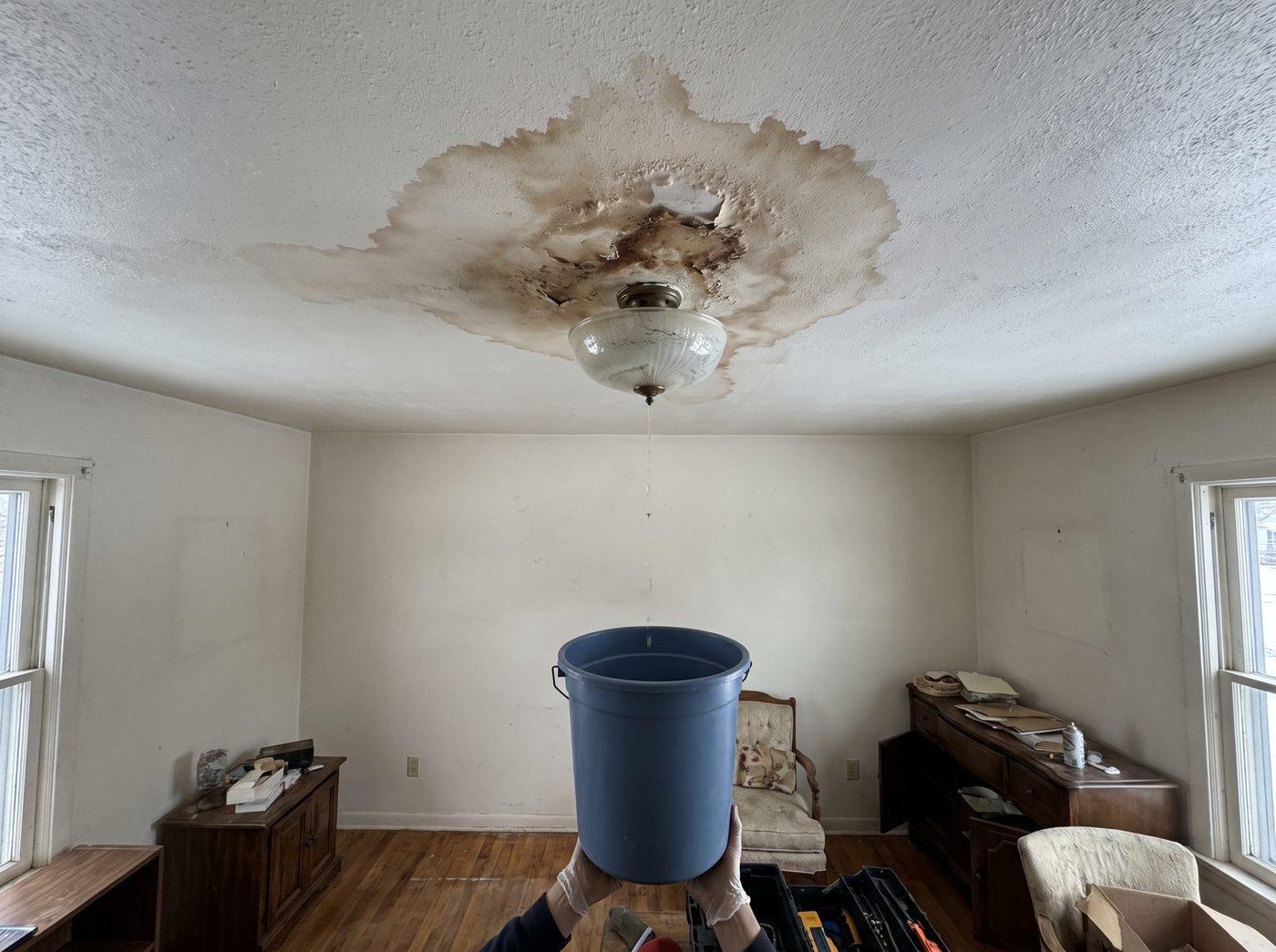
Get a bucket under it and move anything valuable out from underneath. If the ceiling is bulging, you are going to pierce it deliberately, and that is the right call.
Roof leak: what to do in the next hour, and what not to climb
Updated
A roof leak is two problems and they need handling in the wrong order from the one people expect. The water inside your house is the urgent one, and you can deal with it now. The hole is the important one, and it is almost never something to go up and look at yourself. Contain first, diagnose from the ground, and put the ladder away.
- 01
Contain it
Bucket underneath, furniture out, towels around the base. If it is running down a wall rather than dripping, get a plastic sheet against the wall so it reaches the floor rather than soaking into the plaster.
- 02
Pierce a bulging ceiling on purpose
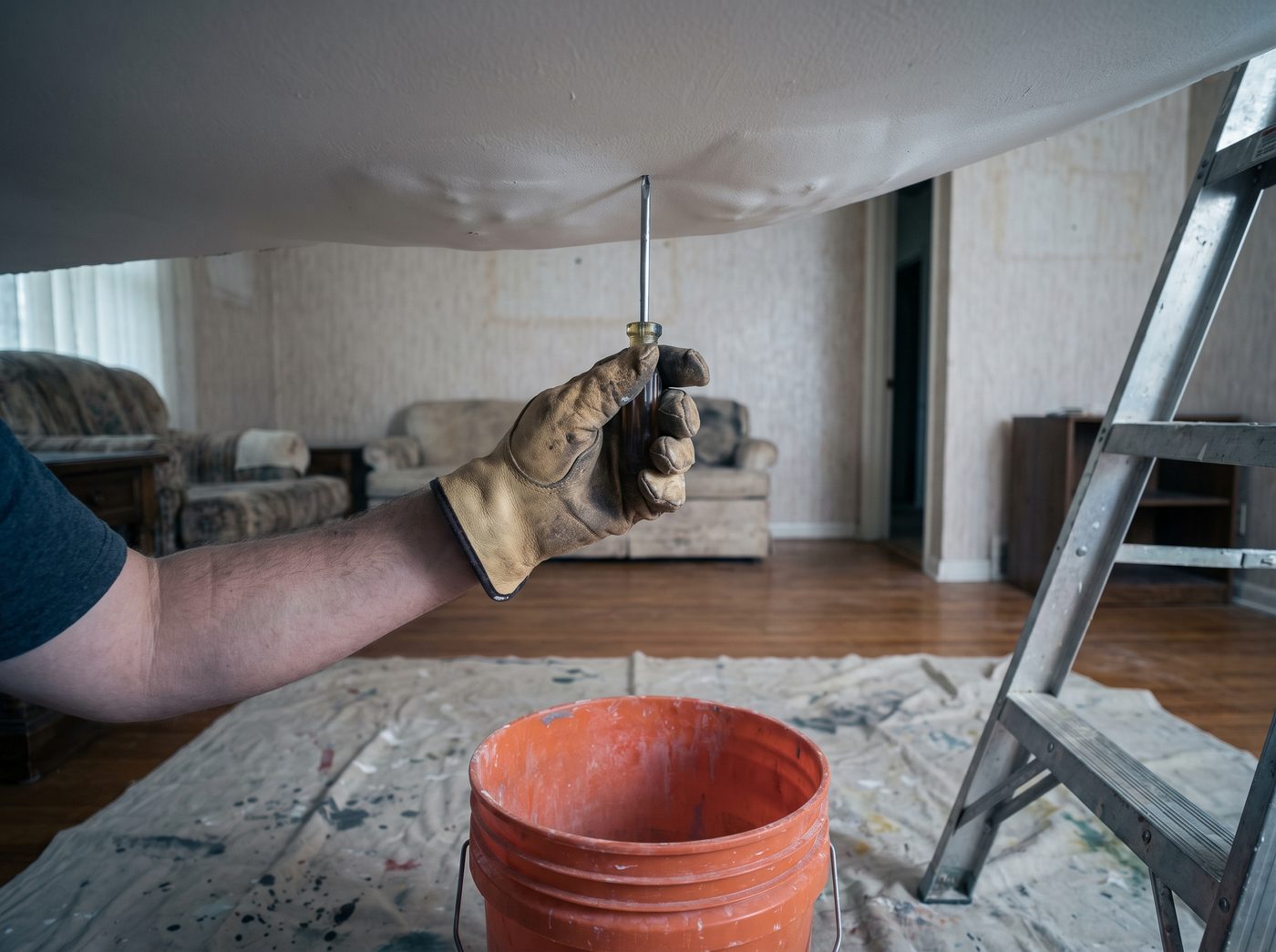
A sagging bulge is holding several kilos of water and it will come down on its own schedule, usually all at once. Put a bucket underneath, then push a screwdriver through the lowest point of the bulge and let it drain. A neat hole you made is a far smaller repair than the section that falls.
Never do this if the stain surrounds a light fitting or you cannot rule out wiring above. Kill the circuit at the breaker first, and if you cannot be sure what is up there, leave it and call someone.
- 03
Note when it drips
Only in driving rain, only in prolonged rain, or steadily regardless? Only in wind-driven rain points at flashing or a vent boot. Steady dripping days after rain often is not the roof at all, but a plumbing leak or condensation.
- 04
Look from the ground with binoculars
Missing or lifted shingles, a rubber vent boot that has split, flashing pulled away from a chimney or wall. The failure is usually at a joint rather than in open roof. You can see all of this from the lawn without owning a ladder.
- 05
Check the attic, not the roof
From inside, with a torch, on a dry day. Follow the stain on the decking uphill: water runs down rafters before it drops, so the entry point is almost always higher up the slope than the wet patch on your ceiling.
- 06
Photograph everything before anyone repairs it
Date-stamped photos of the ceiling, the attic and the ground-level view. If this becomes an insurance conversation, the evidence you want is the evidence that exists before the repair, not after.
What it costs
| Cost | Source | |
|---|---|---|
| Roofer minimum call-out | $150 to $300 | |
| Roof inspection | $100 to $400 | |
| Minor leak repair | $150 to $1,000 | |
| Leak with water damage repairs | $1,000 to $6,000 and up | |
| Vent boot repair | $75 to $150 | |
| Flashing repair | $200 to $500 |
Every figure here is published by the source named beside it. We do not average them into a number of our own.
Where to stop
This is the shortest homeowner list on the site, and it is short for one reason.
- Going on the roof
- Falls from height are the thing that actually hurts people doing home maintenance, and a wet roof is worse. Nothing you would find up there changes what happens next, because the repair is a call either way.
- A stain around a light fitting or ceiling fan
- Water and wiring. Kill the circuit and leave it alone.
- Anything structural or sagging beyond one bulge
- Saturated decking and joists are a different order of problem, and one that gets more expensive the longer it stays wet.
- Chasing the leak in a finished attic
- You cannot see the decking, so finding it means opening things up. That is a job with an order of operations.
Why it happened
Roofs rarely fail in the middle of a slope. They fail where something passes through them: a vent, a chimney, a wall junction. The rubber boot around a plumbing vent perishes in about a decade of sun and splits, and the roof around it can be in perfect condition. That is why the gap between a $75 vent boot and a $6,000 water damage bill is mostly a question of how long it went unnoticed.
What stops it happening again
Look at your own roof from the ground twice a year and after any storm, with binoculars, from the same two or three spots each time. You are not inspecting it, you are noticing change. Perished vent boots and lifted flashing are visible from the lawn long before they leak, and both are cheap while they are still dry.
- The part
- A pair of binoculars, and the habit. HomeGuide puts an annual professional roof inspection at $100 to $400 if you would rather someone else did the looking.
- How often
- Ground-level look each spring and autumn, and after any severe weather. Clear gutters twice a year, because water backing up under the shingle edge is its own route in.
Want the rest of the house covered?
One email a month, timed to the systems you actually have. The same kind of thing as the tablet: small, cheap, and it stops the call.
Also asked
- Should I put a bucket under it or try to fix it now?
- Bucket. Containing the water is the only part that is urgent, and it is the part you can do safely. The roof itself is a call, in daylight, in dry weather.
- My ceiling is bulging. Do I burst it?
- Yes, deliberately and with a bucket underneath, unless the stain is near a light fitting or you cannot rule out wiring above. A bulge is holding water and it will fail on its own terms if you leave it.
- Can I find the leak from inside?
- Often, in an unfinished attic with a torch on a dry day. Follow the stain on the decking upward, because water runs down rafters before it drops. The entry point is nearly always higher than the ceiling stain.
- Why does it only leak in heavy wind and rain?
- That pattern points at flashing or a vent boot rather than a hole in open roof. Wind-driven rain gets under and sideways in a way that ordinary rain does not.
- Should I go up on the roof to look?
- No. Falls from height are the injury that actually happens in home maintenance, and nothing you would find changes the outcome, because the repair is a professional job regardless.