Do this now
Do not take the battery out and leave it out. Everyone has done it, it is how houses end up with dead alarms for years, and it takes ten minutes to do this properly instead.
Smoke alarm chirping: why a new battery often does not stop it
Updated
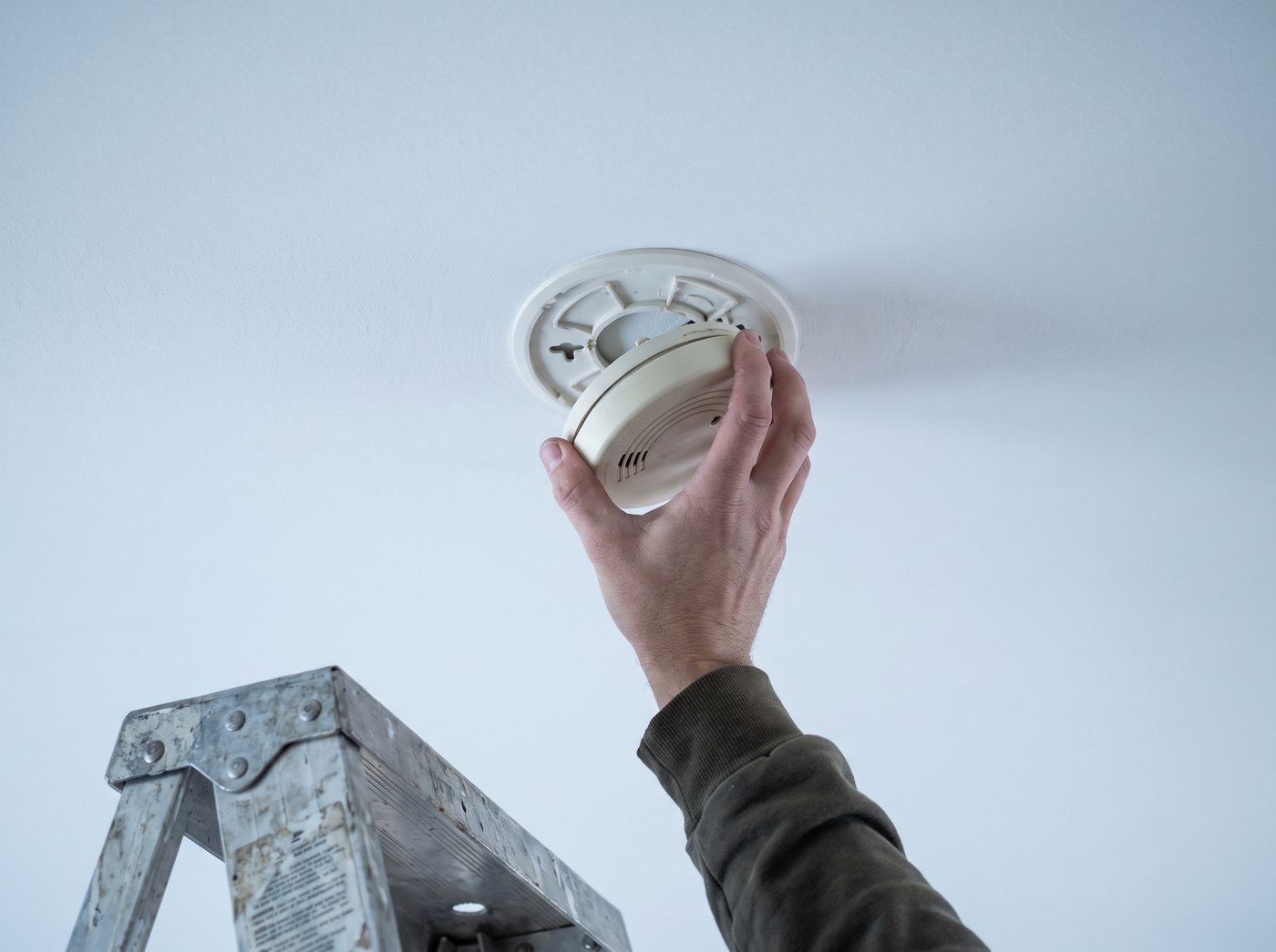
A single chirp every 30 to 60 seconds is almost always low battery. If a fresh battery does not stop it, the alarm has reached its end of life and is telling you so with the same noise. Smoke alarms expire, typically about ten years from their manufacture date, and the date is printed on the back of the unit where nobody looks.
- 01
Work out which one it is
Chirps echo, and in a hallway with three alarms it is genuinely hard to tell. Stand under each in turn and wait through a full cycle. In an interconnected system, one failing unit can make the whole set chirp.
- 02
Replace the battery, even a sealed one
Twist the unit off its mount, swap the battery, twist it back. If it is a ten-year sealed unit there is no battery to change, which tells you immediately that you are at step four.
- 03
Clear the memory
With the new battery in, hold the test button for about fifteen seconds. Many alarms hold a residual charge and keep chirping after a good battery goes in until this is done. This is the step people miss before deciding the alarm is broken.
- 04
Read the date on the back
Take it off the mount and turn it over. There is a manufacture date printed on it. If it is more than about ten years old, it is expired: the sensor degrades whether or not the unit has ever been triggered, and no battery fixes that.
- 05
Vacuum it while it is in your hand
Dust and insects inside the chamber cause both nuisance alarms and odd chirping. A soft brush attachment around the vents takes ten seconds and you are already holding it.
- 06
Replace the whole unit if it is expired
Match the type. A hardwired alarm plugs into a connector on the mount and must be replaced with a compatible hardwired unit, not a battery one. If they are interconnected and any are expired, replace the set: mixing a new alarm into a chain of old ones tends to produce exactly the fault you just fixed.
What it costs
| Cost | Source | |
|---|---|---|
| Replacement battery | a few dollars | |
| New smoke alarm | roughly $15 to $60 depending on type | |
| Electrician, per hour | $50 to $130 | |
| Handyperson, per hour | $50 to $80 |
Every figure here is published by the source named beside it. We do not average them into a number of our own.
Where to stop
Swapping an alarm on an existing mount is homeowner work. These are not.
- There is no existing wiring and you want hardwired alarms
- That is new circuit work and it is usually a code matter for the whole house rather than one ceiling.
- The mount is loose or the wiring behind it looks damaged
- Alarms sit on junction boxes. Anything wrong behind the mount is an electrical repair, not an alarm swap.
- A carbon monoxide alarm is sounding rather than chirping
- That is not maintenance. Get everyone out, then call the gas company or emergency services from outside.
- Chirping that continues with a new, correctly dated unit
- Something else on the circuit or in the interconnect is at fault, and that is an electrician rather than another alarm.
Why it happened
Alarms chirp at low battery by design, and they nearly always start at night because the house cools and battery voltage drops slightly with temperature. It is not malice and it is not coincidence. The deeper reason you are standing there at 3am is that the alarm has no other way to tell you, and its expiry date has been quietly approaching for a decade.
What stops it happening again
Change every battery on the same day once a year whether they are complaining or not, and write the replacement year on the unit in marker when you install it. The second habit is the one that matters, because otherwise the expiry date is invisible until it starts chirping.
- The part
- A year’s worth of batteries bought at once, and a marker pen. Ten-year sealed units remove the battery job entirely and are worth it at replacement time.
- How often
- Test every alarm monthly with the button. Replace batteries annually on a date you will remember. Replace the units themselves at ten years from the printed date.
Want the rest of the house covered?
One email a month, timed to the systems you actually have. The same kind of thing as the tablet: small, cheap, and it stops the call.
Also asked
- Why does my smoke alarm chirp after I changed the battery?
- Usually residual charge. Hold the test button for about fifteen seconds with the new battery in to clear it. If it still chirps, check the manufacture date on the back: the alarm may be expired.
- Why do smoke alarms always start chirping at night?
- The house cools overnight and battery voltage drops slightly with temperature, which is often enough to cross the low-battery threshold. It is a real effect rather than bad luck.
- How long do smoke alarms last?
- Typically about ten years from the manufacture date printed on the back, regardless of battery changes. The sensor itself degrades, so an old alarm can be powered and still not do its job.
- Can I just take the battery out?
- You can, and it is how houses end up with dead alarms for years. Doing it properly takes about ten minutes, and this is the one job on the site where the downside is not measured in money.
- One alarm is chirping but they all go off together. Why?
- They are interconnected. A single failing unit can trigger the whole chain, which is also why replacing one new alarm into a set of old ones often does not settle it.