Do this now
Pour a jug of water down every drain you rarely use, including the basement floor drain, the spare shower and the utility sink. A dried out trap is the commonest cause of this and the fix costs nothing.
Sewer smell in the house: it is usually a trap that dried out
Updated
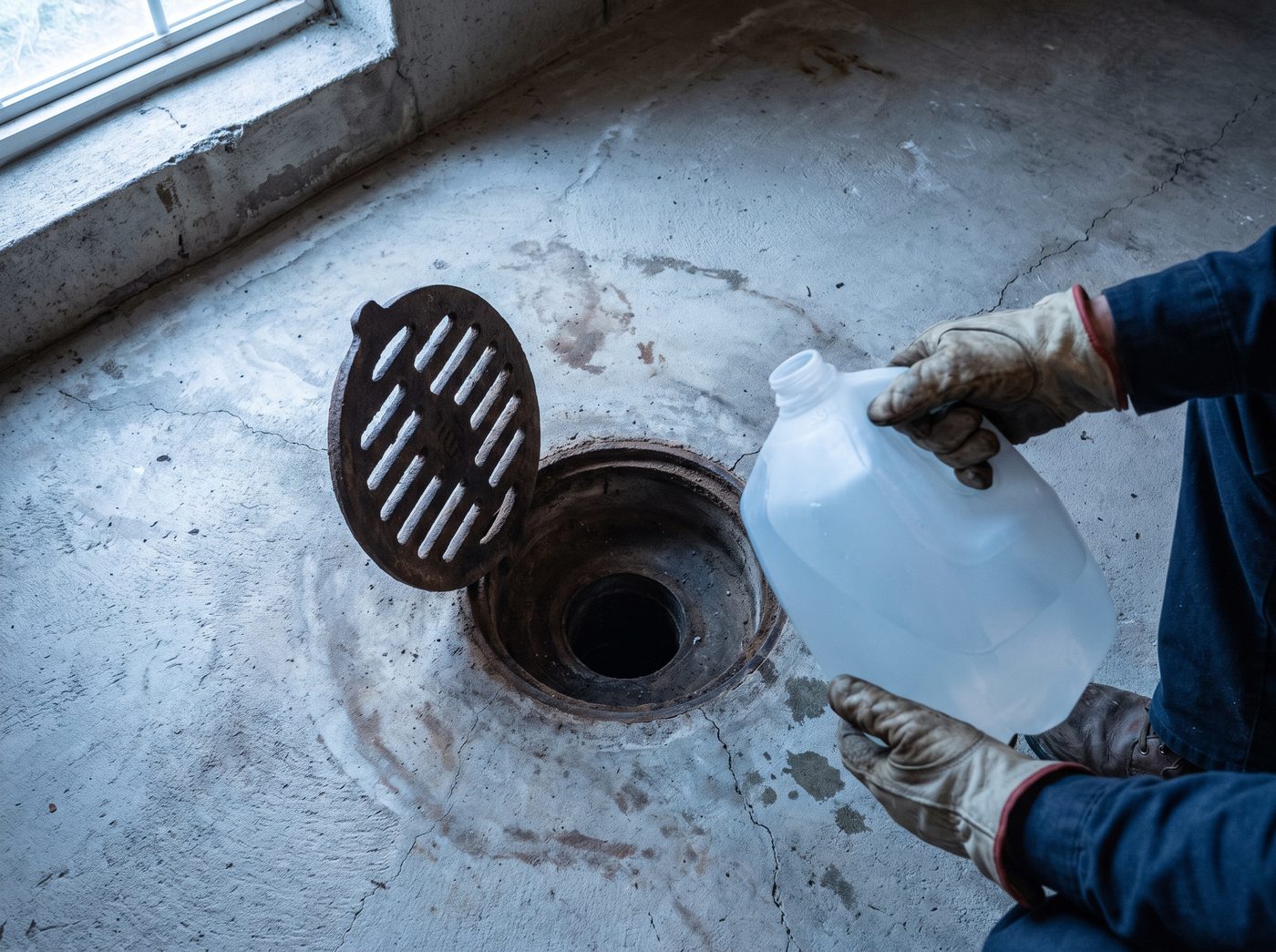
Every drain in a house has a U-bend holding a small amount of water, and that water is the only thing between you and the sewer. Where a drain goes unused the water evaporates and the seal disappears, so gas comes up freely. That accounts for most sewer smells indoors. The rest are a blocked vent, a failed toilet wax seal, or a genuine problem in the line.
- 01
Refill every trap in the house
Guest bathrooms, basement floor drains, laundry sinks, and the shower nobody uses. A litre or two down each. Give it a day: this alone resolves a large share of these smells.
- 02
Work out where the smell is strongest
Walk the house at the time it is worst. A smell tied to one room points at that fixture. A smell throughout, or worse when the wind blows or the extractor runs, points at venting.
- 03
Check the toilets for movement
Rock each toilet gently. Any movement means the wax seal is compromised, and that lets sewer gas past even when water is not visibly leaking. The smell often arrives before the water does.
- 04
Look for a gurgle
Drains that gurgle when another fixture empties are pulling air from somewhere, and if they cannot get it from the vent they siphon it through traps. That empties the very seals you just refilled, which is why the smell comes back.
- 05
Consider the vent stack
The pipe through the roof that lets the drain system breathe. Leaves, a nest or winter ice will block it. From the ground you may see nothing, which is why the gurgle is the better clue.
- 06
Do not mask it
Air freshener over a sewer smell buys a few hours and loses you the only signal you have about where it is coming from and whether it is getting worse.
Sewer gas is mostly nuisance at low concentration and genuinely hazardous at high concentration. A strong persistent smell, particularly in a basement or a room with poor ventilation, is not something to live with while you investigate.
What it costs
| Cost | Source | |
|---|---|---|
| Refill the traps yourself | nothing | |
| Wax ring, if it is a toilet seal | about $5 to $15 | |
| Toilet repair | $100 to $300 | |
| Drain line repair | $100 to $800 | |
| Plumber minimum call-out, travel only | $50 to $150 |
Every figure here is published by the source named beside it. We do not average them into a number of our own.
Where to stop
Refilling traps and spotting the pattern is homeowner work. The rest is not.
- A strong persistent smell that refilling traps does not touch
- Sewer gas at concentration is a health matter, not an inconvenience. Ventilate and get someone out.
- Anything on the roof, including the vent stack
- Roof height, and often in exactly the weather that blocked it.
- Sewage backing up anywhere, or gurgling across several fixtures
- That is the main line and it is urgent rather than annoying.
- Smell coming from a wall or floor rather than a fixture
- That suggests a broken or disconnected drain inside the structure, which needs finding properly rather than guessing at.
Why it happened
The whole drainage system is open to the sewer by design, and the only barrier is a few inches of water sitting in each U-bend. Water evaporates. So any drain that goes unused for weeks quietly loses its seal, and a basement floor drain, which almost never has water put down it deliberately, is the classic offender. Nothing broke. The system simply needs using.
What stops it happening again
Put water down the drains you never use, on a schedule. That is the entire prevention. For a floor drain in a dry basement, a splash of cooking oil on top of the water slows evaporation considerably, which is a genuinely old trick and it works.
- The part
- A jug. For rarely used floor drains, trap primers exist and are worth asking about if the smell keeps returning.
- How often
- Water down every unused drain monthly, and before and after any period away. Rock the toilets when you clean them.
Want the rest of the house covered?
One email a month, timed to the systems you actually have. The same kind of thing as the tablet: small, cheap, and it stops the call.
Also asked
- Why does my house smell like sewage?
- Most often a drain trap that has dried out, letting sewer gas straight past. Rarely used drains, especially basement floor drains, are the usual culprits and a jug of water often solves it.
- The smell came back after I refilled the traps.
- Something is emptying them again, usually a blocked vent causing fixtures to siphon air through the traps. Gurgling drains are the tell.
- Could it be the toilet?
- Yes. Rock each toilet gently. Any movement means the wax seal is compromised, and that lets gas past well before you ever see water at the base.
- Is sewer gas dangerous?
- At low concentration it is mainly a nuisance. At high concentration it is not, and a strong persistent smell in a poorly ventilated space such as a basement is a reason to ventilate and call someone rather than investigate at leisure.
- How do I stop a floor drain drying out?
- Pour water down it monthly. A splash of cooking oil on top of the water floats and slows evaporation, which is an old trick and an effective one.