Do this now
Stop running water into it and do not reach for chemical drain cleaner. If you pour that in and it does not work, everything after this becomes a job with caustic liquid in it.
Kitchen sink clogged: clear it without wrecking the trap
Updated
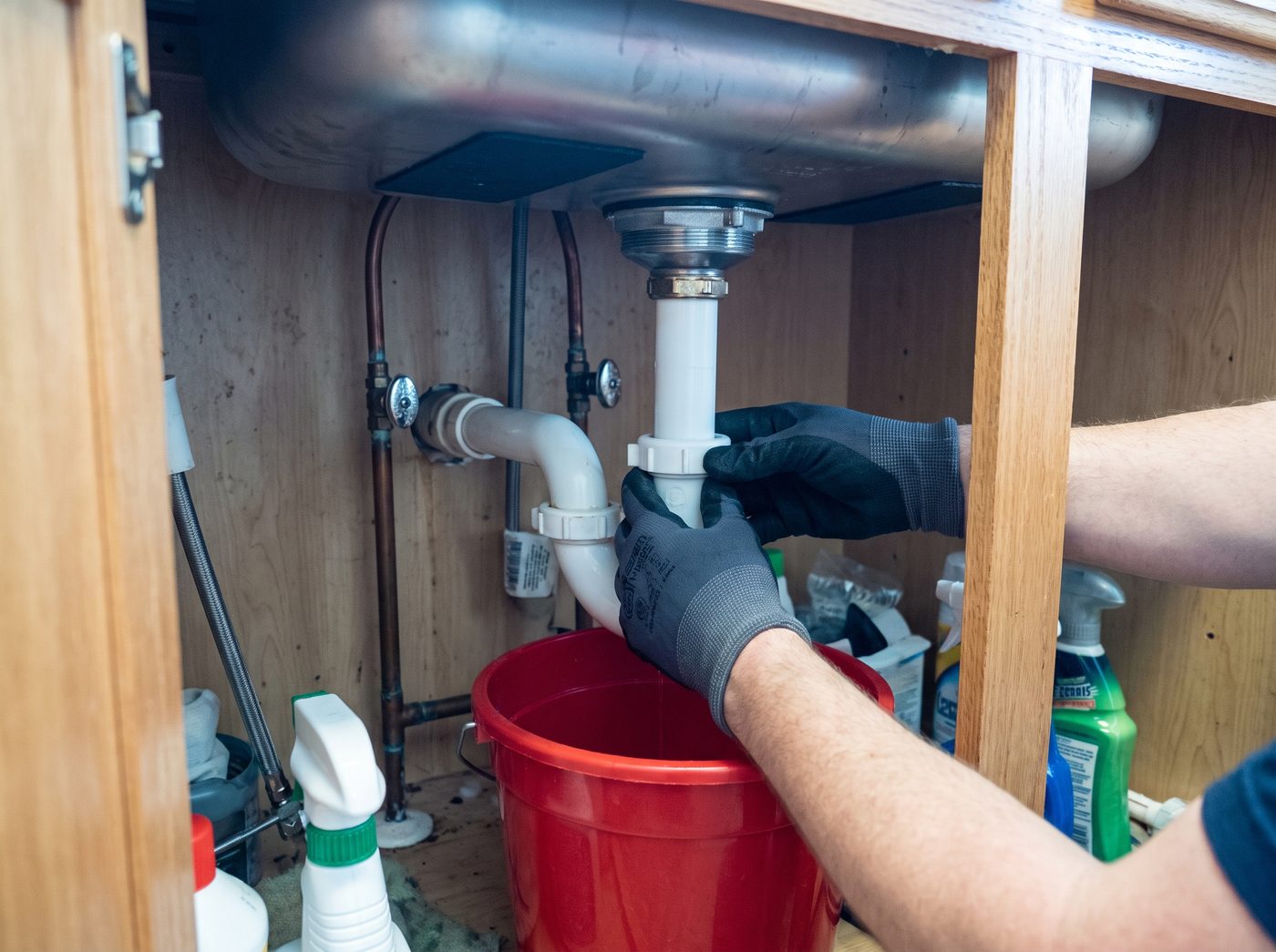
A kitchen sink that holds water is almost always blocked in the P-trap under the sink or the horizontal arm just behind it, and the blockage is almost always congealed grease with food caught in it. Both of those are reachable with a bucket and a pair of hands. The blockage being close by is why chemical cleaner is the wrong first move rather than merely an ineffective one.
- 01
Plunge it first, with the other side blocked
A flat cup plunger, not the toilet one. On a double sink, hold a wet cloth hard into the other drain, or you are just pushing water back and forth between the two bowls. Half fill the bowl so the cup seals, then pump firmly.
- 02
Try boiling water and dish soap
Squeeze a good amount of dish soap into the standing water, then pour a kettle of boiling water in slowly. Grease is what is holding this together and heat plus detergent is what breaks grease down.
Not on PVC waste pipes if you can avoid it, and never on porcelain that already has a crack. Very hot rather than furiously boiling is the safer version.
- 03
Put a bucket under the trap and open it
The U-bend under the sink has slip nuts at each end that usually turn by hand. Have the bucket in place before you loosen anything, because what comes out is the standing water plus whatever was in the trap.
- 04
Clean the trap out completely
Scrape it out rather than rinsing it. Grease reforms as it cools, so a trap that looks clear when it is warm and wet can be half blocked again by evening.
- 05
Check the arm going into the wall
If the trap was clear, the blockage is in the horizontal arm behind it. A small hand auger fed into that pipe will reach it. This is the point most people stop and call, and it is still well within homeowner range.
- 06
Reassemble and test properly
Hand tight, then a small nudge. Run hot water for a full minute with the bucket still underneath and look at every joint. Slip nuts weep when they are slightly out of line, and you want to find that now rather than through the cupboard floor in a week.
What it costs
| Cost | Source | |
|---|---|---|
| Plunger or hand auger | about $10 to $30 | |
| Basic drain cleaning, one fixture | $100 to $275 | |
| Kitchen sink specifically | $100 to $220 | |
| Multiple fixtures or the main line | $175 to $600 | |
| Plumber minimum call-out | $50 to $200 |
Every figure here is published by the source named beside it. We do not average them into a number of our own.
Where to stop
The trap and the arm are homeowner work. Past that it stops being your pipe alone.
- Other drains backing up when this one does
- The blockage is in the main line, not the sink. Clearing the sink will not touch it and pushing harder moves the problem to the lowest fixture in the house.
- You already poured chemical cleaner in
- Tell whoever comes out, before they open anything. Opening a trap full of caustic liquid onto someone’s hands is exactly why plumbers ask.
- A powered drain machine past the arm
- They snag, and when they snag in an old pipe they can split it. That turns a blocked drain into pipe replacement.
- Anything with a dishwasher connected and backing up
- It adds an air gap and a branch to the picture, and a dishwasher pumping into a blocked line puts water somewhere you cannot see.
Why it happened
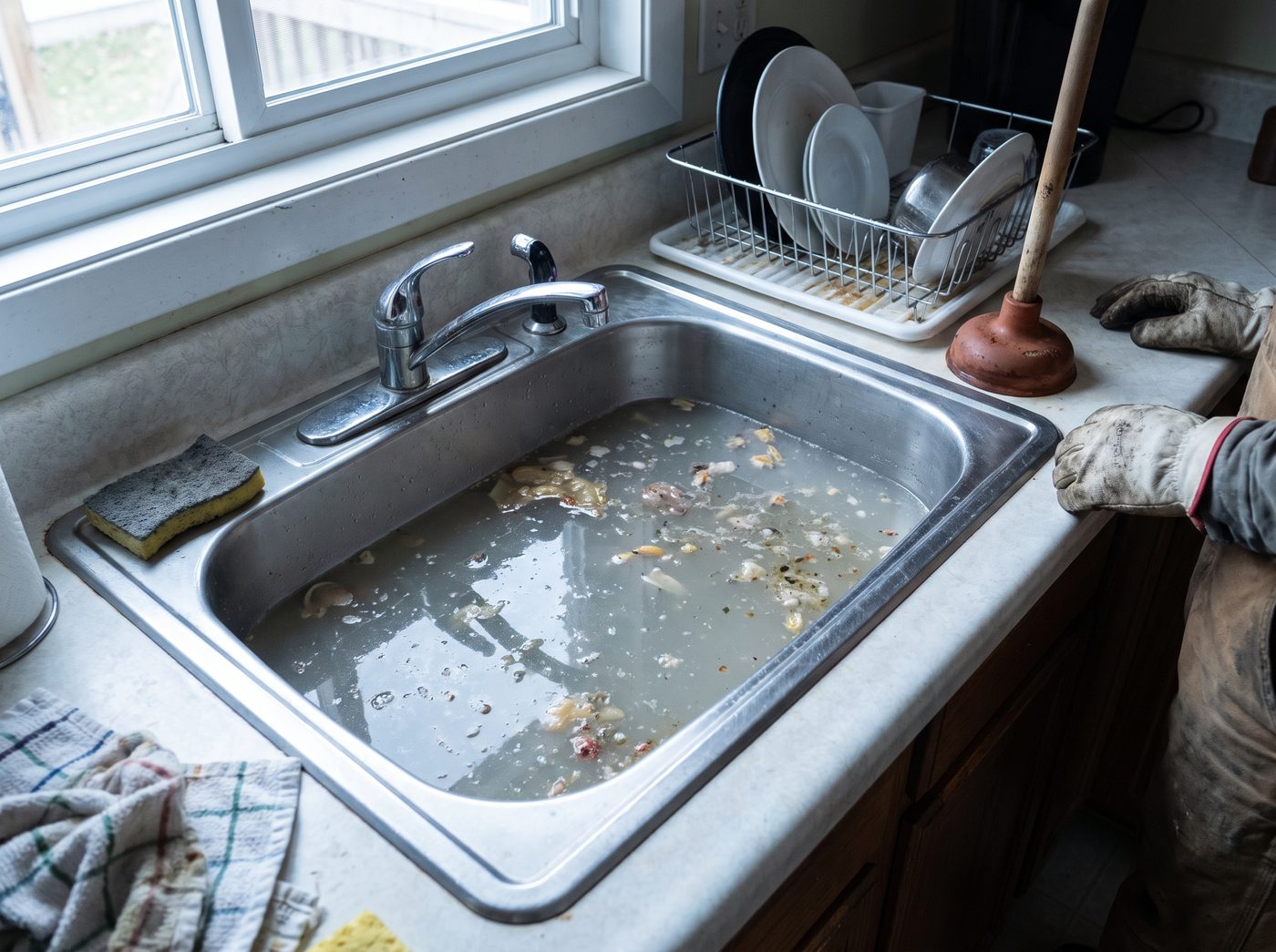
Grease goes down a kitchen drain as a liquid and stops being one about a metre along, where the pipe is cold. It coats the inside, the bore narrows over months, and then one ordinary evening a bit of food catches on it and the sink stops draining. The food gets the blame. The grease did the work.
What stops it happening again
Grease in the bin, not the drain, and hot water after anything oily. That is the whole prevention, and it is free. A drain strainer catches the food that eventually catches on the grease, which is the second half of the same problem.
- The part
- A basket strainer for the plughole, a couple of dollars, and an empty jar by the hob for pan fat.
- How often
- Hot water down the sink for thirty seconds after washing anything greasy. Empty the strainer daily. No cadence beyond that: this one is habit rather than maintenance.
Want the rest of the house covered?
One email a month, timed to the systems you actually have. The same kind of thing as the tablet: small, cheap, and it stops the call.
Also asked
- Should I use chemical drain cleaner on a kitchen sink?
- No. It often fails on congealed grease, and if it does you are then opening a trap full of caustic liquid. Boiling water with dish soap attacks the same blockage without that risk.
- Why does only one side of my double sink back up?
- They share a trap and an arm. Water pushed down one side comes up the other, which is also why plunging only works if you seal the second drain first.
- Is it the garbage disposal or the drain?
- If the disposal hums but does not turn it is jammed, which is a different fix. If it runs normally and the water still sits there, the blockage is downstream in the trap or the arm.
- Can I open the trap myself?
- Yes, and it is the step that actually solves most kitchen blockages. Bucket underneath first, slip nuts usually turn by hand, and scrape the trap out rather than rinsing it.
- When is it a plumber rather than a plunger?
- When other drains gurgle or back up at the same time, when the arm behind the trap is clear and it still blocks, or when it returns within weeks. All three mean the problem is further along than your sink.