Do this now
Pull the lint screen and look at the slot underneath it. If there is a felt mat of lint down there, the screen has been letting it past for a long time and the duct behind the dryer is worse.
Clothes not drying: the vent is the answer, and it is also a fire risk
Updated
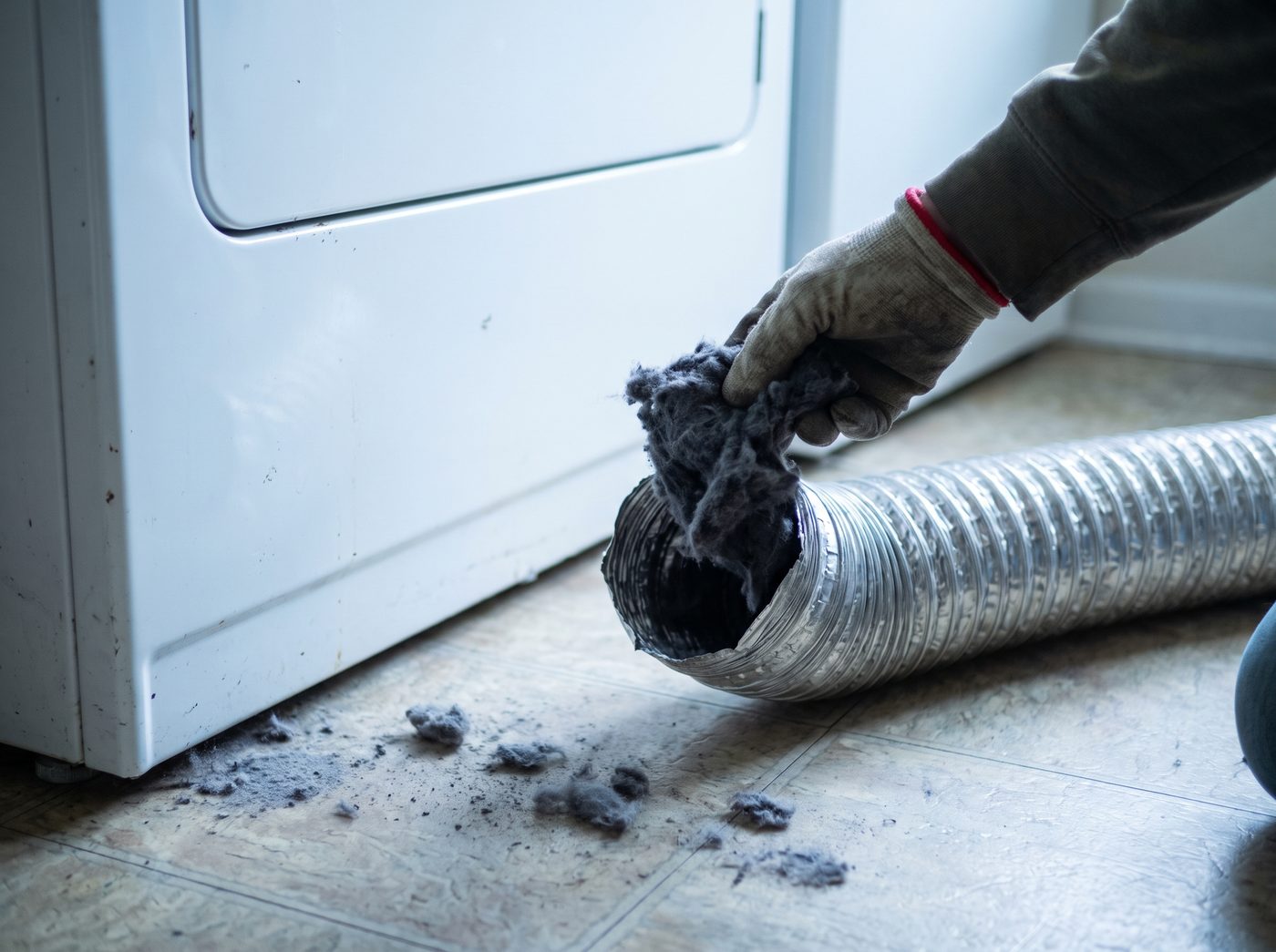
A dryer that needs two cycles is almost always a blocked vent rather than a dying dryer. Lint escapes past the screen, settles in the duct, and the machine cannot push moist air out. So it runs longer, gets hotter, and the clothes still come out damp. This is the one job on this site with a real safety argument behind it as well as a cost one.
- 01
Unplug it, and shut the gas off if it is a gas dryer
Everything below involves moving the machine and putting your hands where the duct connects. Do not do that with it live.
- 02
Clean the lint screen properly
If you use dryer sheets, the screen builds an invisible film that blocks air while looking clean. Run water onto it: if the water sits on top rather than passing through, scrub it with warm soapy water and a brush and let it dry.
- 03
Vacuum the screen housing
A narrow crevice tool down the slot the screen sits in. This is where the mat you found in step one lives, and most people have never been down there.
- 04
Pull the dryer out and disconnect the duct
Ease it forward, loosen the clamp, and pull the flexible duct off the outlet. Expect the first solid handful of lint to be at that joint. Vacuum the machine outlet and the first stretch of duct.
- 05
Clear the run itself
A rotary dryer vent brush on a drill goes through the duct from the dryer end. Work it in and out rather than driving it straight through, and keep the drill in forward: in reverse the brush unscrews and stays in the duct.
- 06
Do the outside vent hood too
Go outside and open the flap. Lint packs behind it and birds nest in it. Then reconnect, push the dryer back leaving a few inches so the duct is not crushed flat, and run a cycle. Put your hand at the outside hood: you should feel a strong warm flow.
What it costs
| Cost | Source | |
|---|---|---|
| Clear it yourself | about $15 to $40 for a rotary brush kit | |
| Professional vent cleaning | $80 to $185, averaging $130 | |
| Full air duct cleaning | $450 to $1,000 |
Every figure here is published by the source named beside it. We do not average them into a number of our own.
Where to stop
The duct behind the dryer is homeowner work. The rest of the run is not always.
- A run that goes up through a wall or across an attic
- You cannot reach it and cannot see what you are doing. This is precisely the case professional vent cleaning exists for, and where the money is well spent.
- A duct made of white vinyl or thin foil
- Those crush and they burn. Replacing it with rigid or semi-rigid metal is a code matter, not a preference, and worth having someone do properly.
- Anything to do with the gas connection
- Moving a gas dryer flexes the connector. If you smell gas at any point, leave and call the gas company from outside.
- A dryer that is hot to the touch or smells scorched
- Stop using it. A blocked vent plus a failed thermostat is the combination behind dryer fires, and that is not a load of laundry worth finishing.
Why it happened
Lint screens do not catch everything and were never meant to. What gets past settles wherever the air slows down, which is the joints and the bends. Nothing about that is a fault, and nothing about it announces itself. It shows up as drying times creeping from forty minutes to eighty over a couple of years, which is slow enough that nobody notices it happening.
What stops it happening again
Screen every load, housing every few months, full duct once a year. The annual clear is the one that matters, and doing it yourself costs a brush you buy once.
- The part
- A rotary dryer vent brush kit, roughly $15 to $40 at a hardware store, which pays for itself against a single professional visit at HomeGuide’s $80 to $185.
- How often
- Screen every load. Vacuum the screen housing quarterly. Clear the full duct annually, and sooner if drying times start creeping up.
Want the rest of the house covered?
One email a month, timed to the systems you actually have. The same kind of thing as the tablet: small, cheap, and it stops the call.
Also asked
- How do I know if my dryer vent is clogged?
- Clothes needing more than one cycle, the machine or the laundry hot to the touch at the end, a damp or musty smell, or weak airflow at the outside hood while it runs. Creeping drying times are the earliest sign.
- How often should a dryer vent be cleaned?
- Once a year for most households, more often with a long duct run, a large family, or pets. Screen every load regardless.
- Can I clean the dryer vent myself?
- The duct behind the dryer, yes, with a rotary brush kit. A run that goes up through a wall or across an attic is worth paying for, because you cannot see or reach what you are doing.
- Do dryer sheets block the lint screen?
- They can leave a film that blocks airflow while the screen still looks clean. Run water onto it. If the water pools rather than passing straight through, scrub it with warm soapy water.
- Is a clogged dryer vent actually a fire risk?
- Yes, and it is the reason this job is worth doing on a schedule rather than when you notice it. A blocked duct traps heat around highly flammable lint. A dryer that is hot to the touch or smells scorched should be taken out of service rather than run one more time.