Do this now
Take the cistern lid off and push the flapper down onto its seat with your hand. That stops water entering the bowl immediately, which is faster than finding the shutoff valve.
Toilet overflowing: stop it in ten seconds, then clear it
Updated
An overflowing toilet is almost always a blockage in the trap, and the water rising is the cistern still refilling into a bowl that cannot drain. Stop the water first, then clear the blockage. The order matters because one takes ten seconds and the other takes ten minutes, and only one of them is racing the floor.
- 01
Stop the water at the flapper
Lid off, reach in, press the rubber flapper down onto its seat. Your hand is in clean cistern water, not bowl water. This is the fastest stop available and it is why it comes before the valve.
- 02
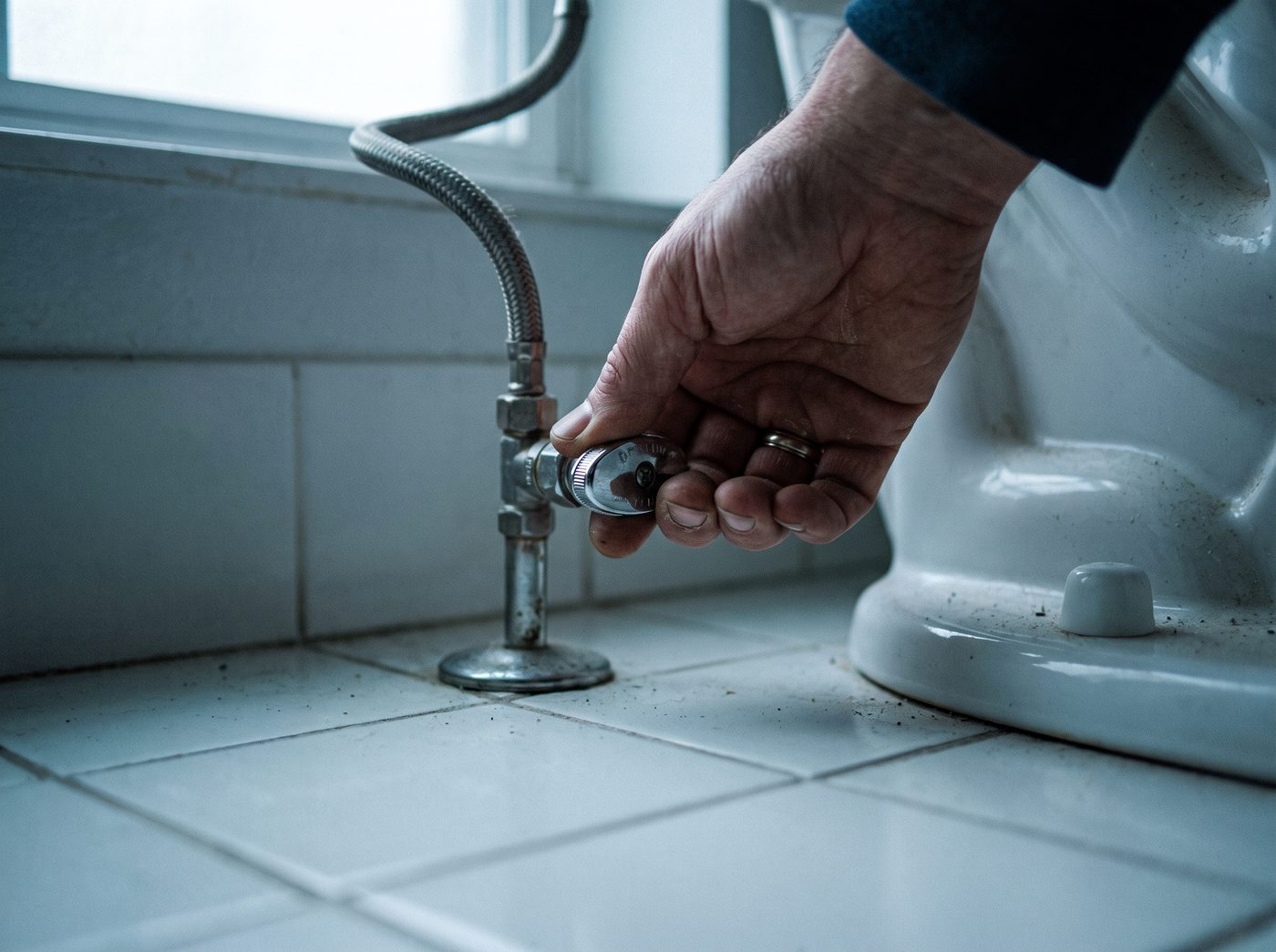
Then close the shutoff valve
Small oval handle on the wall or floor behind the toilet, clockwise until it stops. Now you can let go of the flapper and the bowl cannot refill while you work.
- 03
Let the level drop before you do anything
Give it ten minutes. Some water usually drains past a partial blockage on its own, and a bowl that is not full to the rim is a very different job. Bail some out with a jug if it has not moved.
- 04
Use a flange plunger, properly
The type with a soft rubber sleeve that folds out, not the flat cup for sinks. Seat it fully over the outlet, push down slowly to expel air, then pump hard and straight for fifteen to twenty seconds. The pull is what shifts the blockage as much as the push, so do not lift the seal between strokes.
- 05
If that fails, use an auger
A toilet auger is the one with a plastic sleeve on the shaft to protect the porcelain. Feed it in gently, crank, and expect either the resistance to break or the obstruction to come back with it. Do not use a drain snake meant for sinks: it will scratch or crack the bowl.
No chemical drain cleaner in a toilet. It rarely clears a solid blockage, and it leaves you plunging a bowl full of caustic liquid.
- 06
Test carefully
Open the valve, let the cistern fill, and flush once while watching the level. If it rises further than usual before draining, the blockage has moved but not cleared. Be ready to press that flapper again.
What it costs
| Cost | Source | |
|---|---|---|
| Plunger or toilet auger | about $10 to $30 | |
| Flat rate for a small job like a clogged drain | $75 to $250 | |
| Toilet repair | $100 to $300 | |
| Drain line repair | $100 to $800 | |
| Plumber minimum call-out, travel only | $50 to $150 |
Every figure here is published by the source named beside it. We do not average them into a number of our own.
Where to stop
One toilet blocking is a toilet problem. The signs below mean it is not.
- Other drains gurgle or back up when you flush
- The blockage is in the main line, not this toilet. Plunging it harder pushes sewage toward the lowest fixture in the house, which is usually a shower on the ground floor.
- Sewage coming up anywhere else
- That is a main line or septic problem and an urgent call. It is also a health matter rather than an inconvenience.
- It blocks repeatedly with normal use
- Something is structurally wrong: a partial obstruction further down, roots in the line, or a low-flow toilet fighting a long flat run. Worth diagnosing once rather than plunging monthly.
- Water appearing around the base of the toilet
- That is the wax seal, not the blockage. It means water is escaping under the toilet each flush and getting into the floor.
Why it happened
Modern low-flow toilets use a fraction of the water older ones did, and the drain runs in most houses were sized for the older ones. Less water carrying the same load down a long flat run is a marginal system by design, so it takes very little to tip it: too much paper, a wipe that claims to be flushable and is not, or something a child posted down there weeks ago.
What stops it happening again
Nothing goes down a toilet but the two things it was built for. Wipes are the single biggest cause of blockages that need an auger, including the ones sold as flushable: they pass the toilet and then stop in the run because they do not break up the way paper does.
- The part
- A flange plunger kept in the bathroom rather than the garage, roughly $10 to $30. The one you have to go and find is the one you do not use in time.
- How often
- No cadence. This is a habit rather than a task: no wipes, no cotton, no dental floss, and a bin in the bathroom so there is somewhere else for them to go.
Want the rest of the house covered?
One email a month, timed to the systems you actually have. The same kind of thing as the tablet: small, cheap, and it stops the call.
Also asked
- How do I stop a toilet overflowing right now?
- Take the cistern lid off and press the rubber flapper down onto its seat. That stops water entering the bowl instantly, and it is faster than finding the shutoff valve behind the toilet.
- What kind of plunger works on a toilet?
- A flange plunger, the one with a soft sleeve that folds out of the cup. The flat cup type is for sinks and cannot seal a toilet outlet, which is why it feels useless when you try.
- Should I use a chemical drain cleaner?
- No. It seldom clears a solid blockage and it leaves you plunging a bowl of caustic liquid that can splash. An auger does the job it cannot.
- Are flushable wipes actually flushable?
- They leave the toilet, which is all the label really claims. They do not break up like paper, so they stop further along the run and they are the most common cause of blockages that need an auger.
- Other drains gurgle when I flush. Does that matter?
- Yes, and it changes the answer. It means the blockage is in the main line rather than this toilet, and plunging harder pushes sewage toward the lowest fixture in the house. That is a call.