Do this now
Run the cold tap in the kitchen, then one upstairs, then a bathroom tap. One weak tap and the rest fine is a five minute fix. All of them weak is a different guide entirely, and it is below.
Low water pressure: one tap or all of them decides the whole answer
Updated
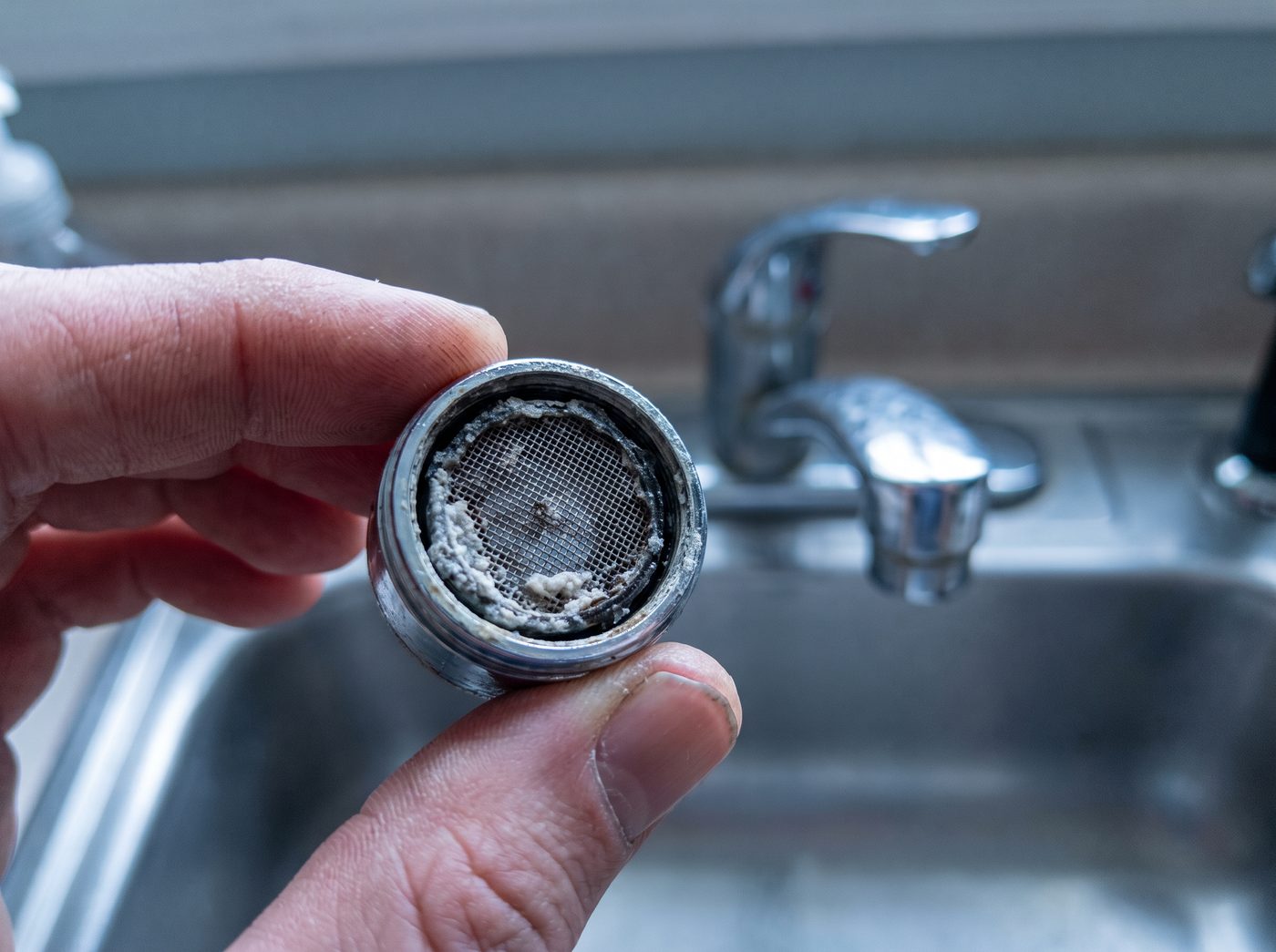
Low pressure at a single tap is nearly always a blocked aerator or a partly closed stop valve under the sink, and both cost nothing. Low pressure everywhere is the main shutoff not fully open, a pressure reducing valve failing, a leak somewhere you have not found, or a supply problem that is the utility’s. Doing the one tap test first saves you from chasing the wrong one.
- 01
Establish whether it is one tap or all
Hot and cold separately at three or four fixtures. Weak on hot only, everywhere, points at the water heater or its shutoff rather than the supply.
- 02
Unscrew the aerator on the weak tap
The mesh insert in the spout end, usually finger tight or a gentle turn with pliers and a cloth. Mineral scale and grit pack it solid over a couple of years. Soak it in white vinegar and brush it clean.
- 03
Check the stop valves under that fixture
Small oval handles on the supply lines. They get knocked half closed during cleaning or a previous repair. Open fully, then close a quarter turn back so they do not seize.
- 04
If it is everywhere, check the main shutoff
Where the supply enters the house. It is common for it to have been left partially closed after work was done, and the effect is exactly this. Fully open, gently.
- 05
Look for a pressure reducing valve
A bell-shaped brass fitting near the main, usually with an adjusting screw. They fail gradually and the pressure drop is house wide. Adjusting one is borderline homeowner work; replacing one is not.
- 06
Rule out a hidden leak, and rule out the street
Turn everything off in the house and watch the meter for fifteen minutes. Movement with nothing running means a leak. No movement, and the neighbours have the same problem, means it is the utility and the answer is a phone call rather than a plumber.
What it costs
| Cost | Source | |
|---|---|---|
| Clean an aerator yourself | nothing, or a bottle of white vinegar | |
| Plumber minimum call-out, travel only | $50 to $150 | |
| Plumber hourly, residential | about $70 per hour | |
| Finding and fixing a leak | $150 to $850 | |
| Pipe repair | $400 to $2,000 | |
| Plumbing work overall | $125 to $350, averaging $280 |
Every figure here is published by the source named beside it. We do not average them into a number of our own.
Where to stop
Aerators and valves are homeowner work. The rest earns its call out fee.
- The meter moving with everything off
- You have a leak running continuously somewhere you cannot see. That is a find-it-properly job, and it gets more expensive the longer it runs.
- Replacing a pressure reducing valve
- It is on the main under full pressure, and getting it wrong floods the space it is in.
- Old galvanised supply pipe
- It corrodes closed from the inside over decades, and the answer is repiping rather than a repair. Worth knowing before you spend money on anything else.
- Pressure that is too high rather than too low
- Above about 80 psi damages appliances and fittings, and it is a regulator problem, not something to live with.
Why it happened
Everything the water passes through gets slowly narrower. Aerators fill with the mineral that was dissolved in the water, valves seize part open, and old galvanised pipe corrodes inward until the bore is a fraction of what it was. None of it happens on a day you would notice. People routinely describe pressure that "suddenly" dropped over about four years.
What stops it happening again
Clean the aerators once a year, which takes ten minutes for a whole house and is the single most effective thing here. Know where your main shutoff is and that it is fully open. If you are on hard water, that is the whole battle, and it is worth knowing whether you are.
- The part
- White vinegar and an old toothbrush. Replacement aerators are a couple of dollars each if the mesh is beyond saving.
- How often
- Aerators once a year. Shower heads at the same time, the same way. Check the meter with everything off once a year as a leak test.
Want the rest of the house covered?
One email a month, timed to the systems you actually have. The same kind of thing as the tablet: small, cheap, and it stops the call.
Also asked
- Why is the water pressure low at only one tap?
- Almost always a blocked aerator or a stop valve under that fixture left partly closed. Both are free to fix and take a few minutes.
- Low pressure everywhere. Where do I start?
- The main shutoff, which is often left partly closed after work was done, then a pressure reducing valve if you have one, then a leak test at the meter with everything off.
- How do I test for a hidden leak?
- Turn everything off in the house and watch the water meter for fifteen minutes. Any movement means water is going somewhere you are not using it.
- Only the hot water is weak. What does that mean?
- Look at the water heater and its shutoff valve rather than the supply. Sediment and a partly closed valve on the heater both do this.
- Could it be the water company rather than my house?
- Yes, and it is worth checking before paying anyone. If the meter is still with everything off and neighbours have the same problem, it is a phone call rather than a plumber.