Do this now
If there is water on the floor around the tank, shut the water supply off at the valve above it before anything else. A weeping tank does not get better and a failed one empties eighty litres onto the floor.
No hot water: how to tell a cheap fix from a new water heater
Updated
Split the problem first, because it decides everything after it. No hot water at all usually means the heat source has stopped: a tripped breaker or failed element on an electric tank, a pilot or thermocouple on a gas one. Some hot water that runs out fast usually means the tank is full of sediment, or the thermostat is set low, or the tank is simply too small for what changed in your house. The first is often cheap. The second is often a habit.
- 01
Decide which problem you have
Run the hot tap and time it. Nothing hot at all, or hot for a few minutes and then cold? Write down which. Everything below forks on that answer.
- 02
Electric tank, no hot water: check the breaker
Water heaters usually sit on a double-pole breaker. Reset it once if it has tripped. There is often a red reset button on the upper thermostat behind the access panel too, and pressing it is reasonable homeowner work with the breaker off first.
- 03
Gas tank, no hot water: look at the burner
Modern gas heaters have a sight glass and a status light rather than a standing pilot. Follow the lighting instructions printed on the tank itself, not from memory and not from a video for a different model. If it lights and goes out repeatedly, that is usually the thermocouple.
- 04
Check the thermostat setting
Most tanks should sit at 120 degrees Fahrenheit. Lower and you run out sooner and encourage bacteria. Much higher and you are paying to store water hotter than anyone can use and risking scalds. If someone has turned it down, that alone explains a lot of not enough hot water.
- 05
Listen for sediment
Rumbling, popping or kettling from the tank is water boiling underneath a layer of settled mineral. That layer insulates the burner or element from the water it is supposed to heat, so you get less hot water and a bigger bill for it.
- 06
Flush the tank
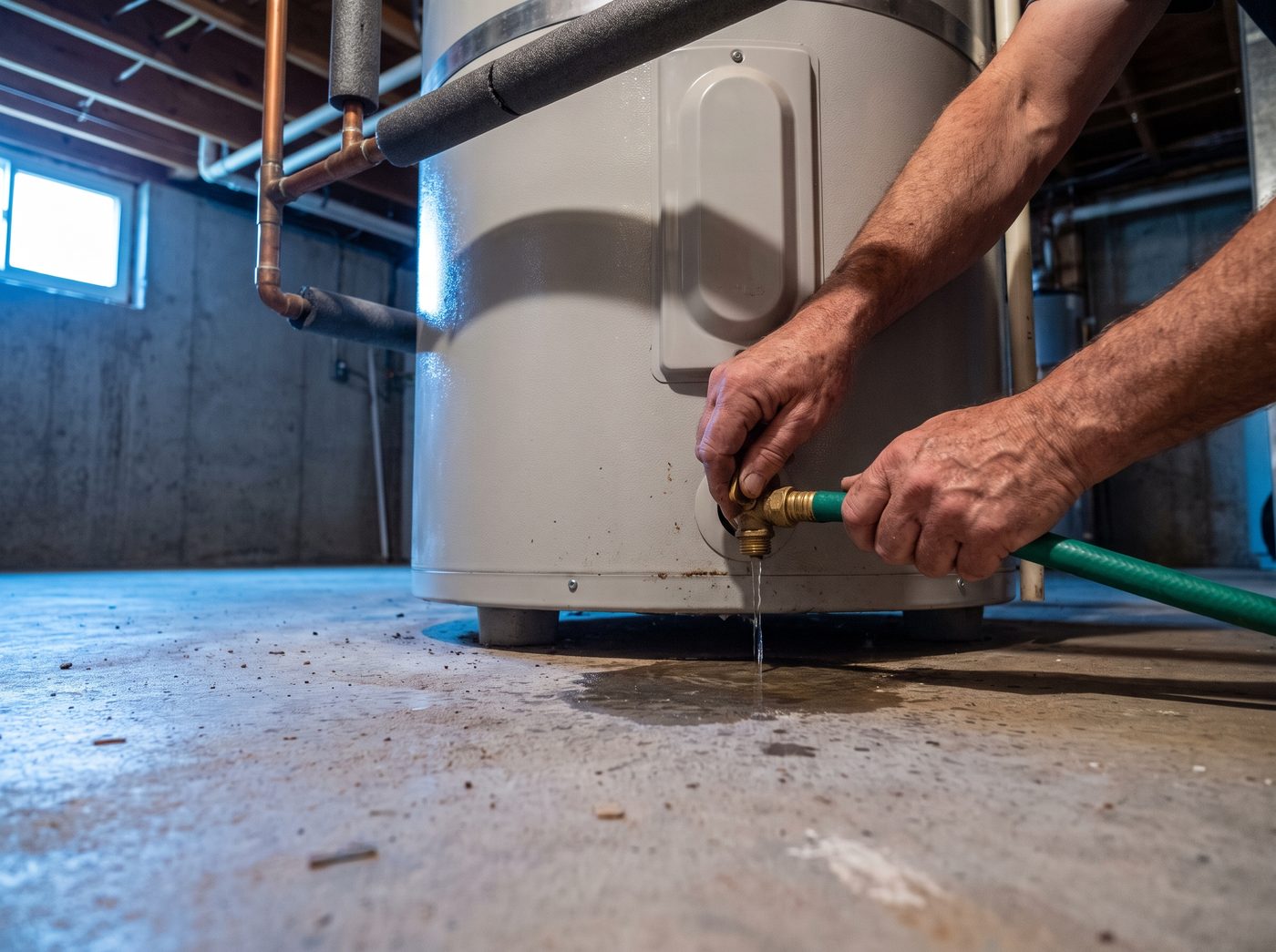
Power or gas off, cold supply off, hose on the drain valve, and run it out to a floor drain or outside until it runs clear. This is the maintenance job almost nobody does, and it is the one that decides whether a tank reaches its twelfth birthday.
The water leaving the tank is scalding. Run it somewhere it cannot reach anyone, and let the tank cool first if you can wait a couple of hours.
What it costs
| Cost | Source | |
|---|---|---|
| Flush it yourself | the cost of a garden hose | |
| Professional flush | $75 to $200 | |
| Thermocouple replacement | $100 to $325 fitted $10 to $30 for the part alone | |
| Heating element replacement | $100 to $350 | |
| Water heater repair overall | $150 to $700, averaging $455 | |
| Minimum service call-out | $50 to $200 |
Every figure here is published by the source named beside it. We do not average them into a number of our own.
Would a home warranty have covered this?
It is the question everyone asks standing in front of a bill this size, and the honest answer is that it depends entirely on the contract rather than on the failure. We do not sell these, take anything for recommending them, or run a page telling you to buy one. What we can do is point at what the consumer regulators say to check, with the repair cost sitting in the table above for comparison.
- They are service contracts rather than warranties, and they may duplicate cover you already have, cover only part of a product, or make repairs slow to get. FTC consumer alert
- Price the deductible and the per-visit service fee, not just the annual premium, and check the reimbursement limits and the cancellation terms. FTC consumer alert
- Find out exactly what you must do before the company will pay for a repair. Read that part before something breaks rather than after. NC Department of Justice
- Many contracts replace equipment only with a particular brand, or only if their own contractor does the work, and many require private arbitration instead of court. NC Department of Justice
Where to stop
Water heaters combine water, gas or high current, and a pressure vessel. The list of things to leave alone is short and firm.
- Any smell of gas
- Leave and call the gas company from outside. Not the plumber first.
- The temperature and pressure relief valve discharging
- That valve is the reason the tank is not a bomb. If it is releasing, the tank is over temperature or over pressure and that is an emergency, not a dripping valve to be capped.
- A tank leaking from the body rather than a fitting
- A leaking tank is not repairable. It is corroded through, and the only question left is whether you replace it before or after it empties itself onto the floor.
- Replacing a gas control valve or an element you cannot isolate
- Both are doable and both punish a mistake with either gas or water at mains pressure, which is why plumbers exist.
Why it happened
Every tank slowly fills with mineral that arrived dissolved in the water and settled out when it was heated. The layer grows for years without any symptom at all, then shows up as showers that run cold sooner and a bill that crept up so gradually you never attributed it to anything. Nothing failed. The tank has been quietly getting worse at its job since it was installed.
What stops it happening again
A flush once a year clears the sediment before it insulates the heat source, and the anode rod is the part that corrodes so the tank does not. Replacing a rod is unglamorous and it is the difference between a tank that lasts eight years and one that lasts fifteen.
- The part
- A garden hose for the flush, which you already own, and eventually a replacement anode rod. HomeGuide puts a thermocouple, the other common consumable, at $10 to $30 for the part.
- How often
- Flush once a year. Check the anode rod at around year three and every couple of years after. Test the T and P valve annually by lifting the lever briefly.
Want the rest of the house covered?
One email a month, timed to the systems you actually have. The same kind of thing as the tablet: small, cheap, and it stops the call.
Also asked
- Can I flush my water heater myself, and how?
- Yes. Power or gas off, cold supply off, garden hose on the drain valve, and run it until the water is clear. Let the tank cool first if you can, because what comes out otherwise is scalding.
- What signs mean my water heater needs flushing now?
- Rumbling or popping from the tank, hot water running out sooner than it used to, or sediment in the water from the hot tap. Rumbling is water boiling under a layer of settled mineral.
- How do I tell a cheap repair from a dead tank?
- Where the water is coming from. A leak at a fitting or the drain valve is a repair. Water from the body of the tank means it has corroded through, and no repair puts that back.
- What temperature should the tank be set to?
- 120 degrees Fahrenheit suits most homes. It is hot enough to be useful and to discourage bacteria, and not so hot that it scalds or wastes money keeping water hotter than anyone will use.
- How often should a water heater be flushed?
- Once a year for a tank heater. Tankless units want a flush and descale at least annually too, and HomeGuide notes most tankless repairs are avoidable by doing it.