Do this now
Shut the cold water supply off at the valve on top of the tank, and kill the power at the breaker or set a gas heater to pilot. Then find where the water is coming from, because that is the whole diagnosis.
Water heater leaking: which leaks are a repair and which mean a new tank
Updated
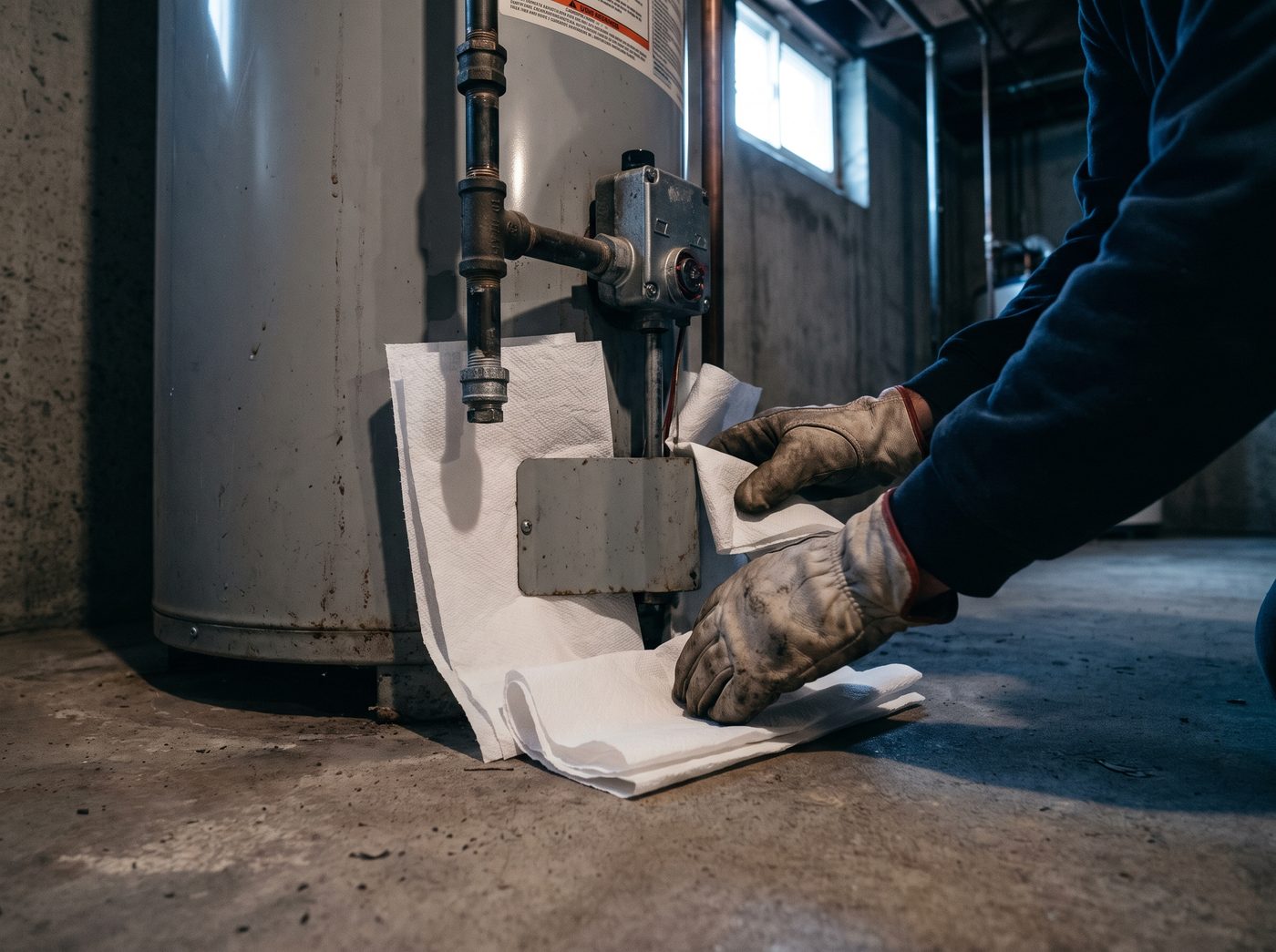
Almost every water heater leak is one of four things, and they have wildly different prices. A drain valve that is dripping, a fitting or supply connection at the top, the temperature and pressure relief valve discharging, or the tank itself corroded through. The first two are cheap repairs. The third is a warning about something else. The fourth is a new water heater, and no amount of sealant changes that.
- 01
Shut off the water and the heat
Cold supply valve on top of the tank, clockwise until it stops. Electric: the double-pole breaker off. Gas: the control to PILOT rather than OFF, which saves relighting if it turns out to be nothing.
- 02
Dry everything and put paper down
Towel the tank and the floor completely dry, then lay newspaper or kitchen paper around the base and under the fittings. Give it an hour. Water travels along pipes and down the outside of a tank, so where you first saw it is often not where it came from. The paper tells you the truth.
- 03
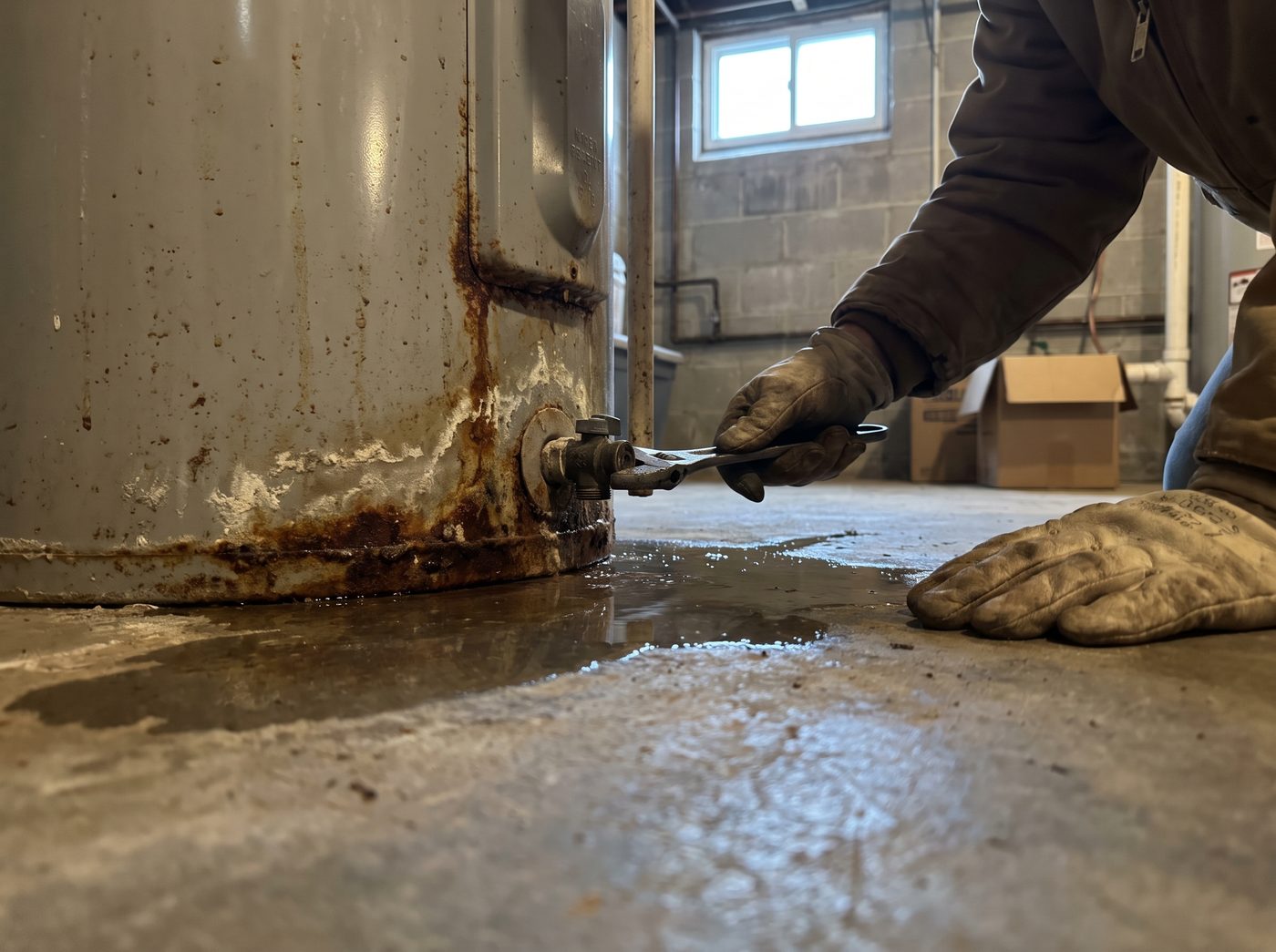
Check the drain valve
Bottom of the tank, where a hose would attach. A slow drip here is the most common and cheapest leak, and often it is just not fully closed. If closing it does not stop the drip, the valve is worn and it is a replaceable part.
- 04
Check the connections on top
Inlet and outlet fittings. A leak here runs down the outside of the tank and pools at the base, which is exactly what a failed tank looks like from across the room. Worth ruling out before assuming the worst.
- 05
Check the T and P valve
The temperature and pressure relief valve is the one with a lever and a pipe running down toward the floor. If water is coming from that pipe, the valve is doing its job because something else is wrong: excess pressure or excess temperature. Do not cap it and do not ignore it.
A discharging T and P valve is the tank telling you it is over pressure or over temperature. That is the safety device working, not the fault.
- 06
Look at the tank body itself
Rust streaks and mineral crust running down from a seam, with wet paper directly beneath and dry paper at every fitting, means the tank has corroded through. That is not repairable. Leave the water off and start pricing a replacement rather than a repair.
What it costs
| Cost | Source | |
|---|---|---|
| Plumber minimum call-out, travel only | $50 to $150 | |
| Plumber hourly, residential | about $70 per hour | |
| Fixing a leak | $150 to $850 | |
| Bigger water heater work | $500 to $800 | |
| Plumbing work overall | $125 to $350, averaging $280 |
Every figure here is published by the source named beside it. We do not average them into a number of our own.
Would a home warranty have covered this?
It is the question everyone asks standing in front of a bill this size, and the honest answer is that it depends entirely on the contract rather than on the failure. We do not sell these, take anything for recommending them, or run a page telling you to buy one. What we can do is point at what the consumer regulators say to check, with the repair cost sitting in the table above for comparison.
- They are service contracts rather than warranties, and they may duplicate cover you already have, cover only part of a product, or make repairs slow to get. FTC consumer alert
- Price the deductible and the per-visit service fee, not just the annual premium, and check the reimbursement limits and the cancellation terms. FTC consumer alert
- Find out exactly what you must do before the company will pay for a repair. Read that part before something breaks rather than after. NC Department of Justice
- Many contracts replace equipment only with a particular brand, or only if their own contractor does the work, and many require private arbitration instead of court. NC Department of Justice
Where to stop
Finding the source is homeowner work. Most of what follows from it is not.
- Any smell of gas
- Leave and call the gas company from outside, before the plumber.
- A T and P valve that is discharging
- The tank is over pressure or over temperature. That is an urgent call, and the one thing you must never do is cap the pipe to stop the mess.
- A leak from the body of the tank
- Corroded through. No repair puts steel back, and a tank that is weeping today can open up completely.
- Replacing the tank yourself
- It combines gas or high current, water at mains pressure, and a heavy object down a set of stairs. This is the job plumbers are for.
Why it happened
Tanks fail from the inside. The anode rod is a sacrificial piece of metal that corrodes so the steel does not, and once it is used up the tank starts corroding instead. That takes years and gives almost no warning, which is why water heaters so often fail all at once and always seem to do it while nobody is home.
What stops it happening again
The anode rod is the whole story. Checking it every few years and replacing it when it is spent is the difference between a tank that reaches eight years and one that reaches fifteen. A drip tray with a drain under the tank does not prevent anything, but it decides whether the failure is an inconvenience or a flooded floor.
- The part
- A replacement anode rod, and a drip pan plumbed to a drain if the tank sits anywhere water would do damage.
- How often
- Check the anode rod at year three, then every two years. Flush annually. Lift the T and P lever briefly once a year to confirm it is not seized.
Want the rest of the house covered?
One email a month, timed to the systems you actually have. The same kind of thing as the tablet: small, cheap, and it stops the call.
Also asked
- Is a leaking water heater an emergency?
- A drip from the drain valve is not. Water from the body of the tank is urgent, because a tank that is weeping can fail completely and empty itself. Shut the cold supply off either way.
- How do I tell where a water heater is leaking from?
- Dry everything, lay paper around the base and under the fittings, and wait an hour. Water runs down the outside of a tank, so the paper tells you the source and your eyes usually do not.
- Can a leaking water heater tank be repaired?
- No. A leak from the tank body means it has corroded through from the inside, and there is nothing to seal against. Fittings and valves are repairable; the tank is not.
- Why is water coming out of the pipe near the top?
- That is the temperature and pressure relief valve discharging, which means the tank is over pressure or over temperature. It is the safety device working. Call someone and never cap that pipe.
- How long should a water heater last?
- Most tanks are expected to run somewhere around a decade, and the anode rod is the single biggest factor in which end of that range you get.