Do this now
Dry the floor completely, then do not use that toilet for an hour and look again. Whether the water comes back without flushing decides which of three very different problems you have.
Toilet leaking at the base: condensation, a loose bolt, or the wax seal
Updated
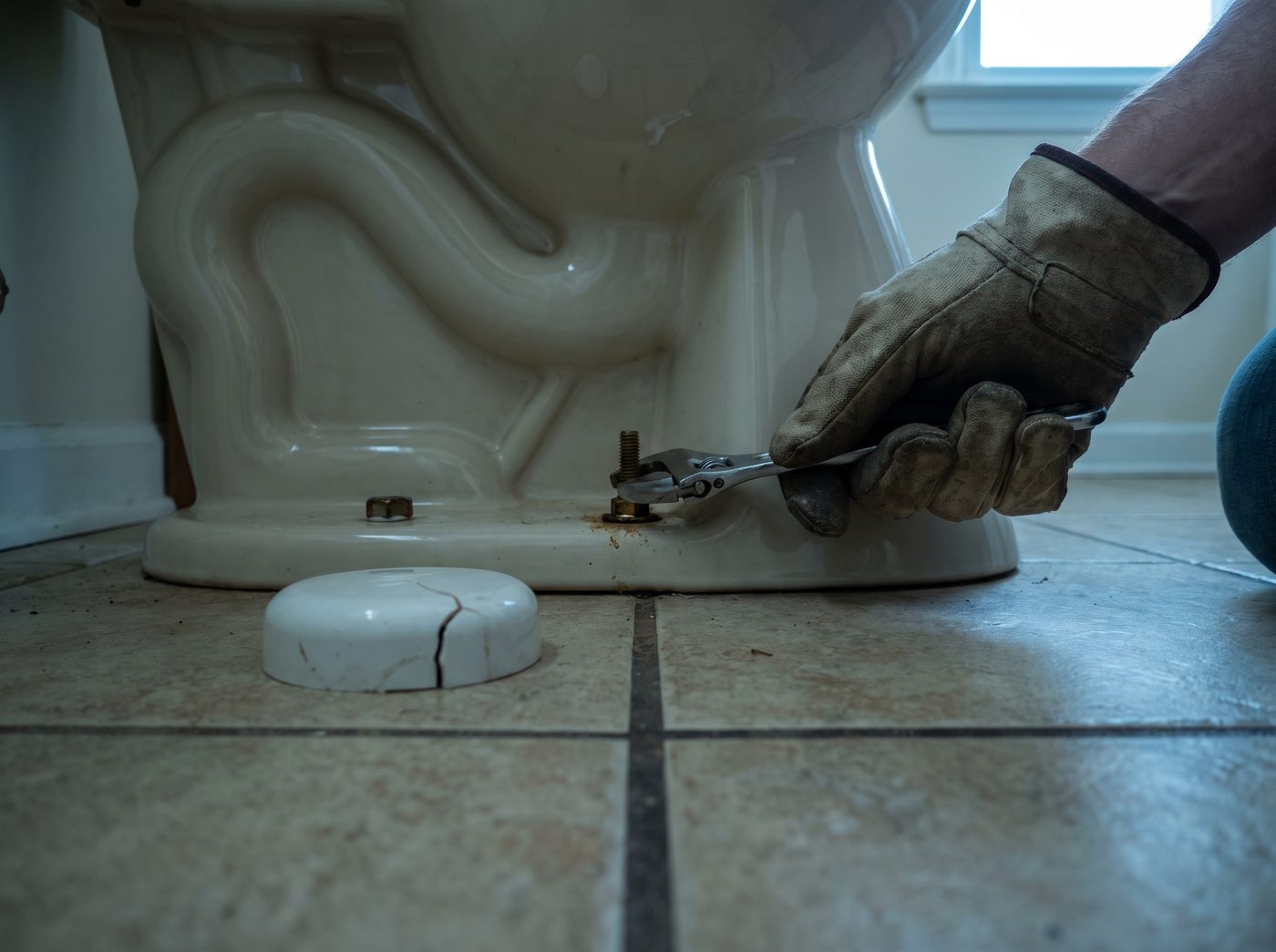
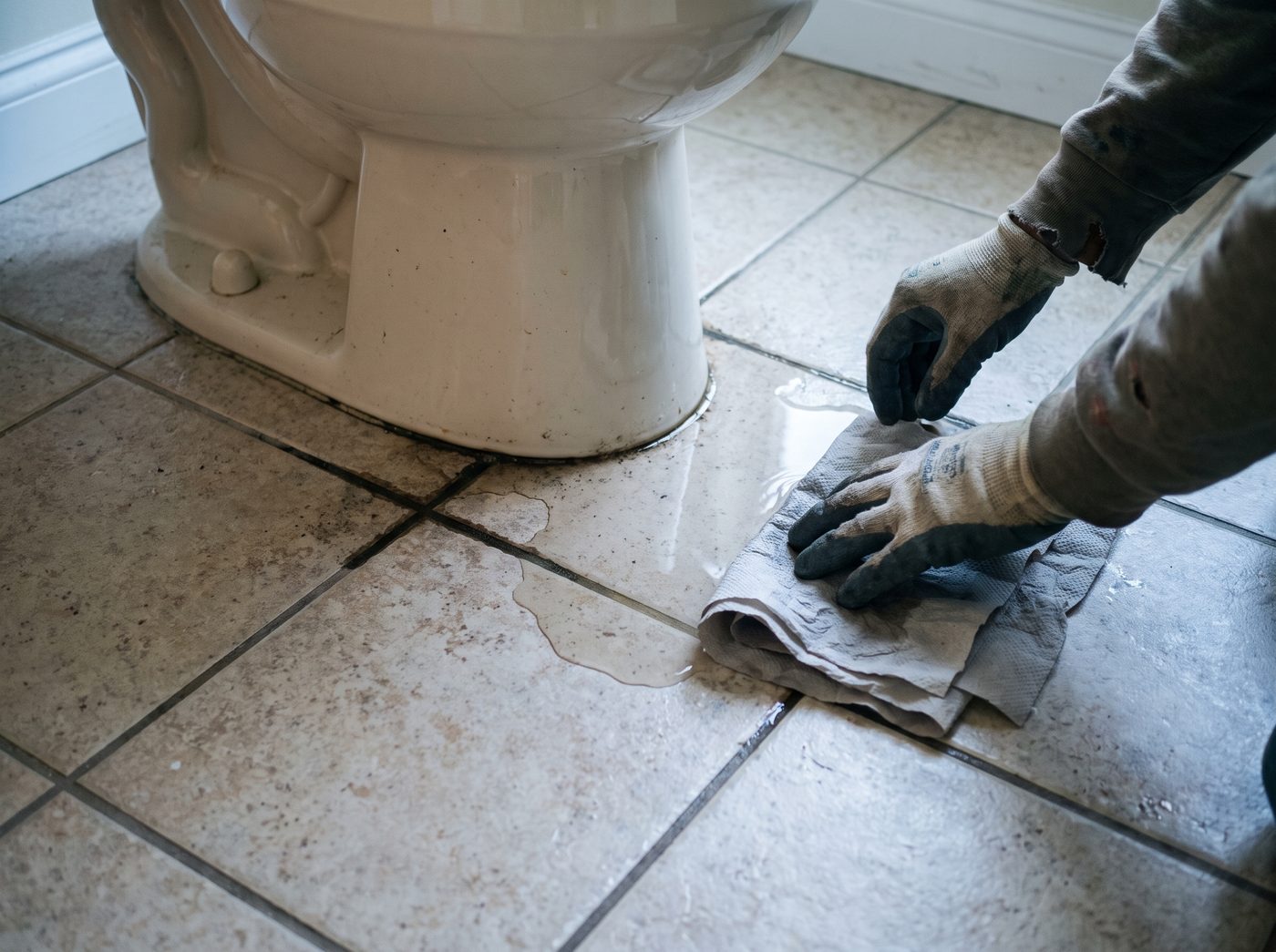
Water at the base of a toilet is condensation off a cold cistern, a leak from the supply connection running down, or a failed wax seal under the toilet. The test that separates them is simple: condensation appears in humid weather and covers the whole tank, a supply leak drips continuously whether or not you flush, and a wax seal failure appears only after a flush. Only the third one means water is getting into your floor.
- 01
Dry everything and wait
Towel the tank, the base and the floor completely dry. Leave it an hour without flushing. Water back with no flush points at condensation or the supply. Dry floor points at the wax seal.
- 02
Feel the tank
A cold sweating tank in a humid bathroom drips onto the floor and looks exactly like a leak. If the whole outside of the tank is beaded with moisture, that is what you have, and it is the good outcome.
- 03
Check the supply line and the shutoff
Run a dry tissue around the connection at the wall, at the valve, and where the line meets the tank. A slow weep at a fitting runs down and pools at the base, which is why it gets mistaken for the seal.
- 04
Flush and watch the floor
With everything dry, flush once and watch the join between the ceramic and the floor. Water appearing there right after a flush is the wax seal, because that is the only moment water passes through it.
- 05
Try the closet bolts before anything drastic
The two bolts at the base, under the caps. If the toilet rocks, snug them a little, alternating sides, gently. A rocking toilet breaks the seal, and sometimes stopping the rock is all it needed.
Gently is the whole instruction. These bolts pull into ceramic and it cracks without warning. A little more than hand tight, no further.
- 06
Decide about the seal
If it is the wax seal, the fix is to lift the toilet, scrape the old wax off the flange, fit a new seal and set it back down. It is genuinely doable and it is also heavy, awkward and unforgiving of a mistake. Knowing what it is has value even if you hand it over.
What it costs
| Cost | Source | |
|---|---|---|
| Wax ring | about $5 to $15 | |
| Toilet repair | $100 to $300 | |
| Plumber minimum call-out, travel only | $50 to $150 | |
| Plumber hourly, residential | about $70 per hour | |
| If the subfloor has rotted | $1,500 to $5,000, at Class 2 water damage |
Every figure here is published by the source named beside it. We do not average them into a number of our own.
Where to stop
The diagnosis is homeowner work. The repair is a fair place to stop, and one thing here is genuinely urgent.
- The floor around the toilet feels soft or springy
- The subfloor is rotting, which means this has been leaking for a long time. That is a floor repair with a toilet on top of it, not a seal.
- A flange that is cracked or below floor level
- A new seal on a broken flange fails again quickly. Fixing the flange is a different job and it is the one that actually matters.
- Sewage smell alongside the water
- The seal is doing nothing at all, and sewer gas is entering the room.
- Lifting the toilet if you are unsure you can set it back
- A misaligned reseat crushes the wax unevenly and leaks straight away, and you will not know until it has been leaking under the floor for weeks.
Why it happened
The wax seal is a ring of soft wax squashed between the toilet and the drain flange, and it works by being permanently compressed. Anything that lets the toilet move breaks that compression: a loose bolt, an uneven floor, or a hundred small shifts from people sitting down. It rarely fails on its own. It fails because the toilet started rocking and nobody noticed.
What stops it happening again
A toilet that does not move does not break its seal. Put a hand on the bowl and rock it gently every few months, and deal with any movement while it is still just movement. That is the entire prevention and it takes five seconds.
- The part
- Nothing, usually. If it does rock and the bolts are already snug, plastic shims under the base cost a couple of dollars and stop it.
- How often
- Check for rock every few months and any time the bathroom floor is redone. Look at the base whenever you clean it.
Want the rest of the house covered?
One email a month, timed to the systems you actually have. The same kind of thing as the tablet: small, cheap, and it stops the call.
Also asked
- How do I know if it is the wax ring or condensation?
- Dry everything and wait an hour without flushing. Condensation returns on its own and beads the whole tank. A wax seal leak only appears after a flush.
- Is a toilet leaking at the base urgent?
- If it is the wax seal, yes, because the water is going into the floor rather than onto it. A soft or springy floor means it has been going on long enough to become a subfloor problem.
- Can I just caulk around the base?
- No. Caulk seals water in rather than out, so a wax seal leak carries on rotting the floor invisibly. Caulking is done after a repair, not instead of one.
- Why does my toilet rock?
- Loose closet bolts or an uneven floor. Either way the rocking is what breaks the wax seal, so stopping the movement is the actual fix and the new seal is the consequence.
- How much does replacing a wax ring cost?
- The ring is a few dollars. HomeGuide puts toilet repair at $100 to $300 with a minimum call-out of $50 to $150, and the labour is what you are paying for.