Do this now
If you can smell gas, stop. Leave the house, and call your gas company from outside. Everything else on this page waits.
Furnace will not turn on: what to check before you call anyone
Updated
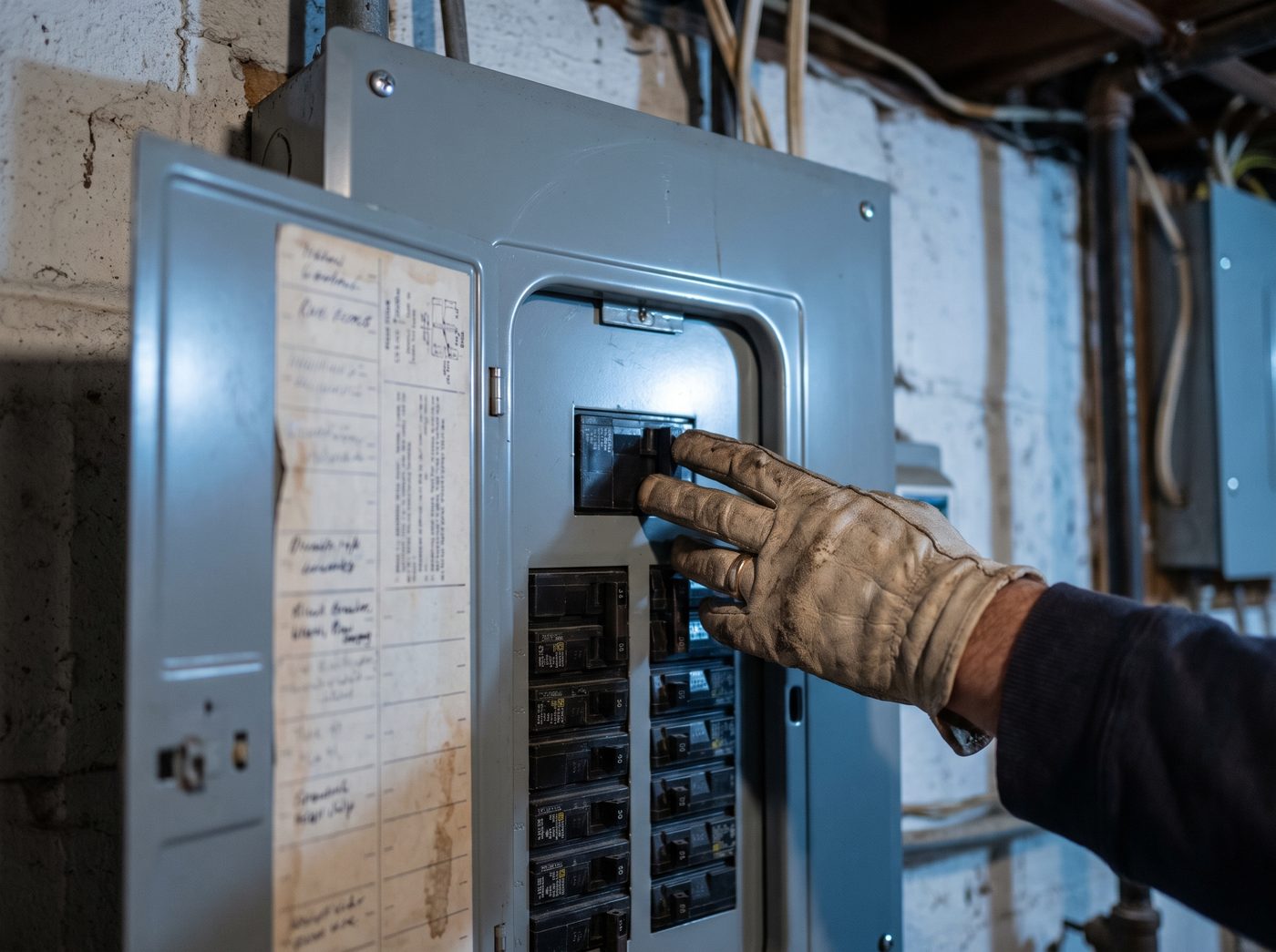
A furnace that will not start is most often not the furnace. It is the thermostat not calling for heat, the service switch beside the unit knocked off, a tripped breaker, or a filter blocked enough to trip the limit switch. Work those four before you touch anything inside the cabinet, because they are free and they are what a technician checks first anyway.
- 01
Confirm the thermostat is calling for heat
Set to HEAT, target several degrees above the room reading. Replace the batteries if it takes them. A blank or frozen thermostat is a thermostat problem, not a furnace problem.
- 02
Find the furnace switch
It looks exactly like an ordinary light switch, usually on or beside the furnace or at the top of the basement stairs, and it is often unlabelled. It gets switched off by decorators, by people carrying things, and by anyone who assumed it was a light. Check it before anything else in the cabinet.
- 03
Check the breaker, once
Find the furnace breaker and reset it if it has tripped. Once. If it trips again immediately, stop and call someone: a breaker doing its job twice is reporting a fault, not being fussy.
- 04
Pull the filter
A badly blocked filter overheats the heat exchanger and the limit switch shuts the furnace down to protect it. That is the system working correctly. If the filter is grey, replace it and try again.
- 05
Read the blink code
Most furnaces have a small viewing window with an LED behind it. It blinks a pattern, and the legend is printed on the inside of the access panel. Count the blinks and read the panel before you conclude anything. This one step turns guessing into diagnosis, and it is free.
- 06
Consider the flame sensor
If the furnace lights and then shuts down after a few seconds, repeatedly, a dirty flame sensor is the classic cause. It is a thin metal rod in the burner path that gets an oxide film on it. Cleaning it is within reach for a confident homeowner with the power and gas off, and it is entirely reasonable to decide it is not.
Power off at the switch and the breaker, and gas off at the valve, before the access panel comes off. If any part of that sentence is unfamiliar, this is the point to call someone.
What it costs
| Cost | Source | |
|---|---|---|
| Service call, per hour | $75 to $150 | |
| After hours or holiday, per hour | $140 to $210 | |
| Ignitor replacement | $100 to $250 | |
| Flame sensor replacement | $80 to $250 |
Every figure here is published by the source named beside it. We do not average them into a number of our own.
Would a home warranty have covered this?
It is the question everyone asks standing in front of a bill this size, and the honest answer is that it depends entirely on the contract rather than on the failure. We do not sell these, take anything for recommending them, or run a page telling you to buy one. What we can do is point at what the consumer regulators say to check, with the repair cost sitting in the table above for comparison.
- They are service contracts rather than warranties, and they may duplicate cover you already have, cover only part of a product, or make repairs slow to get. FTC consumer alert
- Price the deductible and the per-visit service fee, not just the annual premium, and check the reimbursement limits and the cancellation terms. FTC consumer alert
- Find out exactly what you must do before the company will pay for a repair. Read that part before something breaks rather than after. NC Department of Justice
- Many contracts replace equipment only with a particular brand, or only if their own contractor does the work, and many require private arbitration instead of court. NC Department of Justice
Where to stop
Gas appliances have a shorter homeowner list than most things in a house, and the reasons are not administrative.
- Any smell of gas
- Leave and call the gas company from outside. They come out for this and they generally do not charge for it.
- The gas valve, burners or heat exchanger
- A cracked heat exchanger leaks combustion gases including carbon monoxide into the house, and it is not visible to an untrained eye. This is the reason furnaces get inspected rather than just repaired.
- A breaker that trips twice
- Something downstream is drawing current it should not. Resetting it repeatedly removes the protection without removing the fault.
- Anything behind the burner assembly
- Reassembly matters as much as disassembly here, and the failure mode is not a furnace that does not work. It is one that works wrongly.
Why it happened
Furnaces fail on the first genuinely cold night, which feels like bad luck and is not. They sit unused for months, dust settles on the flame sensor and in the filter, and then the system is asked to run hard for the first time since spring. Nothing broke in the night. It stopped being ready some time in August.
What stops it happening again
Run the heat for twenty minutes in early autumn, before you need it. If it is going to fail it fails then, in daylight, when technicians are not booked three days out and not charging the after-hours rate. This is the single highest return habit on this site and it costs nothing at all.
- The part
- A clean filter going into the heating season, and a working carbon monoxide alarm on every floor with a gas appliance. The alarm is not optional and it is not expensive.
- How often
- Test the heat in early October. Filter every 90 days through the season. Replace CO alarms on the date printed on the back, not when they chirp.
Want the rest of the house covered?
One email a month, timed to the systems you actually have. The same kind of thing as the tablet: small, cheap, and it stops the call.
Also asked
- Is the thermostat set correctly and calling for heat?
- Set it to HEAT and several degrees above the current room reading, and change the batteries if it takes them. You should hear the furnace respond within a minute. No response at all points at power rather than the thermostat.
- Should I check the furnace filter or air vents first?
- Filter first. A blocked filter can shut the furnace down through the limit switch, which looks exactly like a furnace that will not start. Closed vents in a few rooms rarely stop it starting.
- How do I safely check the breaker or furnace switch?
- The switch is the one that looks like a light switch near the unit: just turn it on. For the breaker, reset a tripped one once. If it trips again immediately, leave it off and call someone.
- What furnace error lights or codes should I look for?
- Most furnaces blink a code through a small window on the cabinet, and the legend is printed inside the access panel. Count the blinks, read the legend, and you will know whether you are looking at an ignition fault, a pressure switch, or a limit trip before anyone arrives.
- When is it time to call an HVAC technician?
- Any gas smell, a breaker that trips twice, a blink code pointing at the gas valve or pressure switch, or a furnace that lights and drops out repeatedly after you have cleaned the flame sensor.