Do this now
Do not walk into standing water in a basement until the power to that space is off at the panel. If the panel itself is in the water, do not go near it. Call the utility.
Water in the basement: what to do first, and what it costs to get wrong
Updated
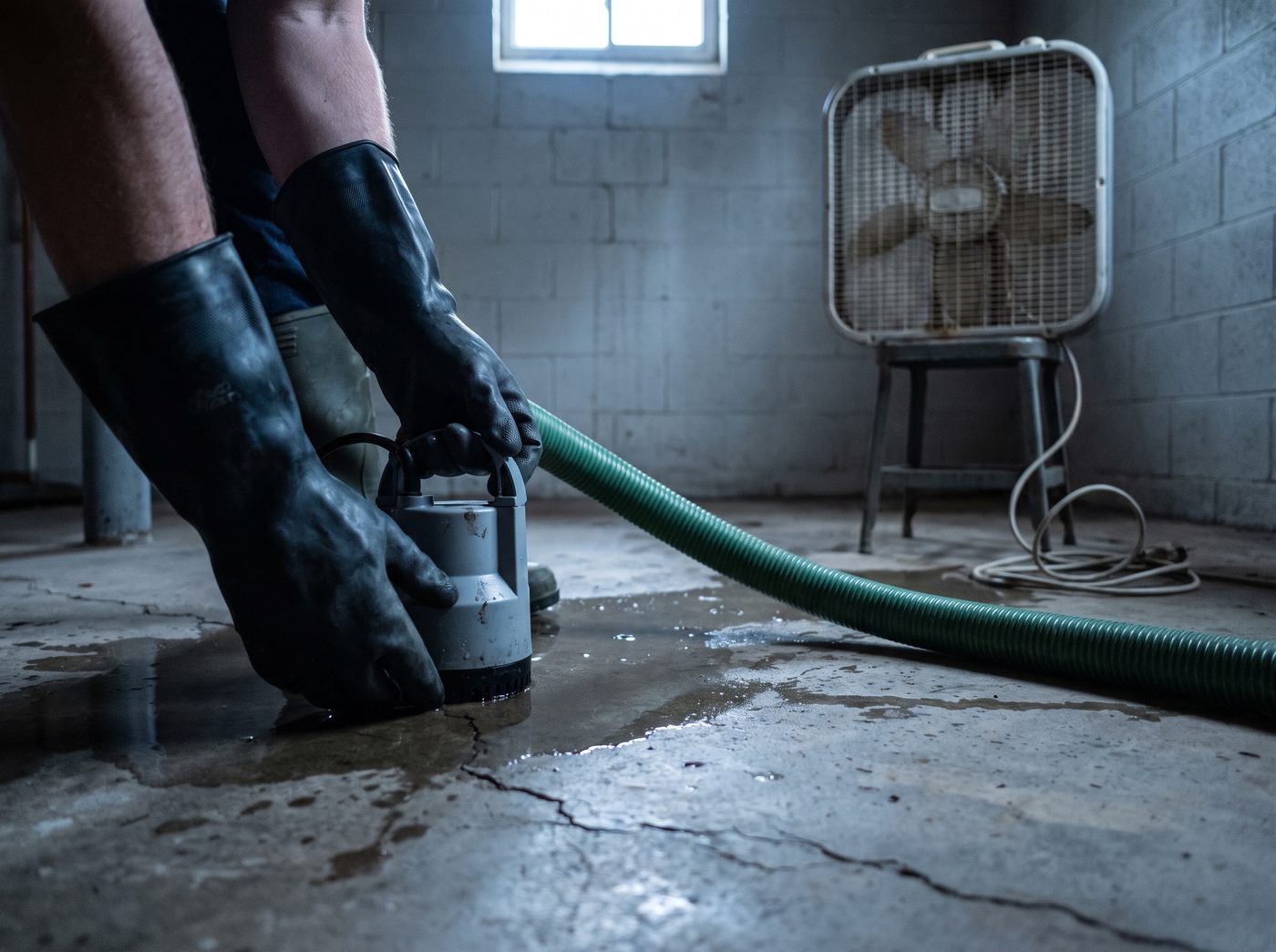
Water in a basement is an electrical problem first, a health problem second and a building problem third, and dealing with them out of order is how people get hurt. Once it is safe, the two questions that decide everything are how deep it got and where it came from: clean supply water, grey water from an appliance, or sewage. Those three cost completely different amounts to put right.
- 01
Kill the power to the basement
At the panel, if the panel is dry and reachable without standing in water. If it is not, stop and call the utility. Standing water plus live outlets at floor level is the one scenario on this site that can actually kill you.
- 02
Find out whether it is still coming in
A one-off from a burst pipe is different from groundwater still rising. If it is a pipe, shut the main off. If the water is coming up through the floor or in at the wall joint, you cannot stop it and the job is limiting damage.
- 03
Identify what kind of water it is
Clean supply water, grey water from a washing machine or dishwasher, or sewage. This is not squeamishness: it sets the restoration category, it decides what can be dried and kept versus cut out and binned, and it is the first thing a restoration firm or an insurer will ask.
- 04
Photograph everything before you move anything
Wide shots showing depth against a wall, close shots of damaged items, and the water line once it recedes. Do this before you start pulling things out. It is the difference between a straightforward claim and an argument.
- 05
Get the water out and the air moving
A submersible pump or a wet vacuum for the water, then fans and a dehumidifier running continuously. Speed matters more than thoroughness here: material that dries within about two days is often salvageable, and material that stays wet past that generally is not.
- 06
Lift anything porous off the floor
Cardboard, carpet, underlay, and anything upholstered. Cardboard wicks water upward and stays wet in the middle long after the surface looks dry, which is where the smell comes from six weeks later.
What it costs
| Cost | Source | |
|---|---|---|
| Class 1, minimal damage in one area | $150 to $500 | |
| Class 2, up to 12 inches of standing water in a room | $1,500 to $5,000 | |
| Class 3, water through walls, ceiling and subfloor | $5,000 to $15,000 | |
| Clean water, per square foot | $4 to $6 | |
| Grey water, per square foot | $6 to $9 | |
| Black water, per square foot | $9 to $12 | |
| Basement waterproofing, interior to exterior | $6,000 to $18,000 |
Every figure here is published by the source named beside it. We do not average them into a number of our own.
Where to stop
The pumping and drying is homeowner work. These are not, and the first is not a matter of confidence.
- Standing water anywhere near the electrical panel
- Call the utility and stay out. This is the genuine danger in an otherwise unglamorous job.
- Sewage, or water that has been standing more than about two days
- Category 3 water carries a real health risk, and material saturated that long is a remediation job rather than a drying job.
- Water coming in through the wall or floor structure
- That is a drainage or waterproofing problem outside the house, and pumping is treating the symptom. It will do it again at the next heavy rain.
- Any smell of gas, or a furnace or water heater that was submerged
- Gas appliances that have been under water are written off, not dried out. The controls are not designed to be immersed.
Why it happened
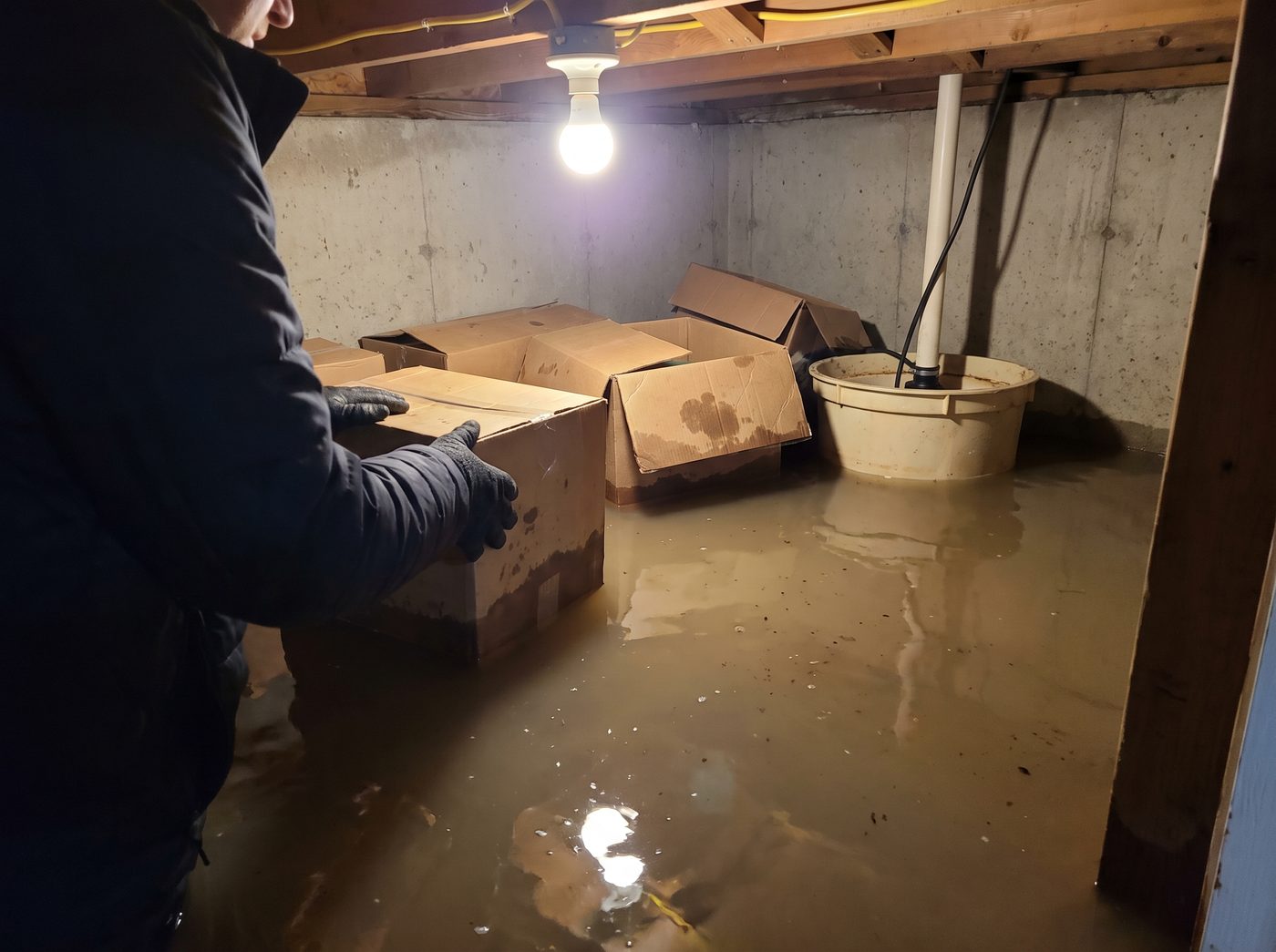
Most basements flood for undramatic reasons: a gutter discharging next to the wall, ground sloping back toward the house, or a sump pump that has quietly not worked for two years because nothing ever tested it. The storm gets the blame, but the storm only found what was already there. That is why the same basement floods repeatedly while the one next door never has.
What stops it happening again
Move the water away from the house before it can get in. Downspouts discharging at least six feet out, soil graded away from the wall, gutters that actually run, and a sump pump you have tested rather than assumed. A battery backup matters because the storm that floods you is the storm that takes the power out.
- The part
- Downspout extensions and a sump pump backup. Against HomeGuide’s $1,500 to $5,000 for a single Class 2 event, both are trivial.
- How often
- Test the sump pump twice a year by pouring a bucket of water into the basin and watching it run. Clear gutters twice a year. Check the grading after any major landscaping work.
Want the rest of the house covered?
One email a month, timed to the systems you actually have. The same kind of thing as the tablet: small, cheap, and it stops the call.
Also asked
- Is it safe to go into a flooded basement?
- Not until the power to that space is off at the panel. If the panel is in the water or you cannot reach it dry, call the utility instead. Everything else about this job waits for that.
- How fast do I need to dry it out?
- Fast. Material dried within roughly two days is often salvageable, and material still wet after that usually is not. Fans and a dehumidifier running continuously beat perfect technique applied slowly.
- Does insurance cover a flooded basement?
- It depends heavily on the source, which is why identifying clean versus grey versus sewage water and photographing everything before you move it matters so much. Get the evidence first and have the coverage conversation second.
- Why does my basement flood every time it rains hard?
- Almost always water management outside rather than the basement itself: downspouts discharging at the wall, ground sloping toward the house, or a sump pump that has not worked in years. Pumping it out treats the symptom.
- How do I test a sump pump?
- Pour a bucket of water into the basin until the float lifts. The pump should start, clear the basin and shut off. Do it twice a year, because the failure you find in daylight is free and the one you find in a storm is not.