Do this now
Look at the two small sensors near the floor at each side of the door. One should show a steady light. If either is blinking or dark, that is your answer and it is usually free to fix.
Garage door will not close: it is usually the sensors, and springs are not yours
Updated
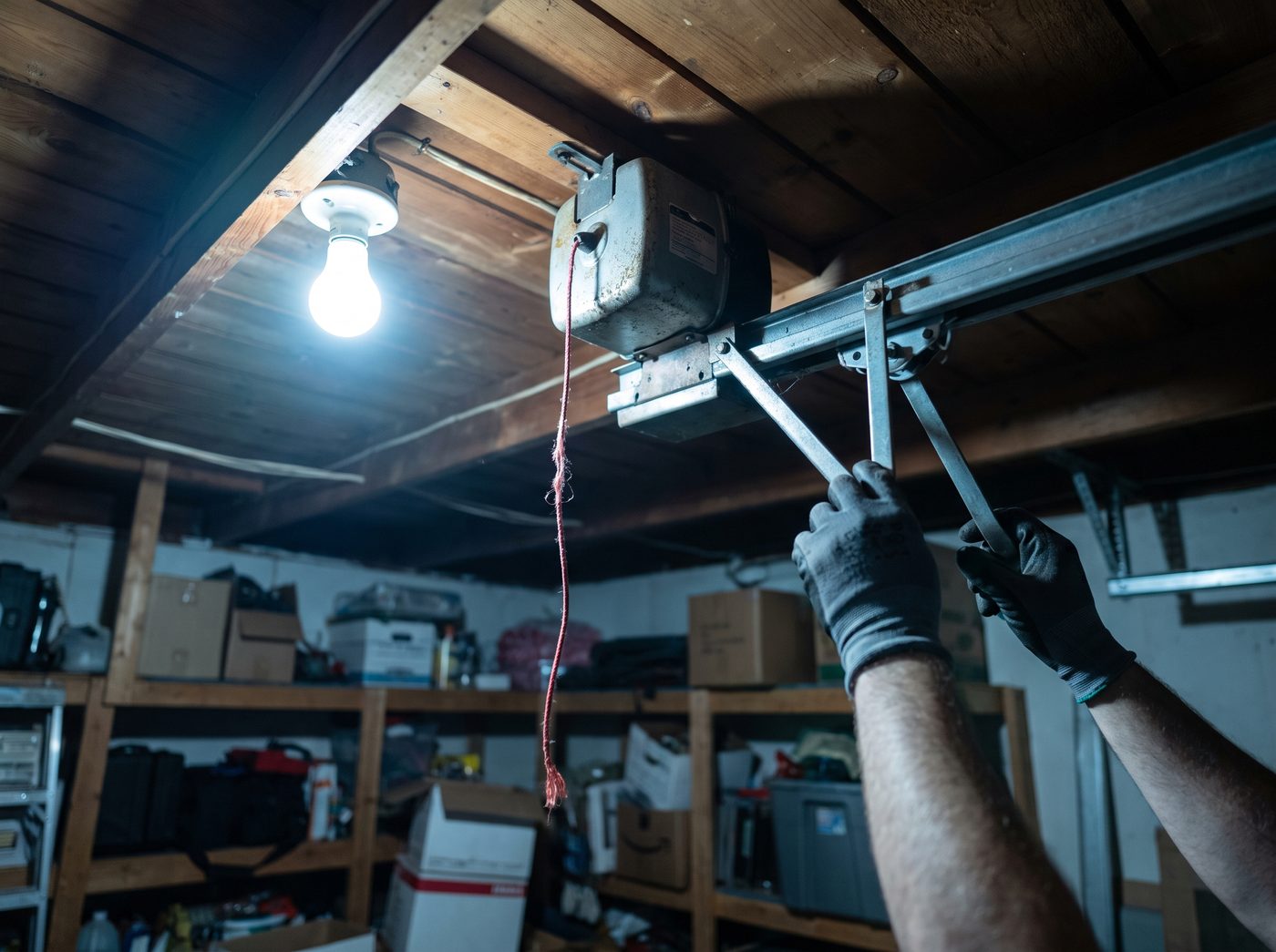
A garage door that closes partway then reverses, or refuses to move at all, is almost always the photo-eye safety sensors: knocked out of alignment, blocked by a bin or a cobweb, or with a lens dirty enough to break the beam. That is a five minute fix. The exception is a broken spring, which looks like a dead opener and is the most dangerous component in a garage.
- 01
Read the sensors before anything else
Two small units six inches off the floor on each track. One is a sender and one a receiver. A steady light on both means the beam is good. A blinking or dead light means it is broken, and the opener will refuse to close as designed.
- 02
Clear and clean the beam path
Bins, bikes, a coiled hose, cobwebs across a lens. Wipe both lenses with a dry cloth. Sunlight falling directly onto the receiver at certain times of day can also swamp it, which is why some doors only misbehave in the afternoon.
- 03
Realign them
Loosen the wing nut on the bracket and move one sensor by a few millimetres at a time until the light goes steady. They must point directly at each other and sit at the same height. Tighten gently, then test.
- 04
Check the track and the rollers
With the door down, look along both tracks for a dent or a roller sitting out of its channel. Debris in a track stops a door mid travel and looks exactly like an opener fault.
- 05
Test the manual release
Pull the red cord to disconnect the trolley, then lift the door by hand. A balanced door moves with moderate effort and stays where you leave it. If it is extremely heavy or crashes down, stop: the springs are doing no work and that is a spring failure, not an opener problem.
Do this with the door fully down, never up. A door released at height with a broken spring comes down with the full weight of the door behind it.
- 06
Look at the springs from a distance
The spring above the door or along the ceiling track. A visible gap in the coil means it has snapped. Do not touch it, do not use the opener, and call someone. A wound garage door spring stores enough energy to remove fingers.
What it costs
| Cost | Source | |
|---|---|---|
| Sensor repair or replacement | $125 to $300 | |
| Opener repair | $100 to $200 | |
| Spring replacement | $150 to $350 | |
| Cable repair | $150 to $350 | |
| Track replacement | $125 to $300 | |
| Panel replacement, per panel | $300 to $900 |
Every figure here is published by the source named beside it. We do not average them into a number of our own.
Where to stop
Sensors, tracks and lubrication are homeowner work. The first item here is the most dangerous thing on this entire site.
- Torsion or extension springs
- They hold hundreds of pounds of stored energy and release it instantly when they go wrong. Professionals use winding bars and still treat them with respect. This is not a confidence question.
- Cables, drums or the bottom brackets
- They are under the same tension as the springs. The bottom bracket in particular is why doors are fitted with warning labels.
- A door that is off its tracks
- It is heavy, unbalanced and prone to falling. Getting it back on is a job with the right clamps and two people.
- Opener wiring or replacing the logic board
- Line voltage in a damp space, and usually not worth it against the price of a new opener.
Why it happened
The sensors are mounted six inches off a garage floor, which is where bins get pushed, hoses get coiled and things get leant. They are designed to fail safe, so anything that interrupts the beam stops the door closing rather than risking closing it on something. The system working correctly is exactly what a fault looks like.
What stops it happening again
Keep the floor either side of the door clear, wipe the lenses when you think of it, and lubricate the rollers, hinges and springs twice a year with a garage door lubricant. A door that moves freely asks less of the opener and of the springs, and springs fail on cycles rather than on years.
- The part
- A can of garage door lubricant, a few dollars, twice a year. Not WD-40, which is a solvent and strips what is already there.
- How often
- Lubricate spring, rollers and hinges every six months. Test the balance with the manual release annually. Wipe the sensor lenses whenever the light flickers.
Want the rest of the house covered?
One email a month, timed to the systems you actually have. The same kind of thing as the tablet: small, cheap, and it stops the call.
Also asked
- Why does my garage door close then reverse?
- Almost always the photo-eye sensors. A blocked, dirty or misaligned beam makes the opener refuse to complete the close, which is the safety system doing its job. Check for a steady light on both units.
- Why does it only misbehave in the afternoon?
- Direct sunlight falling on the receiver can swamp the beam. It is a real and common effect, and shading the sensor or realigning it slightly usually solves it.
- The door will not close and it feels heavy when I lift it. Is that the sensors or a spring?
- The weight is the tell. Sensors stop a door closing, but they do not change what it weighs. With the door fully down, pull the manual release and lift by hand: a balanced door moves with moderate effort and stays roughly where you leave it. Dead weight, or a door that crashes back down, means the springs are not carrying it, and no amount of cleaning the lenses will fix that.
- A spring has broken and the door is stuck open. How do I secure the garage?
- Leave the door where it is. The spring is what counterbalances it, so bringing a door down by hand without one means taking its full weight, and the release cord is the thing that disconnects the only other support it has. Keep people and cars out from under it, lock the door between the garage and the house, and call a garage door company the same day. A door stuck open is normally treated as an emergency call.
- What should I lubricate on a garage door?
- Rollers, hinges and the spring, twice a year, with a proper garage door lubricant. Avoid WD-40: it is a solvent and it removes the lubrication already there.