Do this now
Touch the water. Inside the room, outside on the exterior, or sealed between the panes where you cannot reach it? That single question decides which of three problems you have.
Condensation on windows: which side of the glass tells you the whole story
Updated
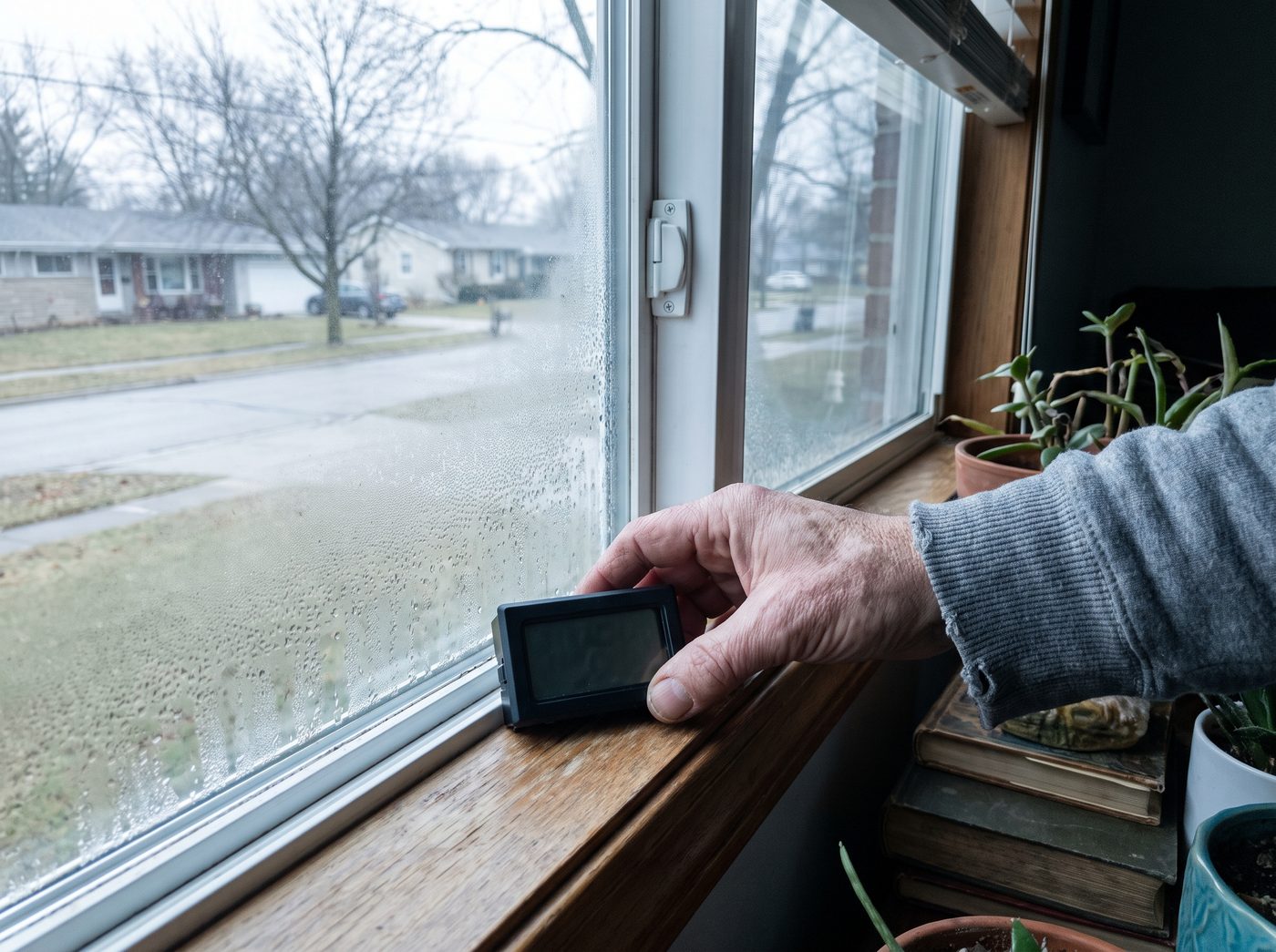
Condensation on the inside means the air in your house holds more moisture than the cold glass can tolerate, and the glass is just the coldest surface reporting it. On the outside it means the glass is colder than the dew point, which usually indicates the window is working well. Between the panes means the sealed unit has failed and no amount of ventilation will touch it.
- 01
Work out which surface is wet
Wipe it. If it clears, it is on that side. If the haze stays and you cannot reach it, it is between the panes and this becomes a glazing question rather than a humidity one.
- 02
Find where the moisture is coming from
Showers, cooking, drying laundry indoors, an unvented tumble dryer, a lot of houseplants, or a wet crawl space beneath. A single load of washing dried on a rack puts a surprising amount of water into the air, and it has to condense somewhere.
- 03
Use the extractor fans properly
Bathroom fan on during a shower and for twenty minutes afterwards, kitchen fan while cooking. Then check they actually vent outside rather than into the attic, which is disturbingly common and turns a window problem into a roof problem.
- 04
Measure rather than guess
A cheap hygrometer tells you what you are dealing with. Somewhere around 30 to 50 percent relative humidity suits most homes in winter, and the lower end of that when it is very cold outside. Below the dew point for your glass, condensation stops.
- 05
Improve air movement at the glass
Heavy curtains and blinds closed tight trap cold air against the pane and make condensation worse, not better. Leave a gap at the bottom, move furniture off the wall, and open trickle vents if the windows have them.
- 06
Deal with what the water has already done
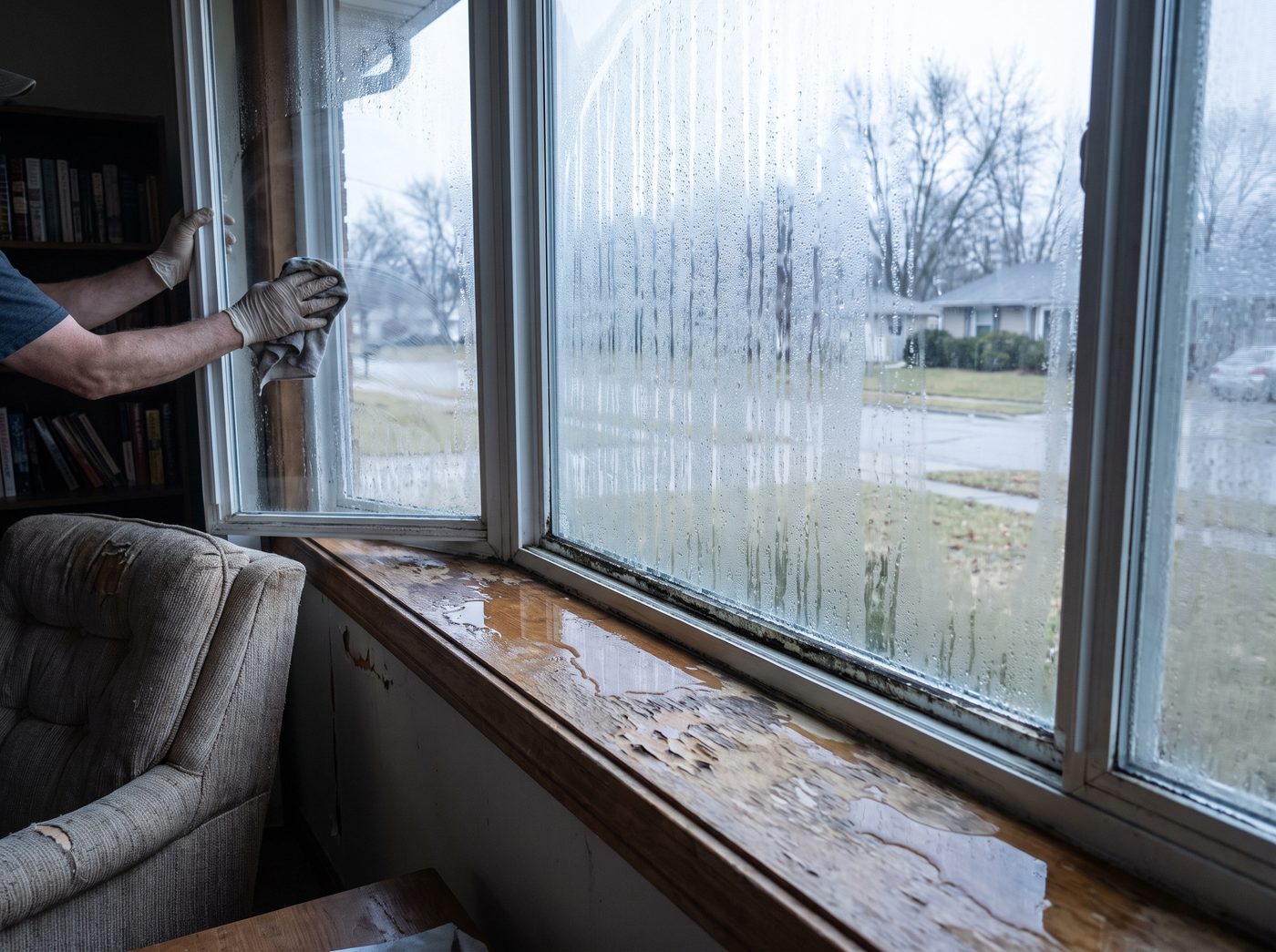
Wipe the sills daily while you sort the cause. Standing water rots timber frames and lifts paint, and the black spotting in the corners is mould that will keep coming back until the humidity does not.
What it costs
| Cost | Source | |
|---|---|---|
| Hygrometer | about $10 to $20 | |
| Dehumidifier | about $150 to $300 | |
| Handyperson, per hour | $50 to $80 |
Every figure here is published by the source named beside it. We do not average them into a number of our own.
Where to stop
Ventilation and humidity are homeowner work. These are not.
- Condensation between the panes
- The sealed unit has failed. It is not repairable in any meaningful sense: the glazing unit gets replaced, though usually not the whole window.
- Mould covering a large area, or coming back after cleaning
- That is a remediation and moisture-source job rather than a wipe down, and the health question deserves a proper answer.
- Soft or blackened window frames
- Rot in a timber frame is structural to the window and it spreads.
- Extractor fans venting into the attic
- That is a building fault putting warm wet air into a cold roof space, which is how you get attic condensation and, in winter, ice dams.
Why it happened
Warm air holds more water than cold air. Your heating puts warmth and, through cooking and washing and breathing, a great deal of moisture into the house, and the glass is the coldest surface in the room. So the water comes out of the air there first. Modern airtight houses made this worse by design: they leak far less, which is excellent for heating bills and means the moisture has nowhere to go unless you deliberately move it.
What stops it happening again
Extract at the source and ventilate deliberately. Fans that run during and after showers and cooking, laundry dried outside or in a vented dryer, and a short burst of open windows on cold dry days, which exchanges the air far faster than leaving one ajar all day and costs less heat.
- The part
- A hygrometer so you are working from a number, and a dehumidifier if the number stays high after the ventilation habits change.
- How often
- Fans on during and after every shower. Check where your extractor fans actually vent, once. Wipe sills daily while the humidity is still high.
Want the rest of the house covered?
One email a month, timed to the systems you actually have. The same kind of thing as the tablet: small, cheap, and it stops the call.
Also asked
- Is condensation on the inside of my windows bad?
- It is a symptom of high indoor humidity rather than a window fault. Left alone it rots frames and grows mould on the reveals, so it is worth acting on even though the glass itself is fine.
- Condensation on the outside of the glass. Is that a problem?
- No, usually the opposite. It means the outer pane is staying cold because the window is insulating well, and it burns off as the day warms.
- The fog is between the panes and I cannot wipe it.
- The sealed unit has failed and moisture has got inside it. Ventilation will do nothing. The glazing unit needs replacing, though often not the whole window.
- What humidity should my house be at?
- Roughly 30 to 50 percent relative humidity suits most homes, toward the lower end when it is very cold outside. A cheap hygrometer turns this from guesswork into a number you can act on.
- Do closed curtains make condensation worse?
- Yes. They trap cold air against the glass and stop room air moving over it, so the pane runs colder. Leaving a gap at the bottom helps more than it sounds like it should.