Do this now
Turn the system off at the thermostat, then at the breaker. Every minute it runs, it makes more water.
AC drain line clogged: clear it in ten minutes, then stop it coming back
Updated
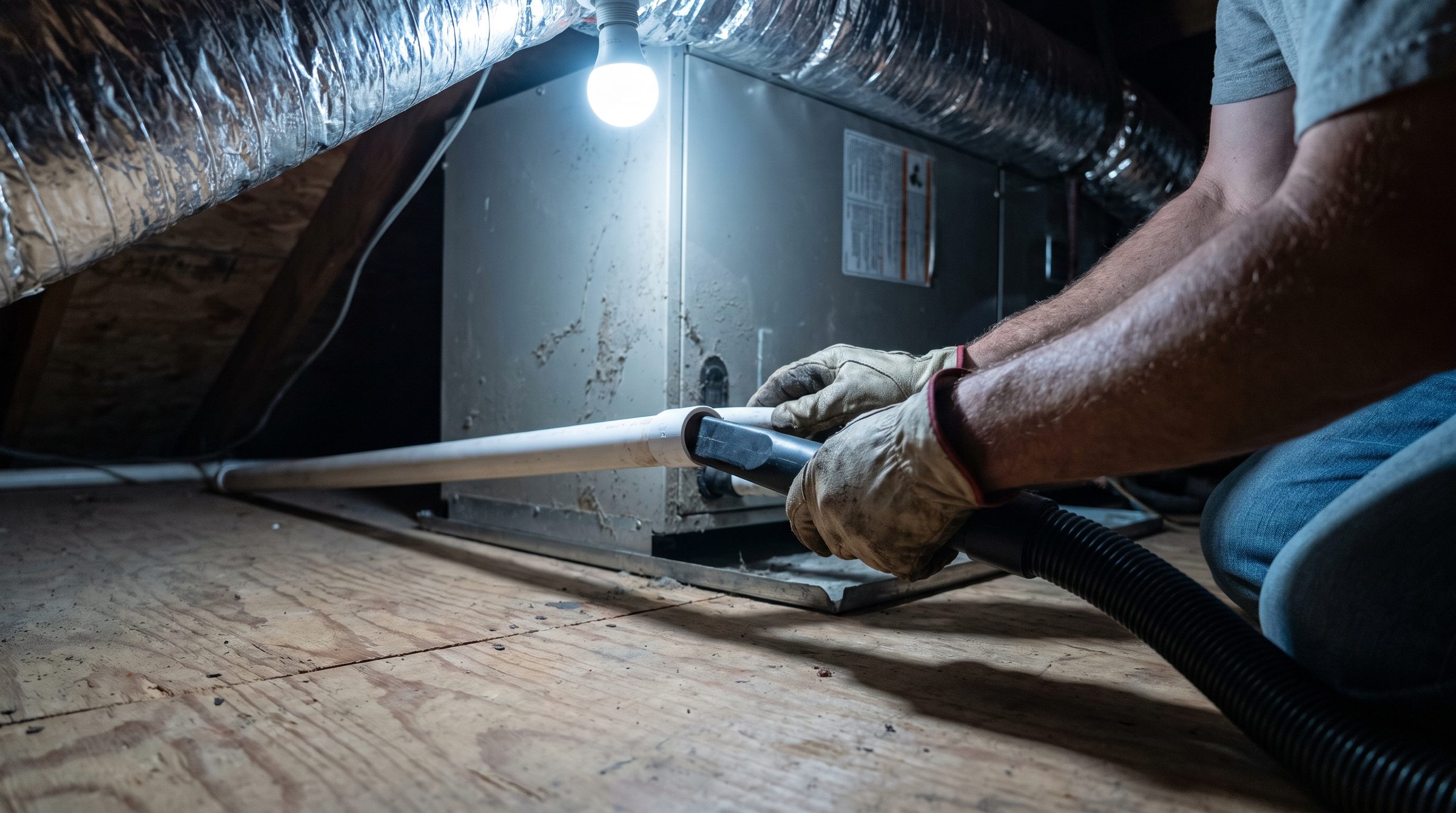
Water pooling under an air handler is almost always a blocked condensate drain line. Your evaporator coil pulls moisture out of the air all summer and that water has to go somewhere. When the line plugs with algae and grit, the drain pan fills and spills over the edge. Clear the line first. The other causes below only matter once you have ruled the blockage out.
- 01
Shut the system down
Off at the thermostat, then off at the breaker. Running it while the pan is full is what turns a drain problem into a ceiling problem.
- 02
Get the standing water out of the pan
A shop vacuum is fastest. Towels work. You want the pan empty enough to see whether it is cracked or just full, and dry enough that you notice if it refills later.
- 03
Find both ends of the drain line
It is white PVC, usually three quarter inch. One end leaves the air handler, often with a capped access tee within a foot or two of the unit. The other end terminates outside, typically near the condenser or through an exterior wall at ground level.
- 04
Put the shop vacuum on the outdoor end
Hold the hose against the pipe and seal around it with your hand or a rag. Run it for two to three minutes. This is the step that actually clears it: you are pulling the plug out backwards rather than pushing it further in. Expect a slug of dark water and slime when it lets go.
- 05
Flush from the access tee
Take the cap off the tee near the air handler and pour a cup of distilled white vinegar down it. Give it half an hour. Then pour clean water through and go outside to confirm it runs out the other end.
Manufacturers differ on bleach. Some advise against it around metal pans and components. Vinegar is the common recommendation and it is what we use.
- 06
Reset the float switch and restart
Many systems have a float switch that cuts the unit off when the pan fills. If yours tripped, it will reset itself once the pan is dry. Put the cap back on the tee, turn the breaker on, then the thermostat. Check the pan again in an hour and again the next day.
Where to stop
Clearing a drain line is genuinely a homeowner job. These are not, and the reason matters more than the rule.
- The water has reached drywall or a ceiling
- You now have two problems and the second one is not plumbing. Deal with the water damage on its own terms.
- The pan is cracked, or it refills with the line clear
- Water is coming from somewhere other than the drain, which usually means the coil or the pan itself. Both need the unit opened.
- The line runs inside a wall
- There is nothing to put a vacuum on. Clearing it means access, and access means cutting.
- Anything involving refrigerant
- Not a judgement call. Federal law requires EPA Section 608 certification to buy or handle refrigerant, so it is a call whether you want it to be or not.
Why it happened
Condensate lines clog because they are dark, permanently damp, and full of the dust your filter did not catch. Algae grows in them. It happens gradually, which is why it tends to happen in the middle of the hottest week of the year, when the system is running hardest and producing the most water. Nothing failed. The line simply was never cleared.
What stops it happening again
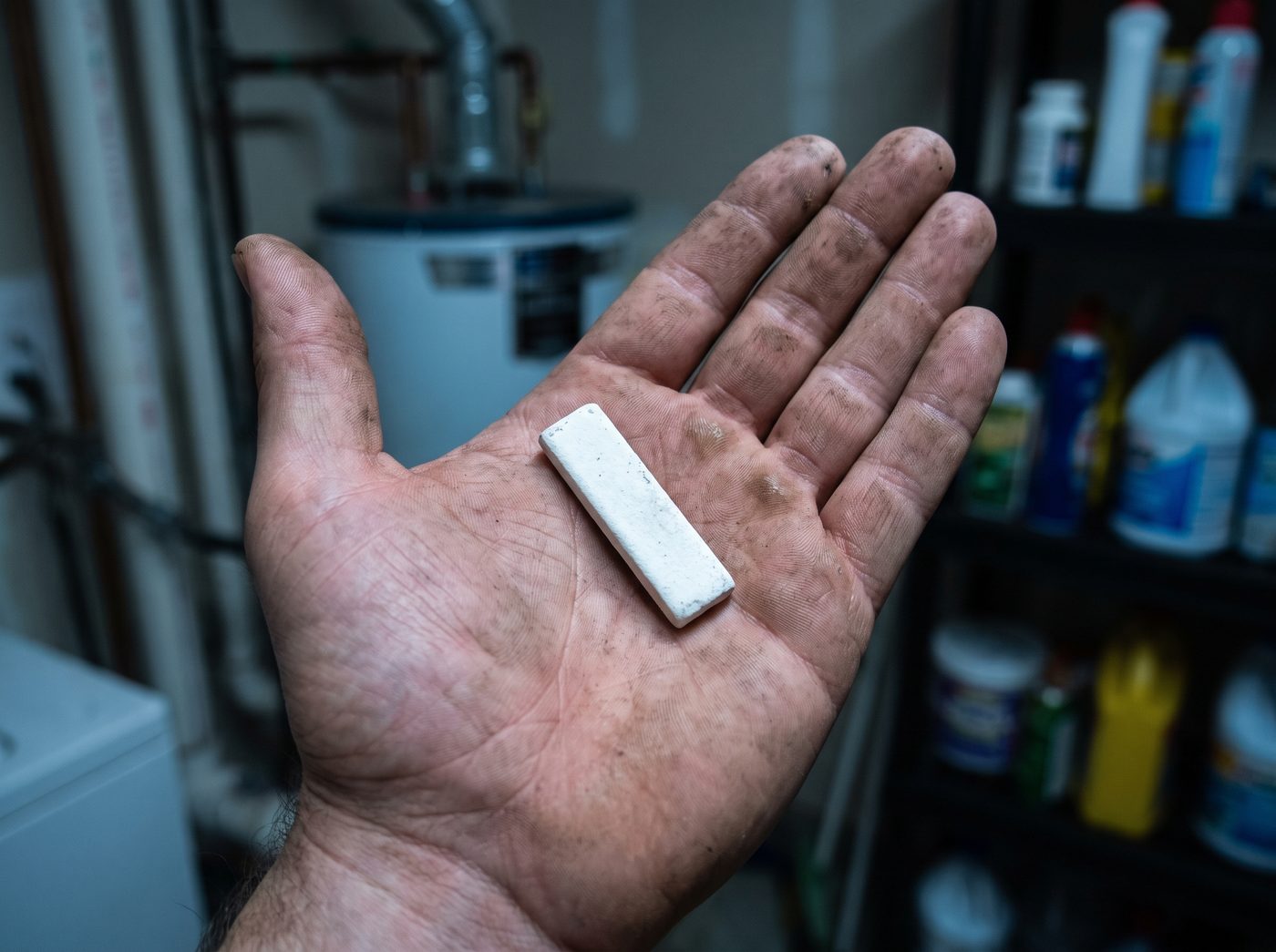
A treatment tablet in the drain pan keeps the slime from re-forming, and a vinegar flush a few times a year keeps the line open. This is the whole difference between a house that needs a call every summer and one that does not. It is also the part nobody tells you when they come out to fix it.
- The part
- AC pan treatment tablets. A six pack was listed at $5.98 at Home Depot in August 2026, and one tablet covers roughly six weeks of cooling season.
- How often
- Tablet in the pan at the start of cooling season and again mid season. Vinegar down the access tee every three months.
Want the rest of the house covered?
One email a month, timed to the systems you actually have. The same kind of thing as the tablet: small, cheap, and it stops the call.
Also asked
- Can a dirty air filter make my AC leak water?
- Indirectly, yes. A blocked filter starves the coil of airflow, the coil can freeze, and when it thaws it produces more water than the pan is designed to hold. If you have just cleared a leak and the filter is grey, change it.
- How do I tell if the clog is in the line or the drain pan?
- Pour clean water into the access tee and watch the outdoor end. If it comes out, the line is clear and your problem is the pan or the coil. If it backs up at the tee, the blockage is still in the line.
- Should I use vinegar, bleach or a drain tablet?
- Vinegar to flush a line that is already open, tablets in the pan to stop slime forming in the first place. They do different jobs. Manufacturers differ on bleach and some advise against it around metal components.
- How often should I clean my AC drain line to prevent clogs?
- Every three months through the cooling season is the common recommendation, and it takes about five minutes once the line is already clear.
- When should I call an HVAC technician for recurring clogs?
- If it blocks again within a season despite treatment, something structural is wrong: the line may be improperly sloped, undersized, or partially collapsed. That is worth paying someone to look at once rather than clearing it four times a year.