Worth it?
Is basement waterproofing worth it?
Yes, but not as a package
If water is genuinely getting in then yes, something has to be done, and the trade is not wrong about that. What is worth resisting is the word. Waterproofing is a bundle name covering eight or nine separate jobs whose published prices run from $220 to $18,000, and a quote is almost always written for the top of that range. Find out where the water is actually coming in before you buy the package.
Read the price list rather than the package, because the people selling it publish both. HomeGuide puts the headline at $6,000 to $12,000 for interior work and $10,000 to $18,000 for exterior. On the same page it prices the parts on their own: extending or replacing downspouts $220 to $625, regrading around the house $1,000 to $5,000, epoxy injection $250 to $800 or more per crack, a sump pump $600 to $2,500 or more, an interior French drain $4,000 to $17,000. The bottom of that list and the top of it differ by a factor of eighty, and the same single word covers all of it.
The cheap end is not our idea, either. HomeGuide's own sentence is that regrading is occasionally enough to prevent water intrusion in a basement. Occasionally is not usually and it is not a promise. It is still a page that offers free estimates from waterproofing contractors saying out loud that a $1,000 to $5,000 job sometimes closes a problem being quoted at $12,000, which makes establishing the cause first a good deal more than a delaying tactic.
Then there is the number most people get backwards. Exterior work costs more and needs the ground dug out around the house, so it reads as the permanent one. HomeGuide says waterproof membranes typically last 10 to 15 years, while interior French drains and sump pumps can function for 20 to 30 with upkeep. That is a membrane against a drain rather than a full system against a full system, so it does not settle the choice. It does mean nobody should accept "exterior is the one that lasts" as a given, and that the two options deserve to be priced side by side rather than one being presented as the serious version.
When it is genuinely worth paying for
- Water is arriving through the wall or up through the floor
- That is groundwater under pressure rather than something running down a pipe, and it is the case the cheap end genuinely cannot reach. HomeGuide is explicit that sealers create a barrier against moisture but will not stop water under pressure. A drain and a pump is the mechanism that handles it, and this is the case where the five figures are buying something real.
- The walls are bowing, or a crack is moving
- HomeGuide lists bowed walls and warped doors among the signs, and that is a structural problem rather than a damp one. It also notes that leak repairs are essential BEFORE other waterproofing measures, at $250 to $5,000 for minor work and $4,500 to $15,000 for major. Waiting is the expensive option here in a way it is not anywhere else on this page.
- The cheap rungs are genuinely done and it still comes in
- Downspouts extended well clear of the wall, grading corrected so the ground falls away from the house, gutters actually clearing, and it still floods after heavy rain. At that point you have ruled out the common causes by experiment rather than by assumption, which is the only honest basis for spending five figures.
- You are about to finish the basement, or it is already finished
- Doing the water first is the cheaper order rather than the cautious one. HomeGuide puts mould remediation at $1,500 to $15,000, and it is a great deal easier to run a drain across a bare floor than to take up a finished one to get at it afterwards.
When it is not
- Nobody has told you how the water is getting in
- The first question on HomeGuide's own list for contractors is "How is water getting into my basement?" That is their list, not ours. A quote naming methods and a price but not an entry point is a price for a package, and it cannot be compared against anything.
- Your downspouts discharge at the wall, or the ground slopes toward the house
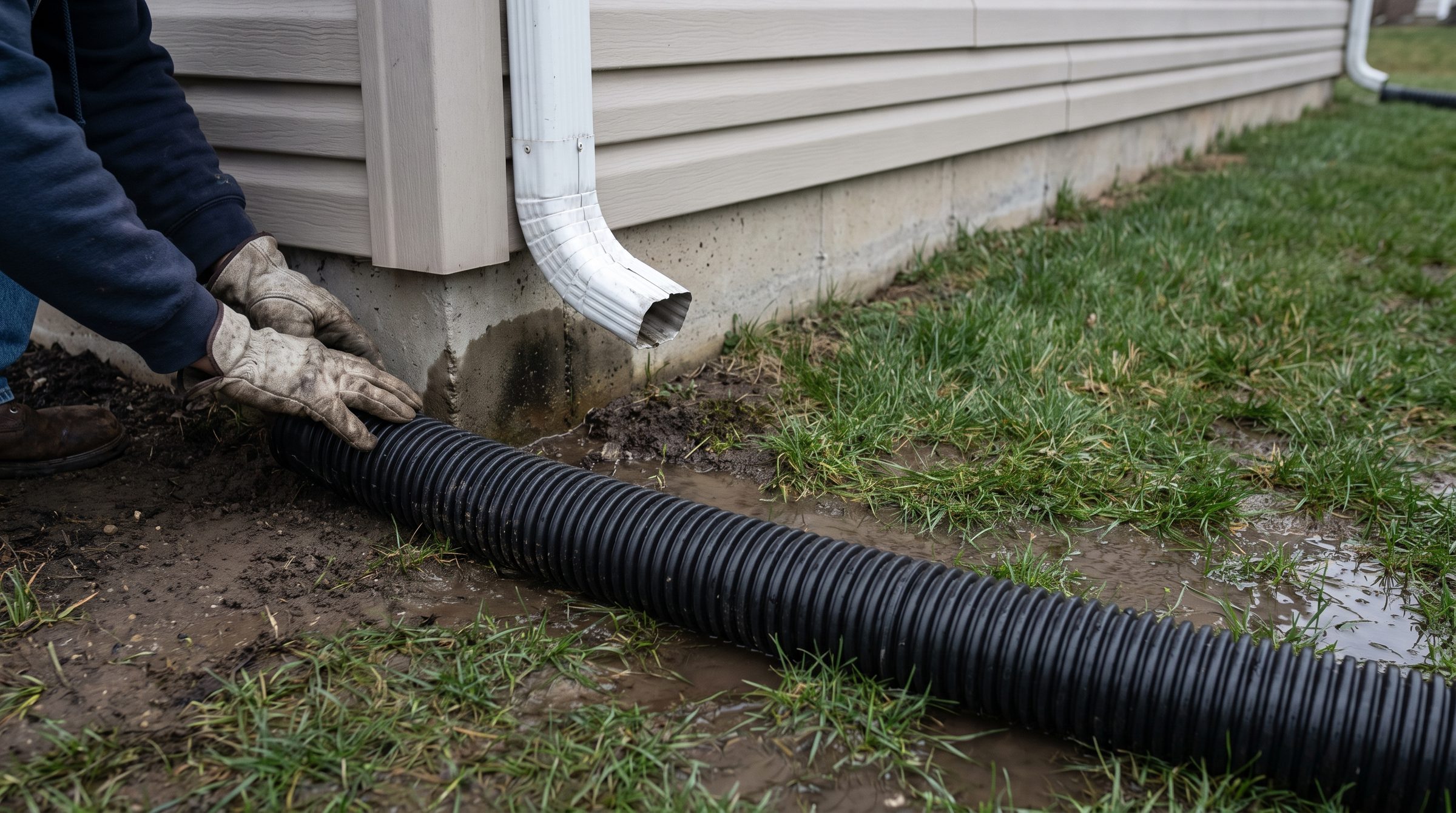
- Replacing downspouts is $220 to $625 and regrading is $1,000 to $5,000, against $6,000 to $18,000 for the package. You would be paying to manage water that is being delivered to the foundation on purpose, and the delivery costs almost nothing to stop.
- The proposal is waterproof paint, for a wall that gets wet under pressure
- Sealers are $2 to $10 per square foot and HomeGuide states plainly they will not stop water under pressure. On a genuinely wet wall this is the cheap version of the wrong job, and the money is simply gone. It has a real use as one layer of a larger system and for minor dampness, which is not what it usually gets sold as on its own.
- It is being sold to you as something that pays back at resale
- HomeGuide's own FAQ says you may not recoup the full cost at resale, and to treat waterproofing as necessary maintenance rather than a value-add renovation. When the page selling the introduction tells you not to buy it for that reason, believe it.
- You are proceeding on the assumption insurance will cover it
- It generally will not. HomeGuide notes that standard homeowners policies do not cover waterproofing, or damage from seepage and flooding, and that flooding needs a separate flood policy. Sudden failures like a burst pipe are a different matter. Worth settling before the decision rather than after it, because it changes what the money is actually for.
- It is damp and musty rather than actually wet
- A portable dehumidifier is $130 to $300 and a whole-house unit is $1,500 to $3,500 installed. That is one to two orders of magnitude below the package. If nothing is running in, start at that end and measure over a season before anyone excavates anything.
Two rungs and one question, before anyone quotes the package
Get the downspouts discharging well clear of the wall, at $220 to $625 to replace them outright and a great deal less to extend what is there. Check that the ground falls away from the house rather than toward it, which is regrading at $1,000 to $5,000 if it does not. Those two are the rungs the industry concedes are occasionally enough on their own. Then go and watch it happen: stand in the basement with a torch during genuinely heavy rain and find where the water arrives, because a wet floor the next morning tells you almost nothing about which wall it came through. That is the answer to the first question on HomeGuide's own list for contractors, and any quote that cannot answer it is a price without a diagnosis attached.
What it costs
Every figure below is published by the source named beside it and links to it.
| Job | Published range |
|---|---|
| Interior waterproofing, typical total | $6,000 to $12,000 HomeGuide |
| Exterior waterproofing, typical total | $10,000 to $18,000 HomeGuide |
| Extending or replacing downspouts | $220 to $625 HomeGuide |
| Regrading around the house | $1,000 to $5,000 HomeGuide |
| Epoxy injection, per crack | $250 to $800 or more HomeGuide |
| Sump pump installation | $600 to $2,500 or more HomeGuide |
| Interior French drain | $4,000 to $17,000 HomeGuide |
| Exterior French drain, per linear foot | $30 to $90 HomeGuide |
| Waterproof membrane, installed | $4 to $7 per square foot HomeGuide |
| Waterproof paint or sealer, which will not stop water under pressure | $2 to $10 per square foot HomeGuide |
| Foundation leak repair, minor | $250 to $5,000 or more HomeGuide |
| Foundation leak repair, major | $4,500 to $15,000 or more HomeGuide |
| Mould remediation, if it has got that far | $1,500 to $15,000 HomeGuide |
| A portable dehumidifier | $130 to $300 HomeGuide |
| A whole-house dehumidifier, installed | $1,500 to $3,500 HomeGuide |
| Putting the garden back after exterior work | $300 to $1,000 or more HomeGuide |
If you do go ahead, insist on these
01Make them put the entry point in writing, not just the method
"How is water getting into my basement?" is the first question on HomeGuide's own list, and the answer is what the whole quote should follow from. A proposal that leads with a system rather than with a diagnosis has been written from a catalogue.
02Settle the leak repair before the rest of it is priced
HomeGuide says leak repairs are essential before other waterproofing measures, and puts them at $250 to $5,000 for minor and $4,500 to $15,000 for major. Discovering that mid-job is exactly how a fixed price turns into a range.
03Ask for interior and exterior priced separately, with lifespans
$6,000 to $12,000 against $10,000 to $18,000, and membranes at 10 to 15 years against interior drains and pumps at 20 to 30. Two prices and two lifespans next to each other is a decision you can make. One bundled number is not.
04Insist on an itemised estimate, and read the items
HomeGuide advises getting an itemised estimate, contract and warranty in writing. The itemisation is the part that matters here, because it is the only way to see which of the sixteen jobs in the table above you are actually buying, and which ones were added because they were on the form.
05Ask what it costs to put the garden back
Exterior work means excavating the perimeter, and HomeGuide puts replacing sod and plants afterwards at $300 to $1,000 or more. It is rarely inside the waterproofing number and it is entirely predictable, which is a bad combination to discover at the end.
We will tell you when something is not worth buying
One email a month, and the same standard as this page: what is worth doing, what is not, and what it costs either way.
Common questions
- Is basement waterproofing worth it?
- Yes when water is genuinely getting in, and almost never as an undiagnosed package. HomeGuide prices the parts separately on the same page as the bundle: downspouts $220 to $625, regrading $1,000 to $5,000, a sump pump $600 to $2,500, an interior French drain $4,000 to $17,000, against $6,000 to $18,000 for the whole job. Establish where the water comes in before choosing which of those you are buying.
- What is the cheapest way to waterproof a basement?
- Dealing with the water outside. Extending or replacing downspouts is $220 to $625 and regrading around the house is $1,000 to $5,000, and HomeGuide states that regrading is occasionally enough on its own to prevent water intrusion. Waterproof paint is cheap per square foot at $2 to $10 but will not stop water under pressure, so it is not a substitute on a genuinely wet wall.
- Is interior or exterior basement waterproofing better?
- They do different things. Interior work at $6,000 to $12,000 manages water that has already reached the wall. Exterior work at $10,000 to $18,000 tries to stop it arriving and needs the perimeter excavated. The surprise is in the lifespans: HomeGuide puts waterproof membranes at 10 to 15 years and interior French drains and sump pumps at 20 to 30 with upkeep, so the dearer option is not automatically the longer-lived one.
- Does homeowners insurance cover basement waterproofing?
- Generally no. HomeGuide notes that standard policies do not cover waterproofing or damage from seepage and flooding, and that flood damage needs a separate flood policy. Sudden events such as a burst pipe are treated differently from long-term groundwater seepage, which is why what the water is and where it came from matters so much.
- Does waterproofing a basement add value when you sell?
- Not reliably, and this is HomeGuide's own position rather than ours: a dry basement is attractive to buyers, but you may not recoup the full cost, and they advise treating it as necessary maintenance rather than a value-add renovation. Buy it because the basement is wet, not because of what it might return.
- How long does basement waterproofing last?
- HomeGuide puts quality systems at 10 to 30 years or more, depending on materials, installation, soil and maintenance. Within that, waterproof membranes typically last 10 to 15 years while interior French drains and sump pumps can function for 20 to 30 with regular upkeep. A pump is a machine, so testing it twice a year is part of what buys you the upper end of that.
Last updated 2026-08-23. Tell us if something here is wrong.