Do this now
Do not reach for drain cleaner. It rarely clears a hair clog, it sits on top of the blockage in a pipe you may later have to open by hand, and it is the reason plumbers ask what you have poured down before they start.
Shower draining slowly: it is hair, and you can reach it
Updated
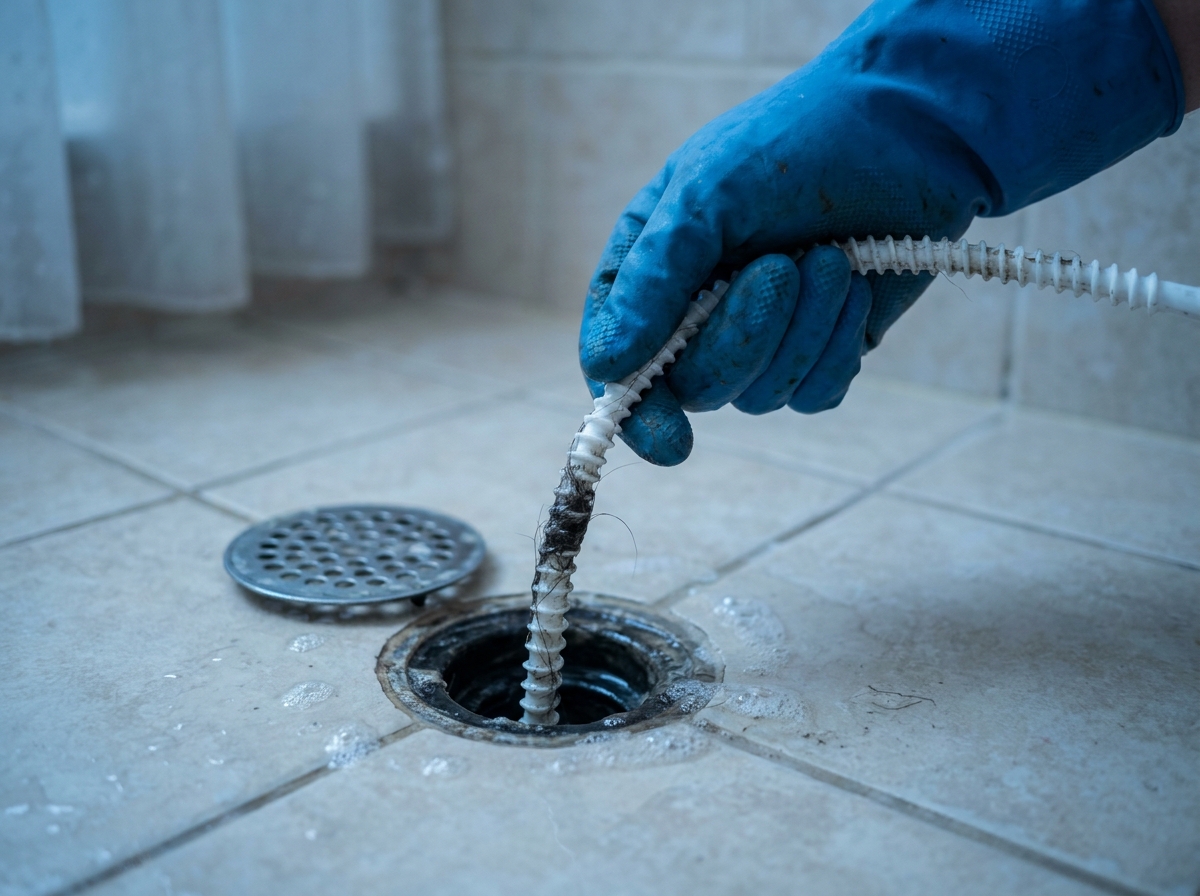
A shower that drains slowly is a hair and soap clog, and in most houses it sits in the first few inches below the strainer where you can physically reach it. A shower that has stopped entirely, or one where other fixtures gurgle when it drains, is a different and more serious problem further down the line.
- 01
Take the strainer or cover off
Most lift out or come off with one screw. Some tub drains unscrew anticlockwise, some are a lift-and-turn you pull straight up. Underneath is usually the answer, and it is usually visible immediately.
- 02
Pull the clog out with a hair tool
A barbed plastic drain stick costs a couple of dollars, goes in a few inches, and brings the clog out on the way back. Do this over a bin. It is unpleasant and it is the entire fix in the large majority of cases.
- 03
If it is a tub, deal with the stopper linkage
Tubs with a lever overflow have a linkage and a plunger inside the overflow tube, and hair wraps around it where you cannot see. Unscrew the overflow plate and draw the whole assembly out. This is the clog people miss when the strainer looked clean.
- 04
Flush it with hot water, then a plunger
Run the hottest water for a couple of minutes to move the soap film the hair was stuck to. If it is still slow, block the overflow with a wet cloth and plunge: without blocking the overflow you are just pushing air around a loop.
- 05
Use a hand auger if it is deeper than you can reach
A small drum auger will go past the trap. Feed it gently and turn rather than forcing it, especially on older or plastic waste pipes. If it will not pass, stop rather than pushing harder.
- 06
Notice whether other fixtures are affected
If the toilet bubbles when the shower drains, or the sink backs up at the same time, the blockage is not in the shower at all. That is a shared line or the main, and it is on the stop list.
What it costs
| Cost | Source | |
|---|---|---|
| Hair removal tool | about $2 to $10 | |
| Hand auger | about $10 to $30 | |
| Plumber clearing a sink or shower drain | $150 to $275 | |
| Drain cleaning generally | $100 to $220 | |
| Emergency or after-hours plumber, per hour | $100 to $350 and up |
Every figure here is published by the source named beside it. We do not average them into a number of our own.
Where to stop
Clearing hair from a shower trap is homeowner work and it is genuinely easy. These are not.
- Other fixtures gurgle, back up, or run slow at the same time
- That is a shared branch or the main drain, not this shower, and clearing it from a shower is not possible.
- Sewage smell, or water coming back up rather than going down
- That is a main line problem and it can put waste water into the house. It needs someone with a camera and a jetter.
- The pipes are old galvanised or cast iron
- Augering corroded pipe can puncture it, and a hole in a waste pipe inside a wall is a far more expensive day than a slow shower.
- It clears and then blocks again within weeks
- Repeated clogs in the same place usually mean a fault in the pipe itself, a belly or a root, rather than what you keep pulling out of it.
Why it happened
Hair binds to the soap and conditioner film on the inside of the pipe rather than washing through it, so the clog builds where the water slows first, which is right under the strainer. That is also why it comes back on a schedule: the film is still there after you pull the hair out, and it starts catching again immediately.
What stops it happening again
A hair catcher over the drain, emptied when you clean the bathroom. It is the single cheapest prevention on this site and it removes the cause rather than the symptom. Once a month, run the hottest water for two minutes to clear the soap film that hair sticks to in the first place.
- The part
- A silicone hair catcher, a couple of dollars. A barbed drain stick to keep under the sink for when it does happen anyway.
- How often
- Empty the catcher weekly. Hot flush monthly. Pull the tub stopper linkage and clean it once a year.
Want the rest of the house covered?
One email a month, timed to the systems you actually have. The same kind of thing as the tablet: small, cheap, and it stops the call.
Also asked
- Why is my shower draining slowly but not blocked?
- A partial hair and soap clog just below the strainer. It restricts flow long before it stops it, which is why the water rises while the shower runs and then goes down once you turn it off.
- Does drain cleaner work on a shower clog?
- Usually not well. Hair clogs are physical rather than greasy, the chemical sits on top of them, and it makes the job hazardous for anyone who then opens the pipe by hand. Pulling the hair out takes two minutes.
- How much does a plumber charge to unclog a shower drain?
- HomeGuide puts clearing a sink or shower drain at $150 to $275, and drain cleaning generally at $100 to $220. After-hours calls run $100 to $350 an hour and up.
- Why does my shower drain smell?
- Usually biofilm on the pipe walls, which is the same stuff the hair sticks to. If it smells of sewage rather than damp, the trap may have dried out or there is a venting problem, and that is different.
- The tub strainer is clean but it still drains slowly. What now?
- Take the overflow plate off and pull out the stopper linkage. On lever-operated tubs the hair wraps around the plunger assembly inside the overflow tube, out of sight from the drain.