Do this now
Do not reach for bleach and ammonia together, or any two cleaning products at once. Mixed chlorine and ammonia produce a gas that will put you in hospital, and a small bathroom is the worst possible room to do it in.
Mould on the bathroom ceiling: clean it, then fix the fan that caused it
Updated
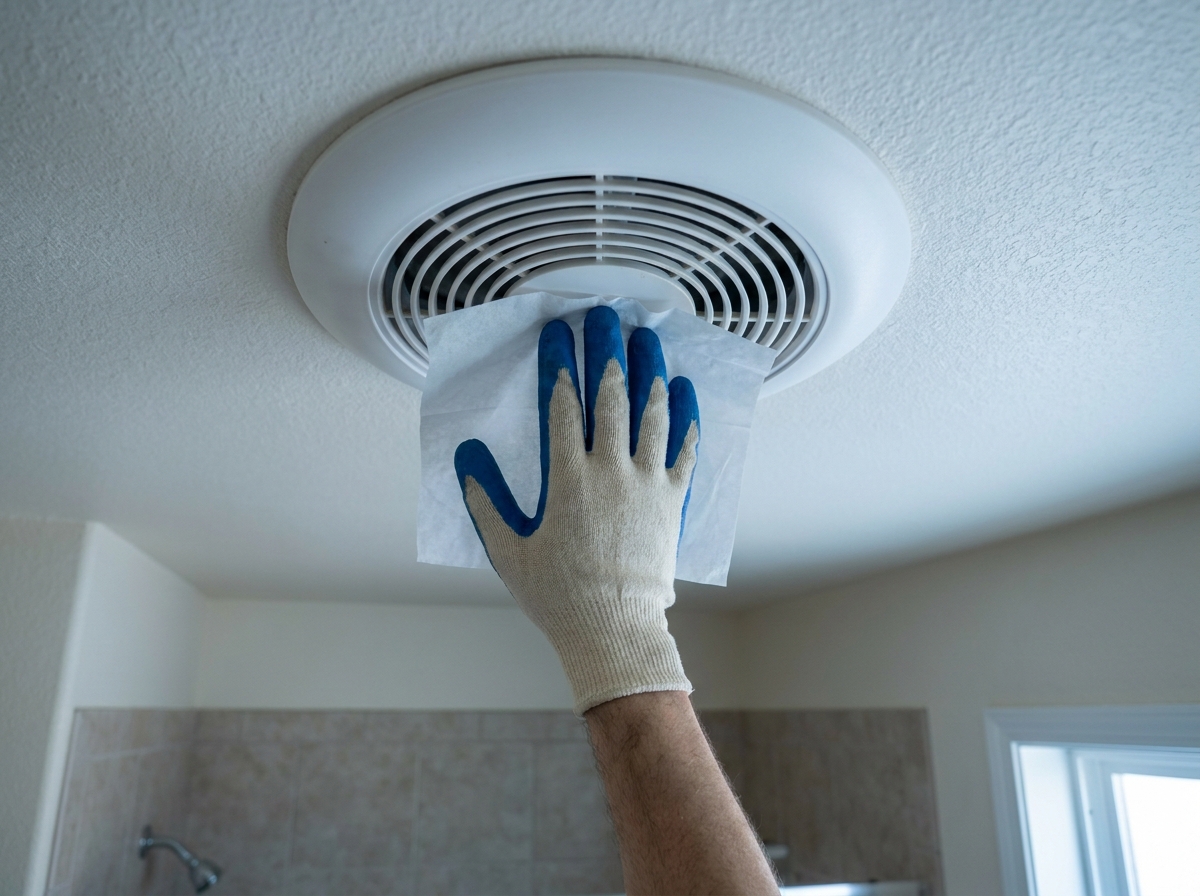
Speckled black or grey growth on a bathroom ceiling, worst near the shower and in the corners, is surface mould feeding on condensation. It is a ventilation problem wearing a cleaning problem as a disguise. Cleaning it takes twenty minutes and it will be back within a year unless the moisture leaves the room faster, which usually means the extractor fan is undersized, blocked, or venting into the loft.
- 01
Test whether the fan actually moves air
Hold a single sheet of toilet paper against the grille with the fan running. It should hold there on its own. If it falls, the fan is running without extracting anything, which is the most common finding and the actual cause.
- 02
Open the room up and protect yourself
Window open, door open, and wear gloves and eye protection. A respirator is sensible for anything beyond a few spots, because cleaning disturbs spores that were sitting still.
- 03
Clean with one product, and detergent is the one EPA names
EPA's method is to scrub mould off hard surfaces with detergent and water, and they specifically do not recommend chlorine bleach or other biocides as a routine practice during mould cleanup. A proprietary mould cleaner or white vinegar are the usual alternatives. Whichever you use, use one of them and never two. Let it sit for the time on the label rather than scrubbing immediately, then wipe rather than scrub hard: scrubbing drives it into the paint and spreads spores.
- 04
Dry the surface properly
Leave the fan running and the window open for an hour afterwards. Mould does not grow on dry surfaces, so the drying is not a tidy-up step, it is half the job.
- 05
Find out where the fan vents to
It should exit through a wall or the roof. A duct that stops in the loft is putting a bathroom worth of water vapour into your insulation every day, and it is common in houses where a fan was added later. Look in the loft with a torch.
- 06
Change the habit that feeds it
Run the fan during the shower and for twenty minutes after, not just while you are in there. A timer switch does this without anyone remembering. Leave the door ajar afterwards if there is no window.
What it costs
| Cost | Source | |
|---|---|---|
| Detergent, or a mould cleaner | a few dollars | |
| Bathroom mould removal, professional | $500 to $2,000 | |
| Mould remediation generally | $15 to $30 per square foot | |
| Remediation labour, per hour | $75 to $120 | |
| Mould inspection | $300 to $650 |
Every figure here is published by the source named beside it. We do not average them into a number of our own.
Where to stop
Surface mould on a painted ceiling is a cleaning job. These are not.
- The area is larger than about ten square feet
- That is the threshold at which US EPA guidance stops treating it as a homeowner clean-up and starts talking about containment.
- The plasterboard is soft, sagging or stained brown
- That is water in the substrate rather than on it, and it means a leak from above rather than condensation. Cleaning the surface does nothing.
- It returns within weeks of a thorough clean
- Something is still feeding it. That is usually a leak or a duct venting into the structure, and both want finding rather than repainting over.
- Anyone in the house has asthma or is immunocompromised
- Disturbing mould releases spores. That is a reason to have someone else do it, not a reason to leave it.
- Adding or rerouting a fan and its ducting
- Electrical work in a bathroom is a regulated zone almost everywhere, and cutting through a roof or a wall is not a cleaning job.
Why it happened
A hot shower puts a remarkable amount of water into the air, and the ceiling is the coldest surface in the room, so that is where it condenses first. Paint gives it something to hold on to and soap residue gives it something to eat. Extraction is the only variable you control: get the wet air out within twenty minutes and there is nothing for anything to grow on.
What stops it happening again
Run the fan for twenty minutes after the shower, every time. That single change does more than any product, and a timer switch means nobody has to remember it. If the fan cannot hold a sheet of paper, replacing it is the real fix and the cleaning is just tidying up after the last one.
- The part
- A timer switch for the fan, or a humidity-sensing one that runs until the room is actually dry. Mould-resistant bathroom paint when the ceiling is next repainted.
- How often
- Paper test on the fan twice a year. Wipe the ceiling corners when you clean the bathroom, which catches it while it is still a smudge.
Want the rest of the house covered?
One email a month, timed to the systems you actually have. The same kind of thing as the tablet: small, cheap, and it stops the call.
Also asked
- Why does mould keep coming back on my bathroom ceiling?
- Because cleaning removes the growth but not the condensation feeding it. Until the wet air leaves the room faster, usually via a working extractor fan, it returns on the same schedule.
- Is bathroom ceiling mould dangerous?
- Surface mould on a painted ceiling is a nuisance rather than an emergency for most people, but it is worth taking seriously if anyone has asthma. Do not disturb a large area without protection.
- What kills mould on a bathroom ceiling?
- EPA scrub it off hard surfaces with detergent and water, and do not recommend chlorine bleach or other biocides as a routine practice during mould cleanup. A proprietary mould cleaner or white vinegar are the usual alternatives. One product only, never two together, and never bleach with anything containing ammonia.
- How do I know if my bathroom fan is working?
- Hold a sheet of toilet paper against the grille with the fan on. If it does not stay there by itself, the fan is making noise rather than moving air.
- How much does bathroom mould removal cost?
- HomeGuide puts professional bathroom mould removal at $500 to $2,000 depending on the extent. Surface spotting on a ceiling is usually a twenty minute job with a few dollars of cleaner.