Do this now
Check the thermostat is on HEAT and not on EMERGENCY or AUX heat. Emergency heat bypasses the heat pump entirely and runs resistance elements instead, which will warm the house and produce a genuinely shocking electricity bill.
Heat pump not heating: what is normal in cold weather and what is not
Updated
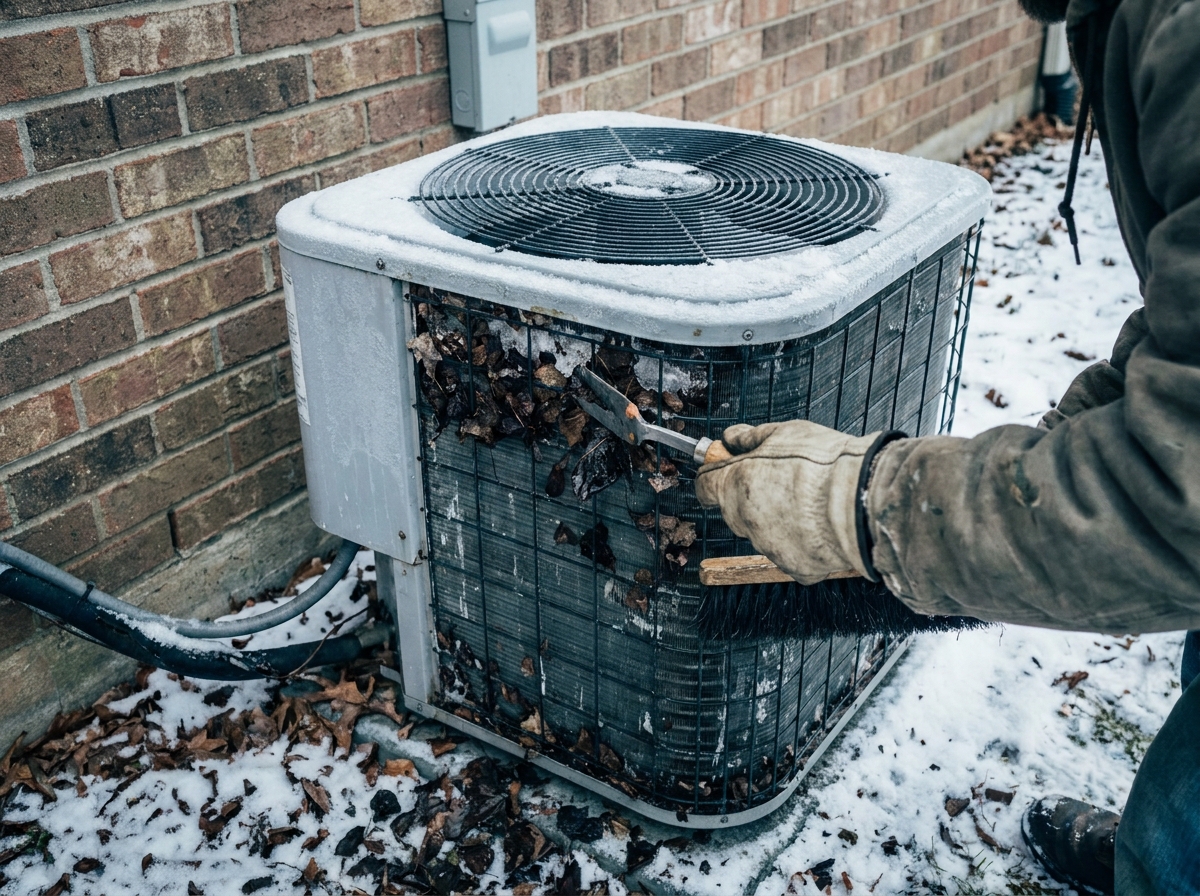
Heat pumps deliver air that is warm rather than hot, so air that feels cool at the vent is often normal. Two things are genuinely normal: a defrost cycle, where the outdoor unit steams and the indoor air goes briefly cool, and reduced output on the coldest days. What is not normal is ice that never clears, no heat at all, or the system running constantly without reaching the setpoint.
- 01
Check the thermostat mode and setpoint
HEAT, not AUTO, not EM HEAT. Heat pumps also dislike large setback swings: asking for five degrees at once triggers the expensive backup heat instead of the pump. Move the setpoint in small steps.
- 02
Work out whether it is defrosting
A heat pump periodically reverses to melt frost off the outdoor coil. During it the outdoor unit steams, you may hear a whoosh, and the indoor air goes cool for a few minutes. That is correct behaviour. If it lasts much beyond fifteen minutes, or the coil stays iced afterwards, it is not.
- 03
Change the filter and open the vents
Same as any forced-air system. Restricted airflow reduces output and makes a working heat pump look inadequate. This is the cheapest thing on the list and it is often the answer.
- 04
Clear the outdoor unit
Leaves, snow drifts and ice around the base stop it drawing air. Clear a couple of feet around it, and clear the top. Do not chip ice off the coil with anything metal, and never pour hot water over the unit.
- 05
Check the breaker for the outdoor unit
Heat pumps have a breaker for the outdoor unit and often a separate one for the air handler. If only one has tripped, the indoor fan runs and blows unheated air, which is exactly this symptom.
- 06
Judge whether it is simply very cold
Output falls as outdoor temperature drops, and below the balance point the backup heat is supposed to help. A house that will not hold temperature only on the coldest days may be sized or configured wrong rather than broken.
What it costs
| Cost | Source | |
|---|---|---|
| Service call and diagnosis | $75 to $200 | |
| Heat pump repair, minor | $150 to $650 | |
| Capacitor replacement | $100 to $250 | |
| Contactor replacement | $150 to $400 | |
| Refrigerant leak repair | $200 to $1,500 | |
| Annual tune-up | $70 to $200 |
Every figure here is published by the source named beside it. We do not average them into a number of our own.
Where to stop
Thermostat settings, filters and clearing the outdoor unit are yours. These are not.
- The outdoor coil stays iced after a defrost cycle
- That is a defrost control, sensor or reversing valve fault, and all three are inside the refrigerant circuit.
- Anything to do with refrigerant
- US EPA Section 608 certification is legally required to handle it. Low refrigerant also means a leak rather than normal loss.
- The reversing valve is suspected
- It is the part that makes a heat pump a heat pump, it sits in the sealed system, and diagnosing it needs gauges.
- Emergency heat is the only thing that warms the house
- That is a diagnosis rather than a solution, and running on resistance heat is the most expensive way to heat a house there is.
- Burning smells, or the outdoor unit tripping its breaker repeatedly
- That is an electrical fault. Repeated resetting is the wrong response.
Why it happened
A heat pump does not make heat, it moves it, and there is less heat outside to move as the temperature drops. That is why output falls exactly when you want it most, and why the air at the vent is warm rather than hot even when everything is working. The defrost cycle exists because the outdoor coil is below freezing while pulling moisture out of the air, so it frosts up and has to be melted off periodically. Most heat pump complaints are one of those two normal behaviours being read as faults.
What stops it happening again
Have it serviced annually before the first cold week, and keep the outdoor unit clear year round. Set the thermostat and leave it: heat pumps are most efficient holding a steady temperature, and deep setbacks are what call in the expensive backup heat.
- The part
- Filters, and a snow stand for the outdoor unit if you get real winters. Units sitting at ground level in a drift cannot breathe.
- How often
- Service annually in autumn. Filter every 90 days. Clear snow and leaves from the outdoor unit after any weather worth the name.
Want the rest of the house covered?
One email a month, timed to the systems you actually have. The same kind of thing as the tablet: small, cheap, and it stops the call.
Also asked
- Why is my heat pump blowing cool air?
- Often because that is normal: heat pump air is warm rather than hot, and during a defrost cycle it goes briefly cool. Check it is not set to emergency heat, and check the filter.
- What is a defrost cycle and how long should it last?
- The system briefly reverses to melt frost off the outdoor coil. The unit steams and indoor air cools for a few minutes. Much beyond fifteen minutes, or ice that stays afterwards, is a fault.
- Should I use emergency heat?
- Only as a stopgap. It bypasses the heat pump and runs resistance elements, which heats the house at several times the cost. Needing it continuously is a symptom to report, not a setting to live with.
- How much does heat pump repair cost?
- HomeGuide puts minor repairs at $150 to $650, a diagnostic call at $75 to $200, and a refrigerant leak repair at $200 to $1,500.
- Why does my heat pump run constantly in cold weather?
- Long run times are normal and efficient for a heat pump. Constant running that never reaches the setpoint is not, and that is worth a service call.