Do this now
Switch the cooling off at the thermostat and set the fan to ON. Running a frozen system pulls liquid refrigerant back to the compressor, and a compressor is the most expensive part in the house to replace. The fan alone will thaw it.
AC freezing up: turn it off before you do anything else
Updated
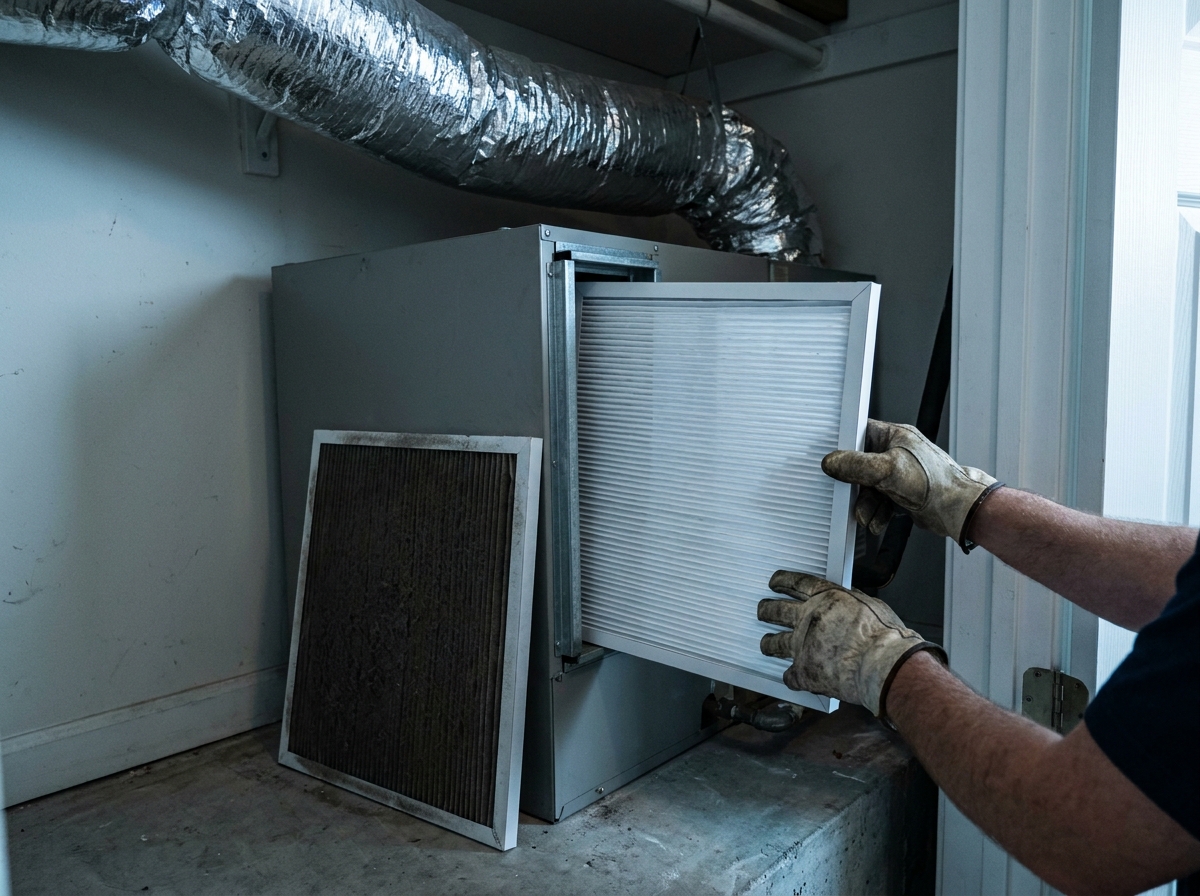
An air conditioner ices up when the coil gets colder than it should, and there are only two families of cause: not enough air moving across the coil, or not enough refrigerant in the system. The first is yours to fix and is usually a filter. The second is a leak, is not a top-up job, and legally requires certification to handle. Ice is a symptom, so clearing it without finding which cause you have simply buys a few hours.
- 01
Kill the cooling, leave the fan running
Thermostat to OFF for cooling, fan to ON. This thaws the coil with warm indoor air and takes anywhere from one to several hours. Put towels down: everything that froze is about to become water and the drain pan may not cope with all of it at once.
- 02
Change the filter while it thaws
This is the most common cause by a distance. A loaded filter starves the coil of air, the coil gets too cold, moisture on it freezes, and the ice then blocks the airflow further. If you cannot see light through the filter, you have found it.
- 03
Open every supply vent and clear the returns
Closed vents in unused rooms and furniture over a return both reduce airflow the same way a dirty filter does. The system is balanced for all of them being open.
- 04
Look at the outdoor unit
Grass clippings, leaves and cottonwood mat the fins and stop heat leaving. Switch the power off at the disconnect, then rinse from the inside outwards with a gentle hose. Never a pressure washer, which folds the fins flat.
- 05
Check the drain while everything is melting
A thaw pushes far more water through the condensate line than a normal day. If that line is already partly blocked, you get the ice problem and a ceiling stain in the same afternoon.
- 06
Run it again and watch
Once fully thawed, restore cooling. If it ices again within a day on a clean filter with the vents open, the cause is refrigerant, and that is the point where this stops being yours.
What it costs
| Cost | Source | |
|---|---|---|
| Replacement filter | about $10 to $40 | |
| AC repair, typical | $100 to $650 | |
| Service call and diagnosis | $75 to $200 | |
| Refrigerant leak repair | $200 to $1,500 | |
| Capacitor replacement | $100 to $250 |
Every figure here is published by the source named beside it. We do not average them into a number of our own.
Where to stop
Filters, vents and rinsing the outdoor coil are homeowner work. These are not, and the refrigerant line is the firmest boundary on this site.
- It freezes again with a clean filter and open vents
- That is a refrigerant charge problem, which means a leak. Adding refrigerant without finding the leak is refilling a bucket with a hole in it.
- Anything involving refrigerant
- US EPA Section 608 certification is legally required to buy and handle it. This is not a caution, it is the law, and the DIY top-up cans do more harm than good.
- Ice on the large copper line outside, or oily residue anywhere on it
- Oil on a refrigerant line means the leak is there. That needs finding and brazing rather than topping up.
- The indoor blower is not turning at all
- A dead blower motor or a failed capacitor is electrical work inside the air handler.
- Bending fins, cleaning the indoor coil, or removing panels
- Evaporator coils are delicate and expensive, and the panels are there to keep airflow where it belongs.
Why it happened
A cooling coil works by being colder than the air passing over it, so moisture condenses on it and drains away. Slow that airflow down, or drop the pressure in the coil by losing refrigerant, and the surface goes below freezing instead. Then the condensation becomes frost, the frost blocks the airflow further, and the system freezes itself solid. It is a runaway, which is why a filter nobody changed ends as a block of ice.
What stops it happening again
Change the filter every ninety days and keep every supply vent open. Between them those two habits prevent most of the airflow half of this fault, which is most of the fault. Keep two feet clear around the outdoor unit and rinse it once a year.
- The part
- A year of filters bought at once, so the job is never delayed by not having one. Write the date on the edge of each in marker when you fit it.
- How often
- Filter every 90 days. Rinse the outdoor unit each spring. Have the system serviced annually, which is when a slow refrigerant leak gets found cheaply.
Want the rest of the house covered?
One email a month, timed to the systems you actually have. The same kind of thing as the tablet: small, cheap, and it stops the call.
Also asked
- Why is my AC freezing up?
- Either not enough air over the coil, usually a dirty filter or closed vents, or not enough refrigerant, which means a leak. The first is yours, the second is not.
- Can I run my AC while it is frozen?
- No. Running a frozen system risks pulling liquid refrigerant back into the compressor, which is the most expensive component in the system.
- How long does it take to thaw a frozen AC?
- One to several hours with the fan running and cooling off. Put towels down first, because all that ice becomes water faster than the drain pan expects.
- Is low refrigerant something I can top up myself?
- No. US EPA Section 608 certification is legally required to buy and handle refrigerant, and low refrigerant means a leak rather than normal consumption.
- Why does my AC freeze up at night but not during the day?
- Cooler night air lowers the load, so the coil runs colder for the same setting. A system already marginal on airflow tips over the freezing point overnight first.